Aging is a complex biological process characterized by a progressive decline in physiological function and an increased risk of age-related diseases. Geroscience aims to intervene in these fundamental aging mechanisms to extend healthy lifespan. Recent breakthroughs have illuminated novel pathways, and among them, the interleukin-11 (IL-11) signaling axis has emerged as a compelling target.
The IL-11 Link to Aging: A Master Regulator Unveiled
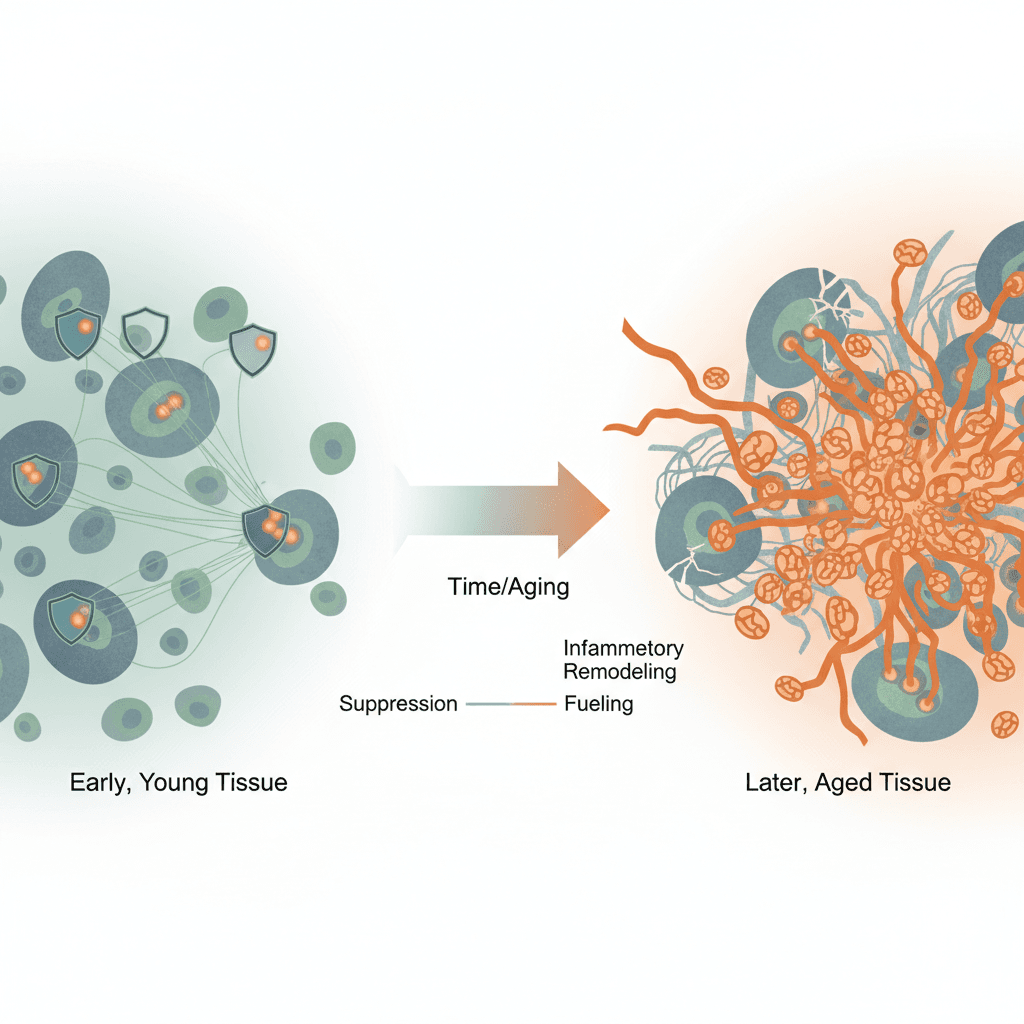
A landmark study published in Nature in 2024 by Widjaja et al. demonstrated that IL-11, a pro-inflammatory cytokine, is progressively upregulated across various cell types and tissues with age [1]. Crucially, genetic deletion of Il11 or its receptor Il11ra1, or pharmacological inhibition of IL-11 in aged mice, significantly extended median lifespan by 22.5% to 25% and improved multiple healthspan parameters, including metabolism and muscle function [1].
This research revealed that IL-11 exerts its pro-aging effects by regulating a critical intracellular signaling cascade: the ERK–AMPK–mTORC1 axis. Specifically, IL-11 stimulates the ERK/p90RSK pathway [2].
p90RSK: The Underappreciated Node in the Longevity Network
While IL-11 itself is a promising target, its downstream effector, p90 ribosomal S6 kinase (p90RSK), presents an equally, if not more, attractive druggable target. The Widjaja et al. study elucidated that IL-11-stimulated ERK/p90RSK activity directly causes the phosphorylation of Liver Kinase B1 (LKB1) at serine residues S325 and S428 [2] [3] [4]. This phosphorylation event leads to the **inactivation of L