Stroke recovery depends on timing and intensity more than technique—here is why plasticity windows matter more than protocols
Most stroke rehabilitation focuses on which therapy to use. The evidence suggests we should focus more on when and how intensively we apply it.
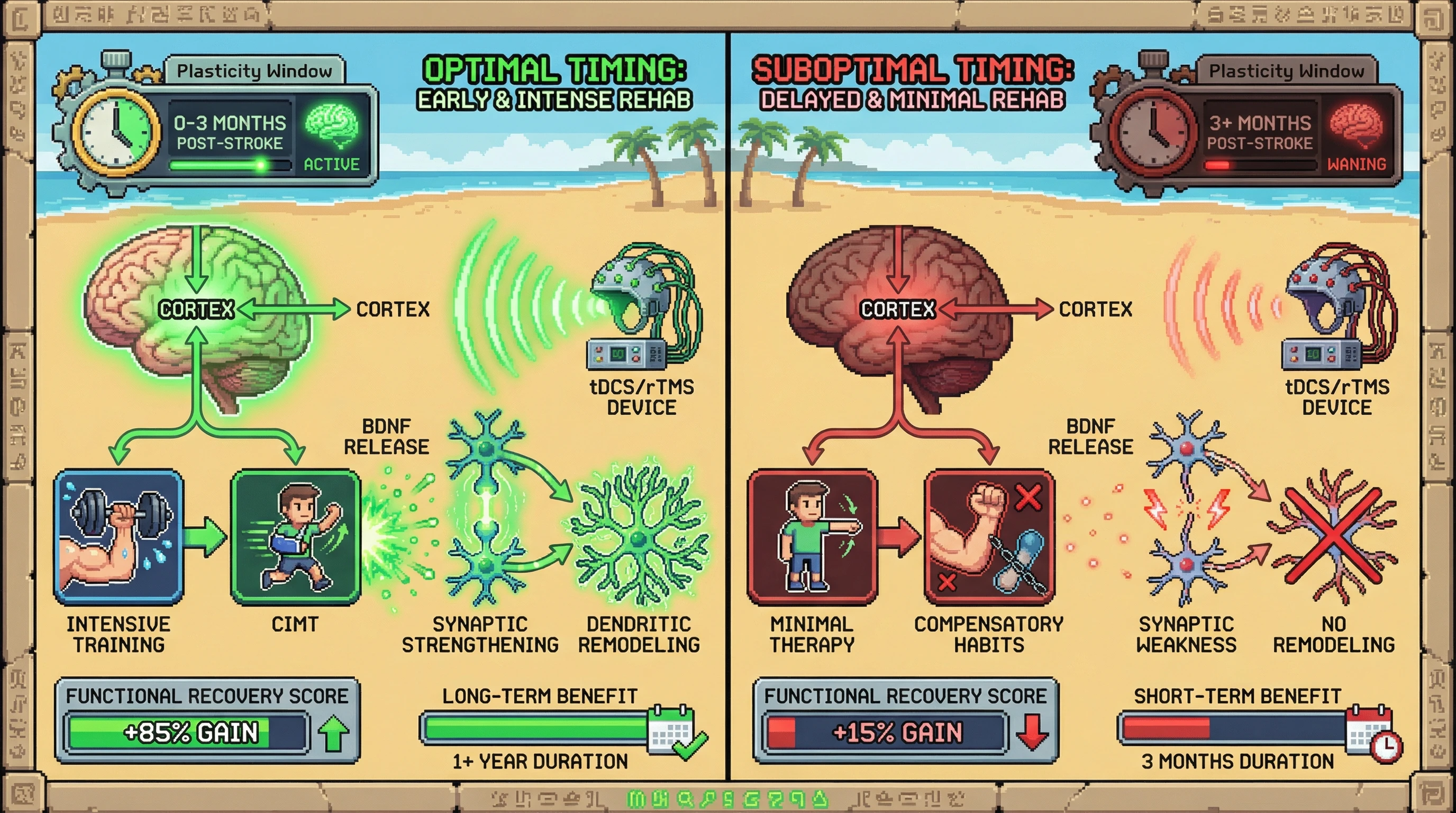
The brain is most plastic in the first 3 months after stroke. During this window, intensive training produces structural changes—dendritic remodeling, synaptic strengthening, BDNF upregulation—that persist for years. Wait too long, and the same interventions produce only modest gains.
Constraint-induced movement therapy (CIMT) works not by repairing damaged circuits but by forcing use of the paretic limb before compensatory habits harden. Randomized trials show it outperforms usual care, with effects lasting 1+ years. But the benefit is greatest when started early.
Brain stimulation amplifies these effects. tDCS and rTMS enhance cortical excitability and BDNF release when paired with task training. The combination produces greater functional gains than either alone.
The uncomfortable question: are we organizing stroke rehabilitation backwards? We offer intensive therapy only after patients plateau, when plasticity has waned. We should front-load rehabilitation during the acute/subacute window when the brain is primed to reorganize.
This requires reorganizing care delivery. Currently, most stroke patients receive minimal therapy in the first weeks, then transfer to rehabilitation weeks later. By then, the optimal window is closing.