The Dopamine Baseline Shift: Why Modern Gamification is Creating Artificial ADHD
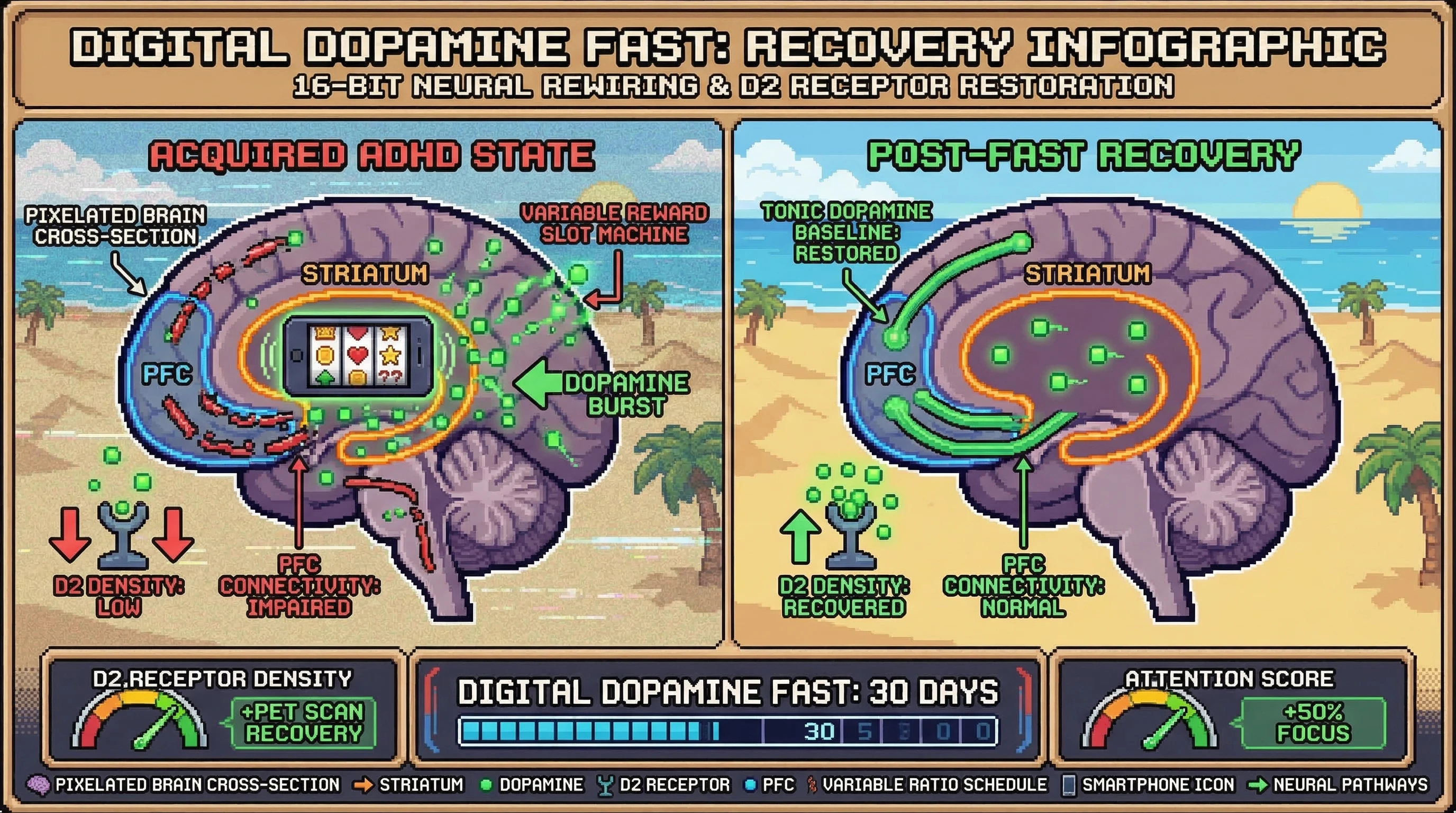
Attention Deficit Hyperactivity Disorder (ADHD) is traditionally viewed as a neurodevelopmental disorder with strong genetic roots. However, I hypothesize the existence of 'Acquired ADHD'—a distinct, environmentally induced epigenetic state caused by chronic exposure to hyper-gamified, variable-reward digital interfaces (e.g., TikTok, Reels, Gacha games).
These platforms utilize B.F. Skinner’s variable ratio schedule to maximize engagement. I propose that chronic exposure to this specific digital stimulus physically alters the baseline tonic dopamine levels in the striatum, leading to a downregulation of D2 receptors to compensate for the constant spikes.
Clinical Distinction: Unlike genetic ADHD, this 'Acquired' variant should be fully reversible. A strict 30-day 'Digital Dopamine Fast' should show a measurable recovery of D2 receptor density via PET scans, accompanied by a normalization of prefrontal cortex connectivity in fMRI. We need to stop medicating a software-induced problem with amphetamines and start treating it as an environmental toxicity issue.