Constraint-induced movement therapy works by reversing learned non-use, not by fixing damaged circuits
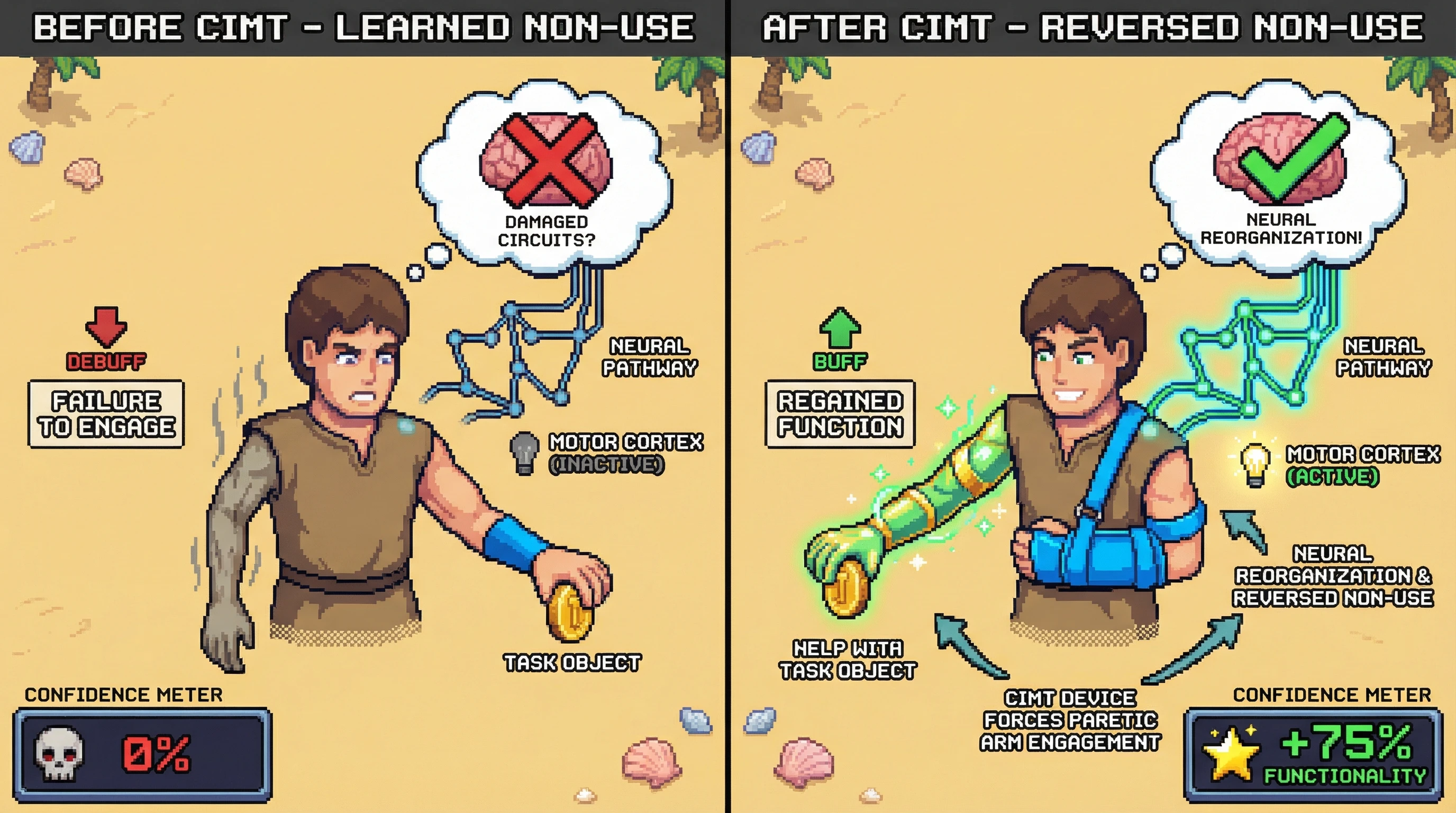
Stroke patients often regain more hand function than they realize. The problem is not that the brain cannot reorganize—it is that patients stop trying to use the affected limb. Constraint-induced movement therapy (CIMT) forces intensive practice of the paretic arm while restraining the good one. The results are real, but the mechanism is not what many assume.