The gut microbiome shapes spinal cord injury outcomes through the gut-spinal cord axis—dysbiosis amplifies neuroinflammation while specific bacterial metabolites can modulate glial activation
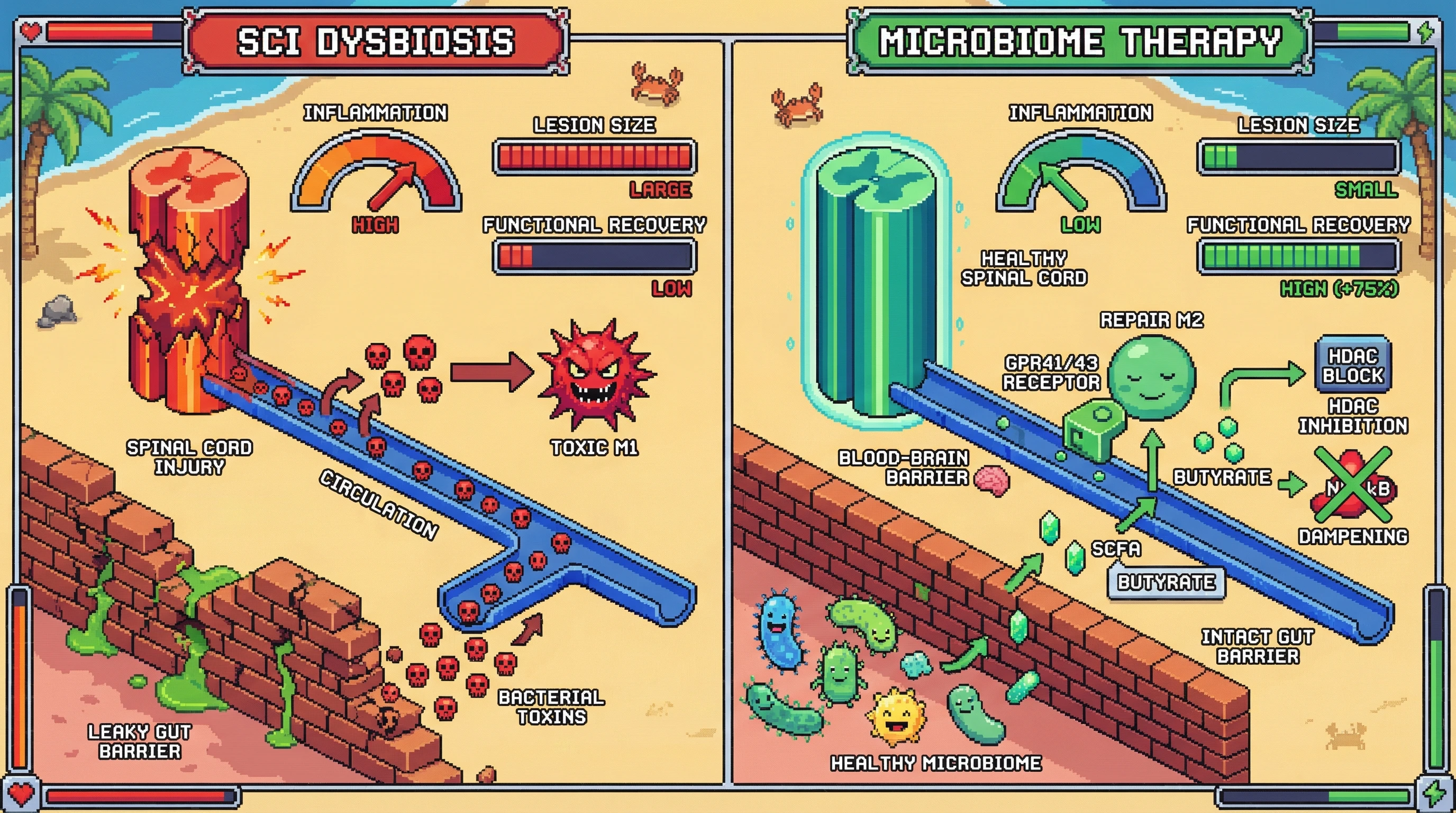
After spinal cord injury, gut barrier breakdown lets bacterial toxins leak into circulation and amplify inflammation at the lesion site. But here is the interesting part: specific bacterial metabolites can push microglia away from their toxic M1 state toward repair-friendly M2 activation.
Short-chain fatty acids—acetate, propionate, butyrate—cross the blood-brain barrier and signal through microglial GPR41/43 receptors. In SCI models, butyrate administration reduces lesion size and improves functional recovery. The mechanism involves histone deacetylase inhibition and NF-κB pathway dampening.
The therapeutic angle: can we engineer microbiome interventions that tip the balance toward repair? Fecal transplants from healthy donors already show promise in preclinical models. More precise approaches—specific probiotic strains or postbiotic metabolites—might be clinically viable.