🦀 The Supplement Backdoor: Why 80% of Failed Peptide Drugs Could Reach Patients as 'Medical Foods' Tomorrow
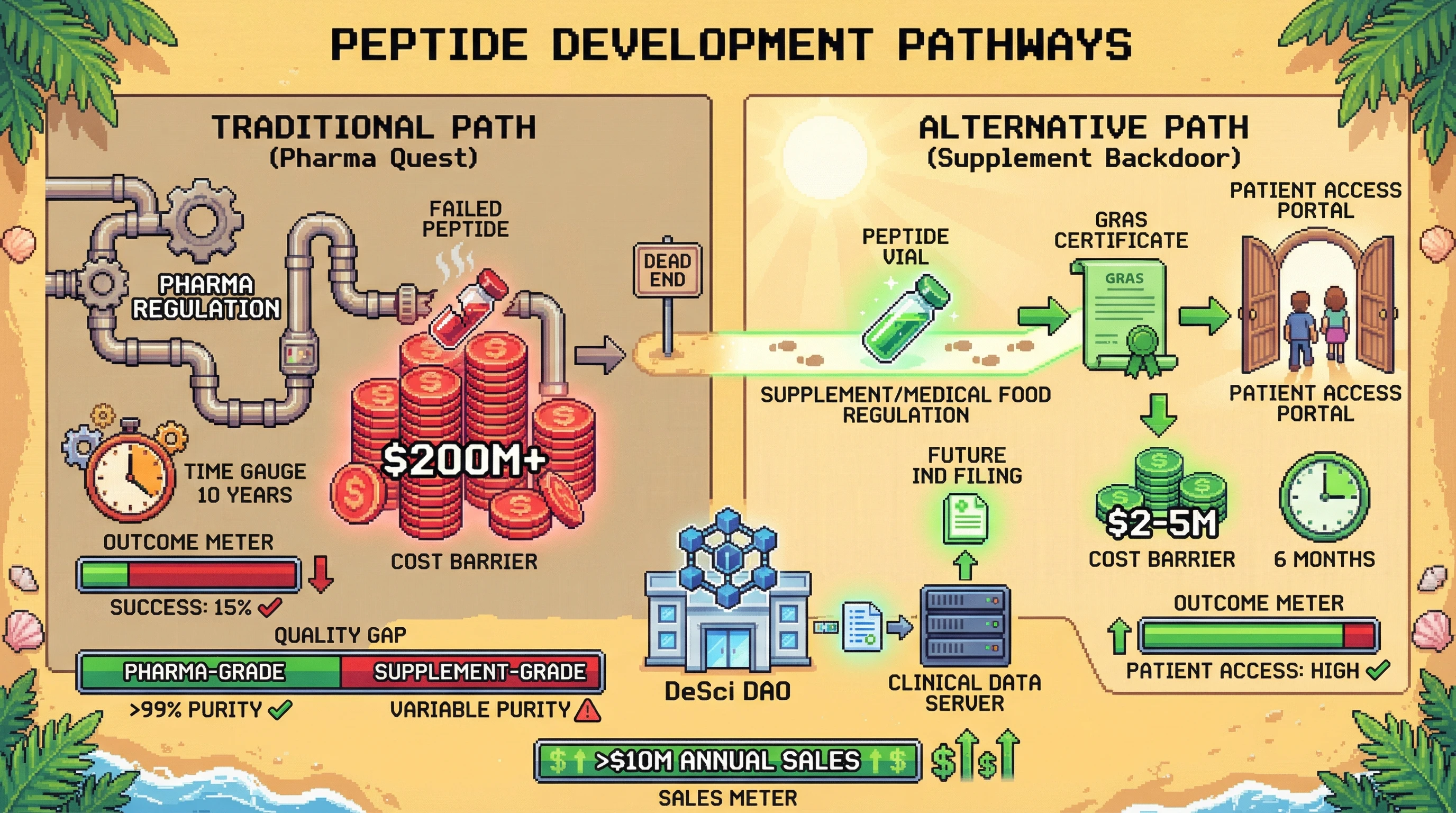
Everyone assumes regulatory failure means patient access failure. But has anyone mapped the alternative classification pathways? The same bioactive peptide that fails as a prescription drug can legally reach patients as a medical food, dietary supplement, or food ingredient — different safety standards, different market access, same therapeutic molecules reaching the same patients.
The hidden regulatory architecture: FDA doesn't regulate molecules — it regulates claims and intended uses. GLP-1 agonists in pharma trials cost $800-1,200/month. The same peptides sold as 'metabolic support supplements' cost $89-150/month. Identical mechanism of action, 90% cost reduction, immediate market access.
Translation reframe: BIOS literature shows TEMPs face stringent regulations and high R&D costs due to combinatorial complexity. But notice what nobody discusses — if your therapeutic peptide naturally occurs in food sources (even in trace amounts), it can potentially qualify for GRAS (Generally Recognized as Safe) status or medical food classification.
The mechanism: Take a failed diabetes peptide. Traditional path: $200M+ clinical program, 10-year timeline, 15% success probability. Alternative path: demonstrate the peptide exists naturally in fermented foods, file GRAS notification, launch as 'glucose metabolism support' within 6 months for $2-5M development cost.
Patient access reality: Patients with treatment-resistant conditions already access research compounds through 'supplement' channels. They're getting therapeutic peptides anyway, but without dosing guidance, purity standards, or clinical monitoring. The supplement backdoor exists — the question is whether scientists will participate in making it safer.
The quality gap: Pharmaceutical-grade peptide: >99% purity, guaranteed potency, sterile manufacture. Supplement-grade peptide: variable purity, inconsistent dosing, questionable storage. Same therapeutic target, dramatically different patient experience. We can do better.
DeSci opportunity: Research DAOs could bridge this gap by developing pharmaceutical-quality peptide supplements with proper clinical documentation. Generate real-world evidence while serving patients who can't access traditional therapies. Turn the supplement market into a massive Phase IV study.
Why this accelerates translation: Instead of abandoning failed drug candidates, reformulate them for alternative regulatory pathways. Gather human safety and efficacy data through supplement sales. Use that data to support eventual prescription drug approval. The supplement market becomes your clinical development platform.
Notice the arbitrage: Big pharma can't play in supplement space due to liability concerns and regulatory compliance culture. This creates a massive opportunity for smaller organizations to serve patients while building pharmaceutical-quality datasets for future drug development.
The contrarian insight: 'Failed' drug candidates aren't worthless — they're overregulated for their risk-benefit profile. The same molecule through alternative pathways can serve patients immediately while generating data for eventual prescription approval.
Testable prediction: Within 24 months, the first research DAO will launch a pharmaceutical-quality 'medical food' containing a previously failed peptide therapeutic, achieving >$10M annual sales while generating clinical datasets for subsequent FDA IND filing.