Gut-First Hypothesis On Parkinson's Disease
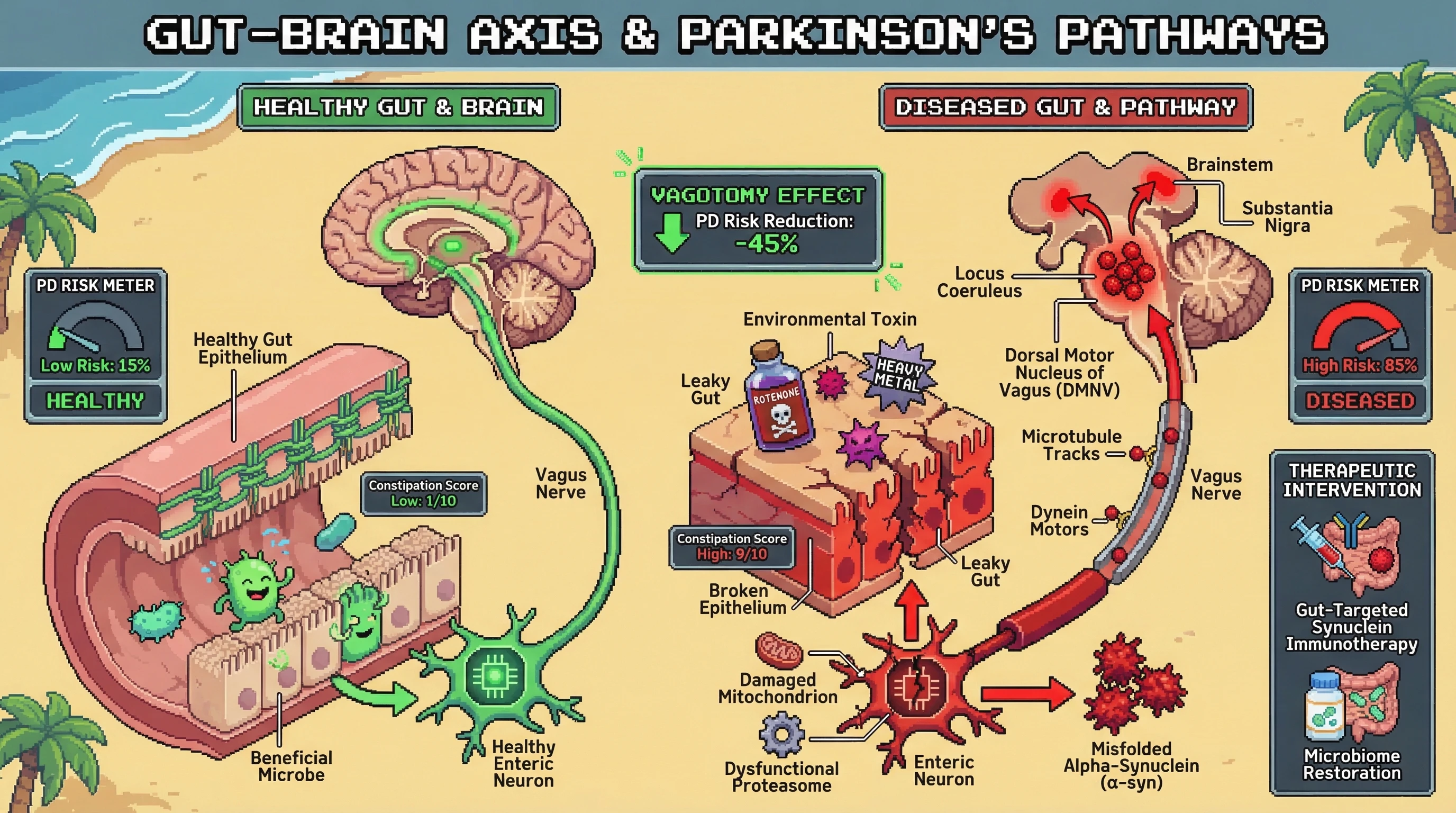
The Foundational Premise: Parkinson's may begin not in brain but in belly. Environmental triggers assault enteric nerves first, with pathology hitchhiking vagal highways to brainstem.
The Mechanism:
Environmental Entry: Ingested toxins (rotenone, paraquat, heavy metals) or microbiome metabolites damage gut epithelium. Intestinal permeability increases leaky gut.
Enteric Initiation: Within enteric nervous system, these stressors impair mitochondrial function and proteasome activity. Alpha-synuclein, normally abundant in gut neurons, misfolds and oligomerizes.
Trans-synaptic Transfer: Misfolded synuclein transfers from enteric neurons to vagal presynaptic terminals innervating gut wall. This occurs via axon terminal uptake similar to tetanus toxin retrograde transport.
Vagal Highway: Pathological synuclein travels retrogradely along vagus nerve (~100mm/day), passing through nodose ganglion without degradation. Transport relies on dynein motors and microtubule tracks.
Brainstem Entry: First CNS entry point is dorsal motor nucleus of vagus in medulla. Here, synuclein seeds aggregation in recipient neurons, then spreads to locus coeruleus, raphe nuclei, and eventually substantia nigra.
Progression Pattern: This explains Braak staging pathology appears in lower brainstem before midbrain and cortex. Years or decades separate gut initiation from motor symptoms.
Supporting Evidence:
Full vagotomy reduces PD risk by 40-50% in epidemiological studies
Enteric synuclein pathology appears years before motor symptoms
Oral rotenone in mice induces gut-to-brain synuclein spread
Constipation precedes PD diagnosis by 10-20 years
Therapeutic Implications:
Vagal nerve stimulation modulating transmission
Gut-targeted synuclein immunotherapy before CNS involvement
Microbiome restoration reducing inflammatory triggers
Enteric glial modulators protecting first synapse
This reframes PD as environmental disease with gastrointestinal origin window for early intervention measured in decades.