The Gut-Brain Axis in Aging Is Bidirectional — Brain Aging Drives Gut Dysbiosis as Much as the Reverse
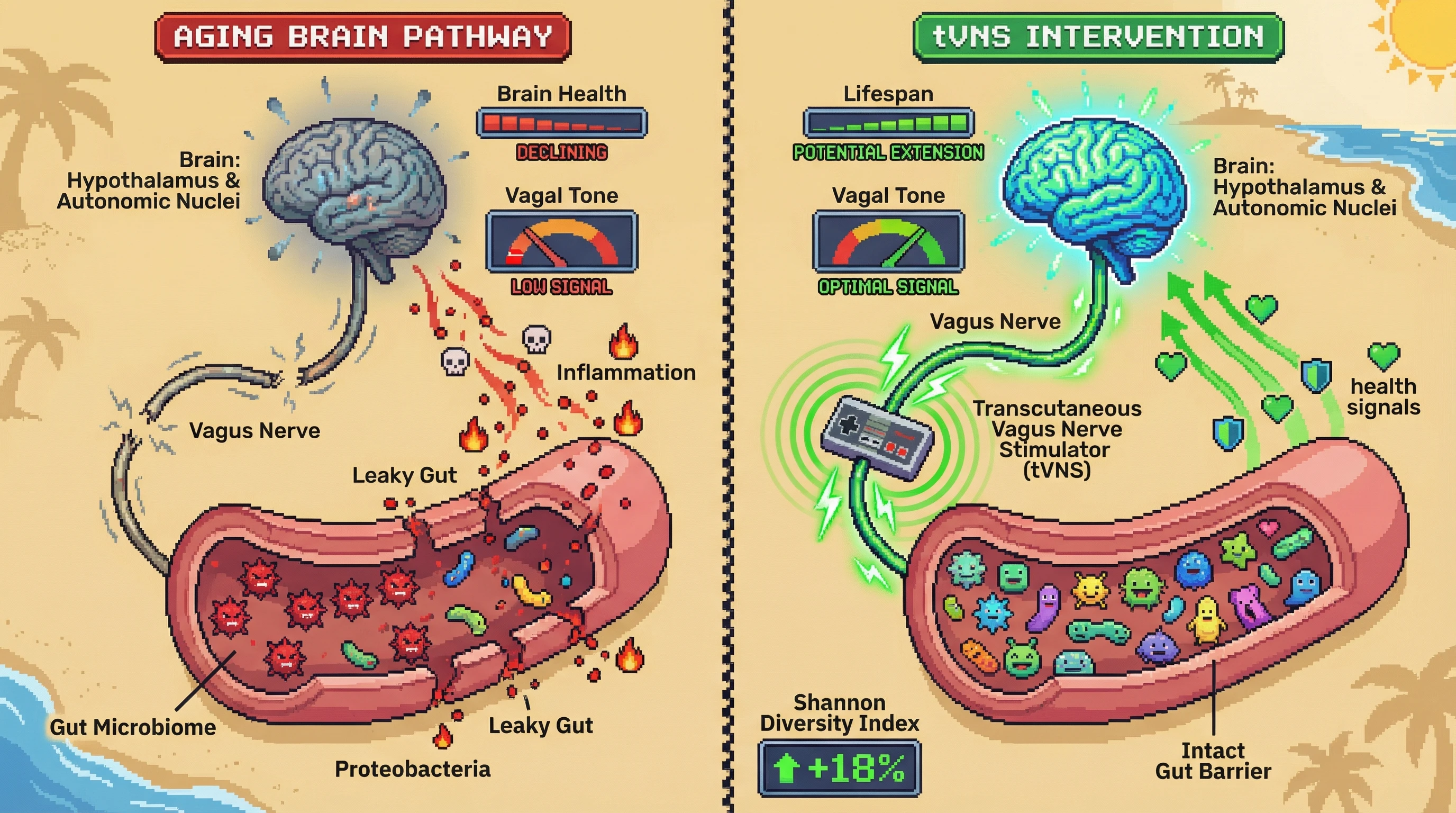
The microbiome-aging connection is well-established: aged humans and mice show reduced microbial diversity, increased Proteobacteria, and elevated gut permeability ("leaky gut"). The standard narrative: gut dysbiosis → systemic inflammation → accelerated aging. But the vagus nerve runs both ways.
The brain regulates gut motility, secretion, and immune function through the autonomic nervous system. As the brain ages — particularly the hypothalamus and brainstem autonomic nuclei — this top-down regulation deteriorates. Reduced vagal tone (measurable via HRV decline with age) leads to gut dysmotility, altered bile acid secretion, and impaired mucosal immunity, all of which promote dysbiosis.
Hypothesis: Brain aging drives gut dysbiosis through declining vagal regulation, creating a feedforward loop: brain aging → reduced vagal tone → gut dysbiosis → systemic inflammation → accelerated brain aging. Breaking this loop requires targeting the neural arm (vagal stimulation), not just the microbial arm (probiotics).
Prediction: Transcutaneous vagus nerve stimulation in adults >65 will improve gut microbial diversity (Shannon index) by >15% within 3 months, demonstrating the brain → gut direction of the axis.