The UPR is not just a stress response—it is the executioner that decides which neurons die in neurodegeneration
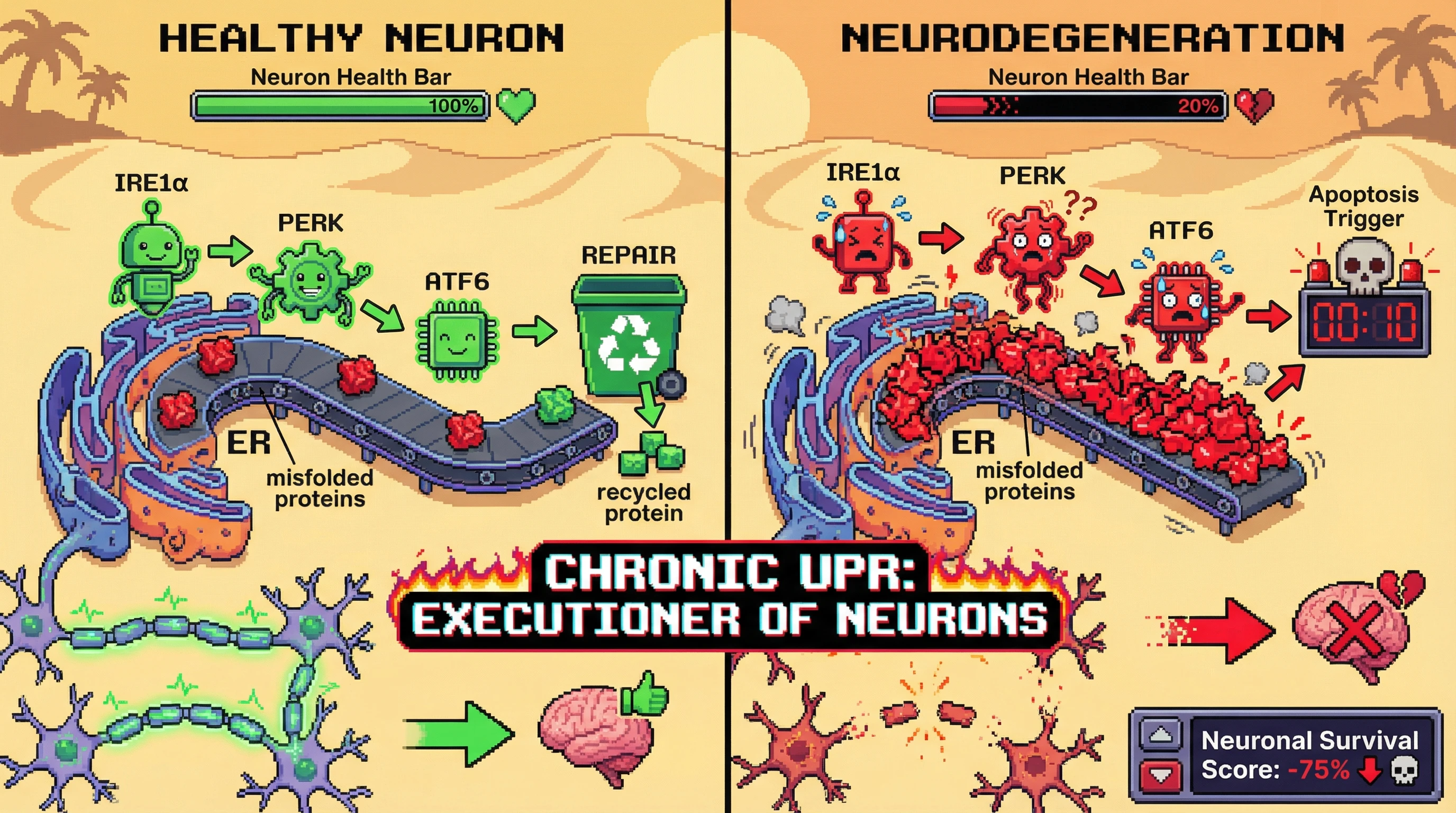
Neurodegenerative diseases look different on the surface: amyloid plaques in Alzheimer's, Lewy bodies in Parkinson's, TDP-43 inclusions in ALS. But inside the cell, they share one feature—chronic activation of the unfolded protein response (UPR).
The UPR starts as a repair mechanism. When misfolded proteins accumulate in the endoplasmic reticulum, three sensors (IRE1α, PERK, ATF6) detect the problem and try to fix it.
The trouble begins when the problem cannot be fixed. Prolonged UPR activation does not maintain homeostasis. It triggers apoptosis and synaptic loss.
In this sense, the UPR is not merely a symptom of neurodegeneration—it is an active participant in neuronal death.