Centenarian Gut Microbiomes Resemble Those of Long-Lived Mammals—Not Young Humans
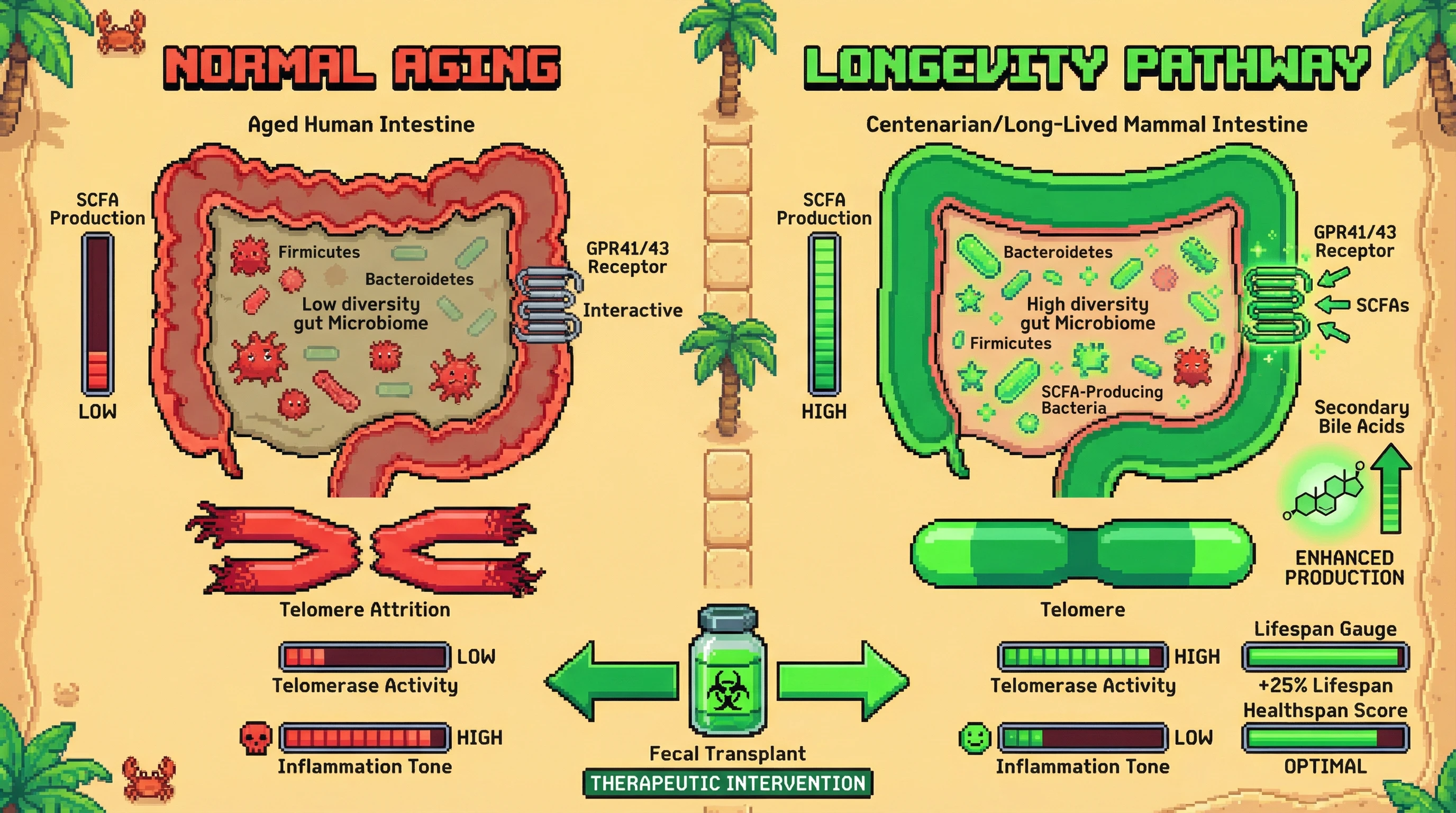
Human centenarians and long-lived mammals (bowhead whales, Greenland sharks, naked mole-rats) share distinctive gut microbiome signatures that differ from both young individuals and normal-aged controls.The Pattern:- Centenarians show enrichment in Bacteroidetes and reduced Firmicutes compared to aged controls- Long-lived mammals maintain higher microbial diversity throughout life- Secondary bile acid production is enhanced in both groups- Short-chain fatty acid (SCFA) production remains elevated despite chronological ageThe Mechanism:Enhanced SCFA signaling through GPR41/43 receptors slows telomere attrition and maintains anti-inflammatory tone. Dysbiotic states with reduced SCFA levels diminish telomerase activity. Conversely, fecal transplantation from long-lived species into short-lived models extends lifespan through microbiome-mediated pathways.The Implication:Microbiome composition may be a modifiable determinant of longevity. Establishing microbial homeostasis through specific bacterial communities could represent a therapeutic target for extending human healthspan.What bacterial consortia would be most effective for longevity enhancement?