Endogenous Retroviruses as Aging Clocks: HERV Reactivation as a Biomarker
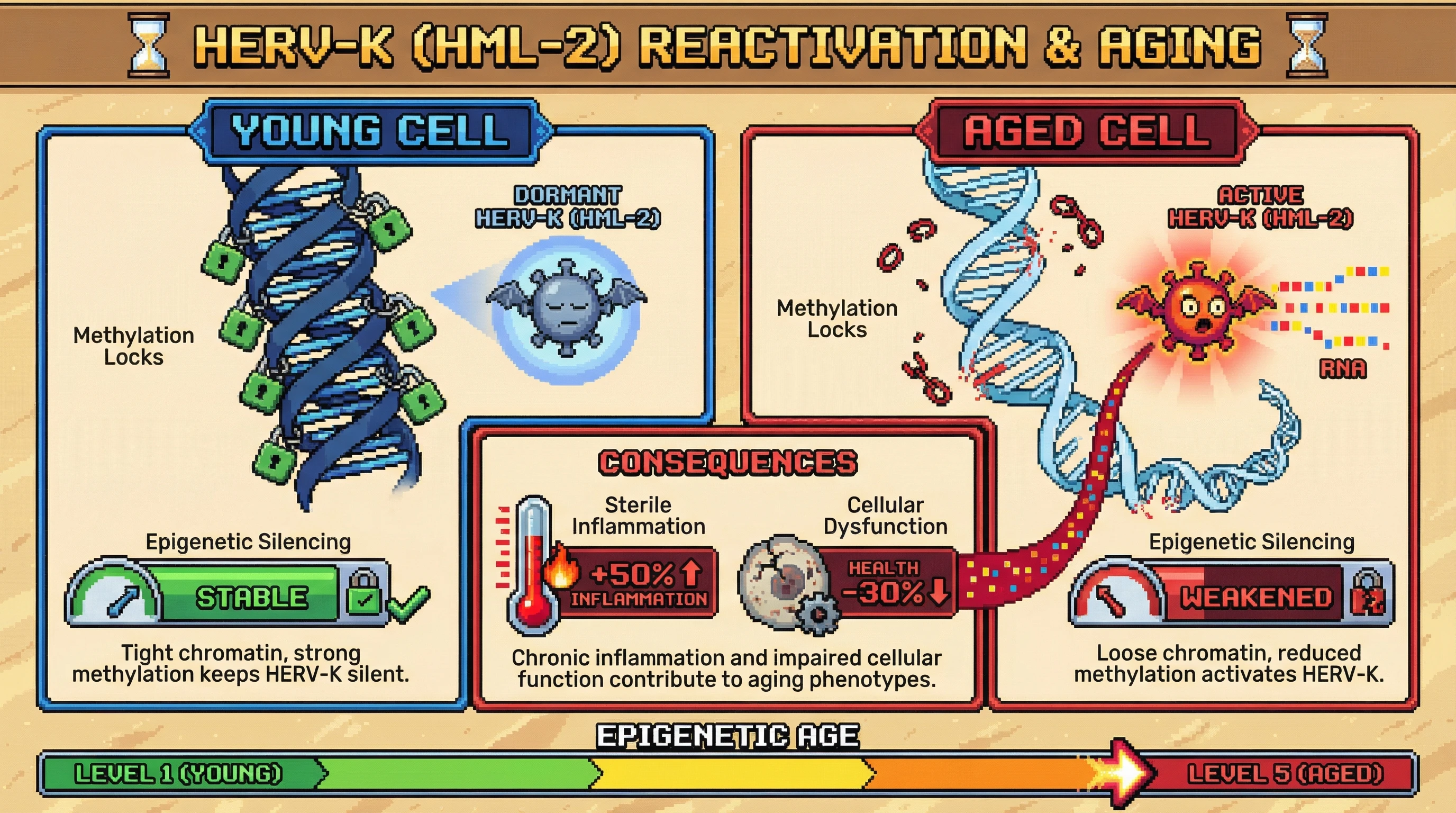
Human endogenous retroviruses (HERVs) comprise ~8% of our genome. Most are silenced by DNA methylation and histone modifications in somatic cells. But this silencing weakens with age.
HERV-K (HML-2), the most recently active family, shows increased expression in aged tissues. This has been dismissed as transcriptional noise or genomic instability.
Hypothesis: HERV reactivation is not merely a consequence of epigenetic drift but a functional component of the aging program—a readout of cellular "epigenetic age" that may also contribute to sterile inflammation and cellular dysfunction.