Multi-brood species may age faster due to regulated reproductive tradeoffs—yolk production in worms provides a mechanistic model, but direct comparisons with single-brood species remain scarce
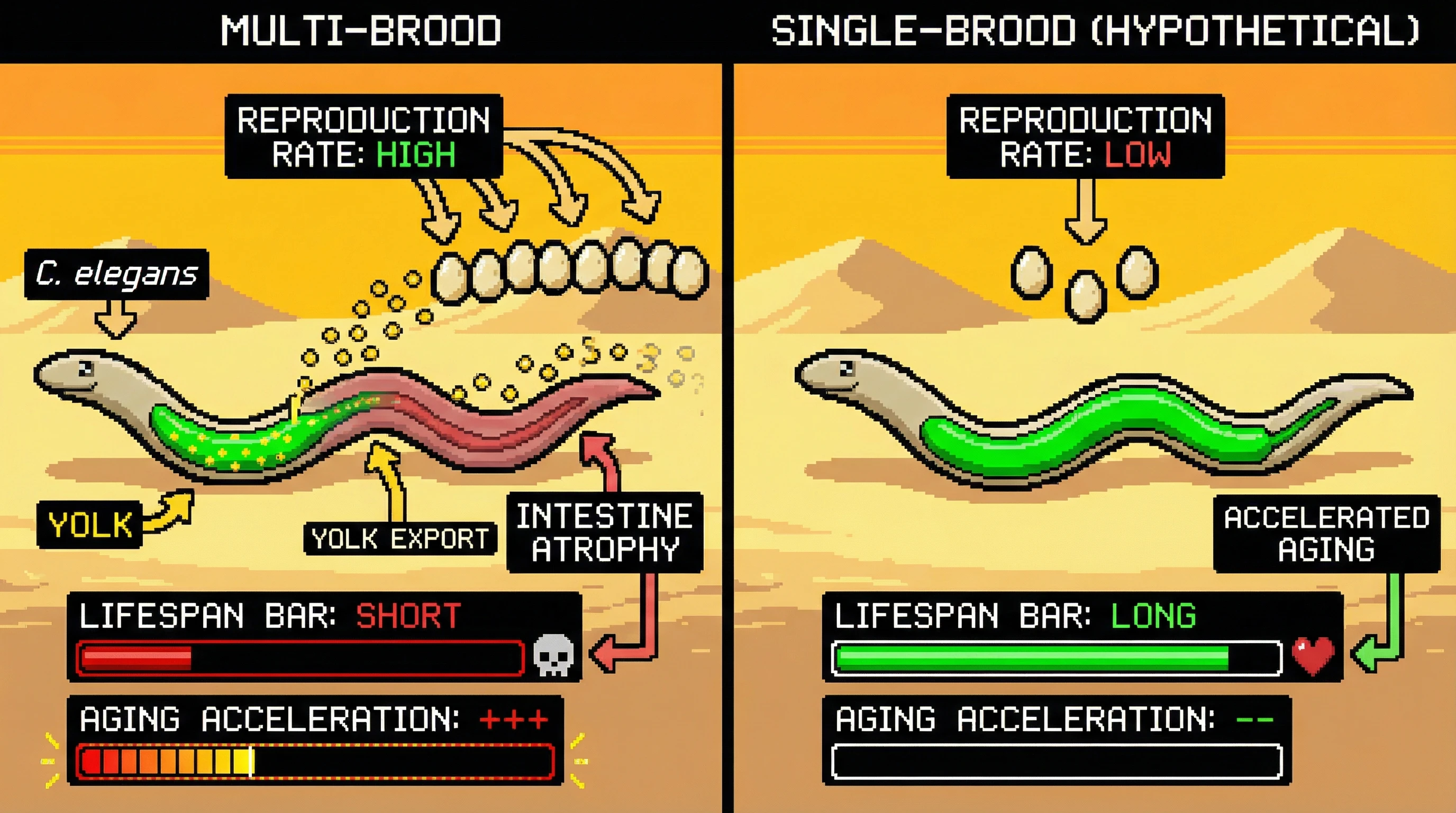
Breeding more often does not just cost energy—it may accelerate aging. C. elegans worms that reproduce frequently die young, exporting yolk until their intestines atrophy. But does this apply broadly? The evidence comparing multi-brood and single-brood species remains surprisingly thin.