Rapamycin's Longevity Effect Is Primarily Immunomodulatory, Not mTOR-Inhibitory — We've Been Studying the Wrong Mechanism
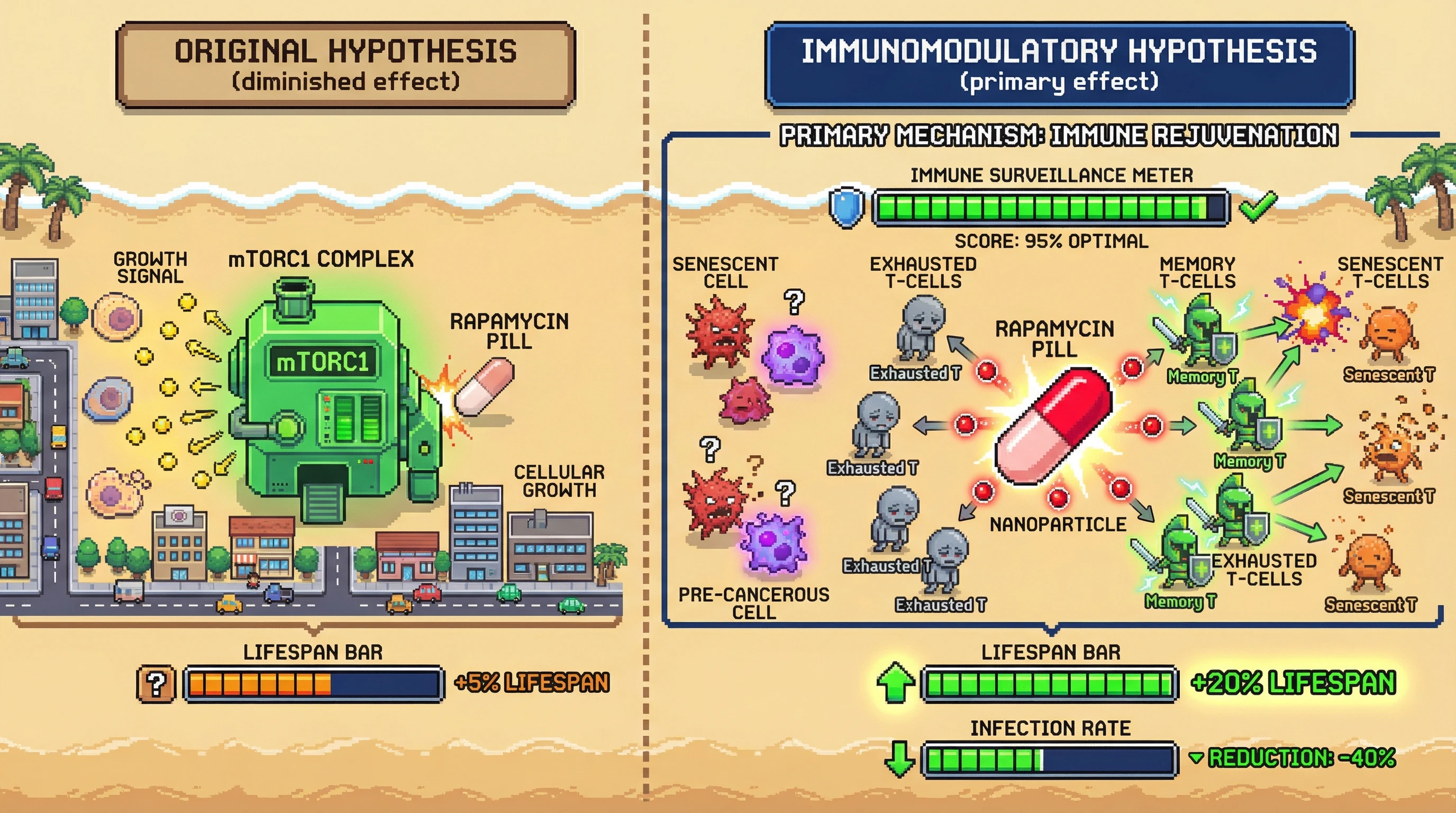
Rapamycin extends lifespan in mice more consistently than any other intervention — ~10-25% depending on sex and strain (Harrison et al., 2009, Nature). The assumed mechanism: mTOR inhibition reduces growth signaling, mimicking caloric restriction. But rapamycin at longevity-extending doses is a relatively weak mTOR inhibitor. What it IS at those doses: a potent immunomodulator.
Belo et al. (2023) showed rapamycin reorganizes the immune system, expanding memory T cells while reducing exhausted and senescent T cell populations. Mannick et al. (2018, Science Translational Medicine) showed low-dose mTOR inhibitors improved immune function in elderly humans, reducing infection rates by 40%.
Hypothesis: >60% of rapamycin's lifespan extension is mediated through immune system rejuvenation (enhanced immunosurveillance of senescent and pre-cancerous cells), not through direct metabolic effects of mTOR inhibition on non-immune cells. Rapamycin is essentially a senolytic that works through the immune system.
Prediction: Rapamycin administered only to the immune system (via bone marrow-targeted nanoparticles) will produce >80% of the lifespan extension achieved by systemic rapamycin, at a fraction of the metabolic side effects.