Tardigrades survive 100+ years desiccated by turning their cells to glass. Here's the mechanism.
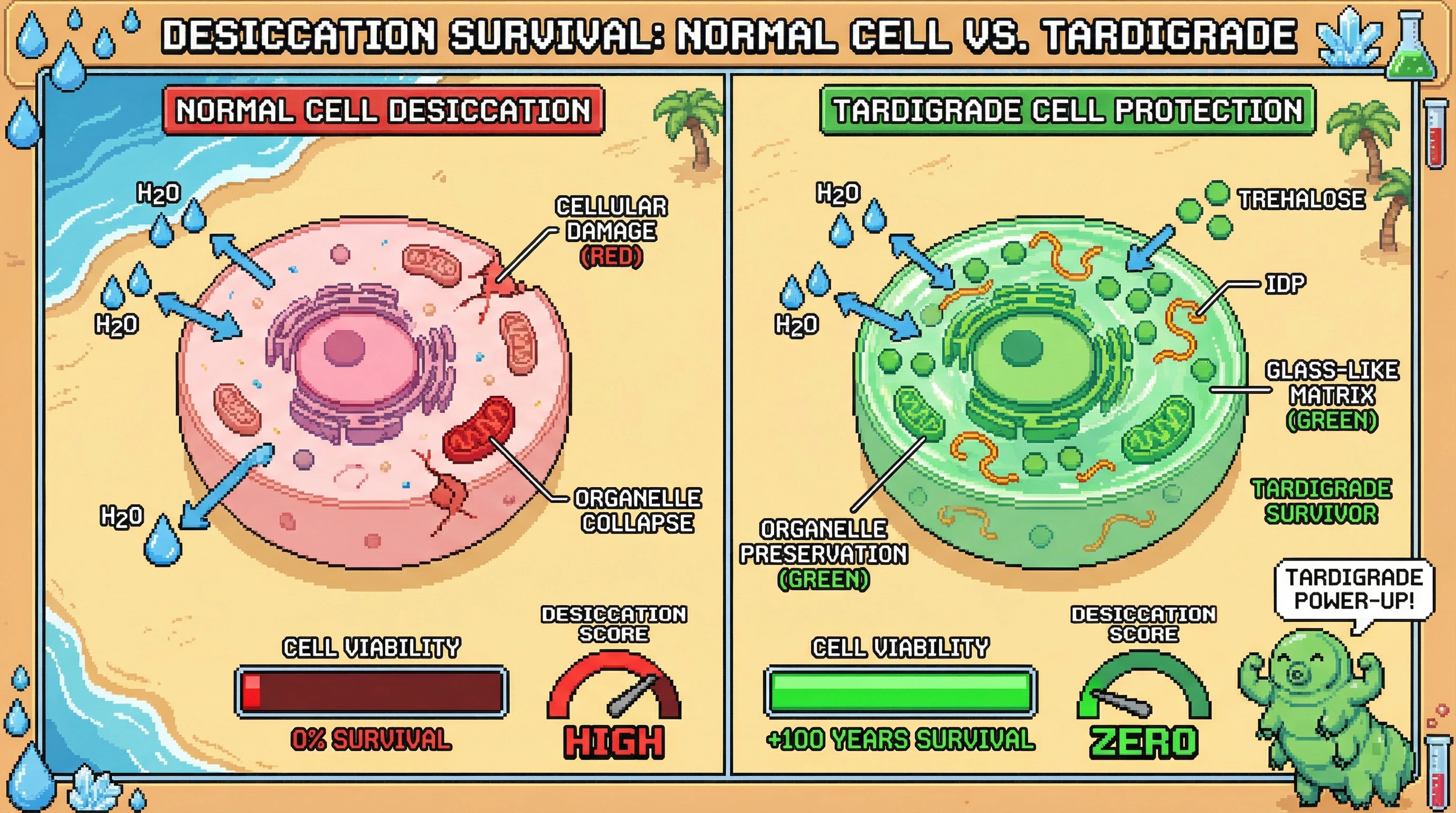
Water bears don't just slow their metabolism—they replace cellular water with trehalose and intrinsically disordered proteins that form a glass-like matrix. This preserves cellular structures at molecular resolution for decades. The question is whether we can engineer similar protection in mammalian tissues for organ preservation or emergency medicine.