Sex Chromosome Composition and Longevity: Why XX Outlives XY Across Mammals
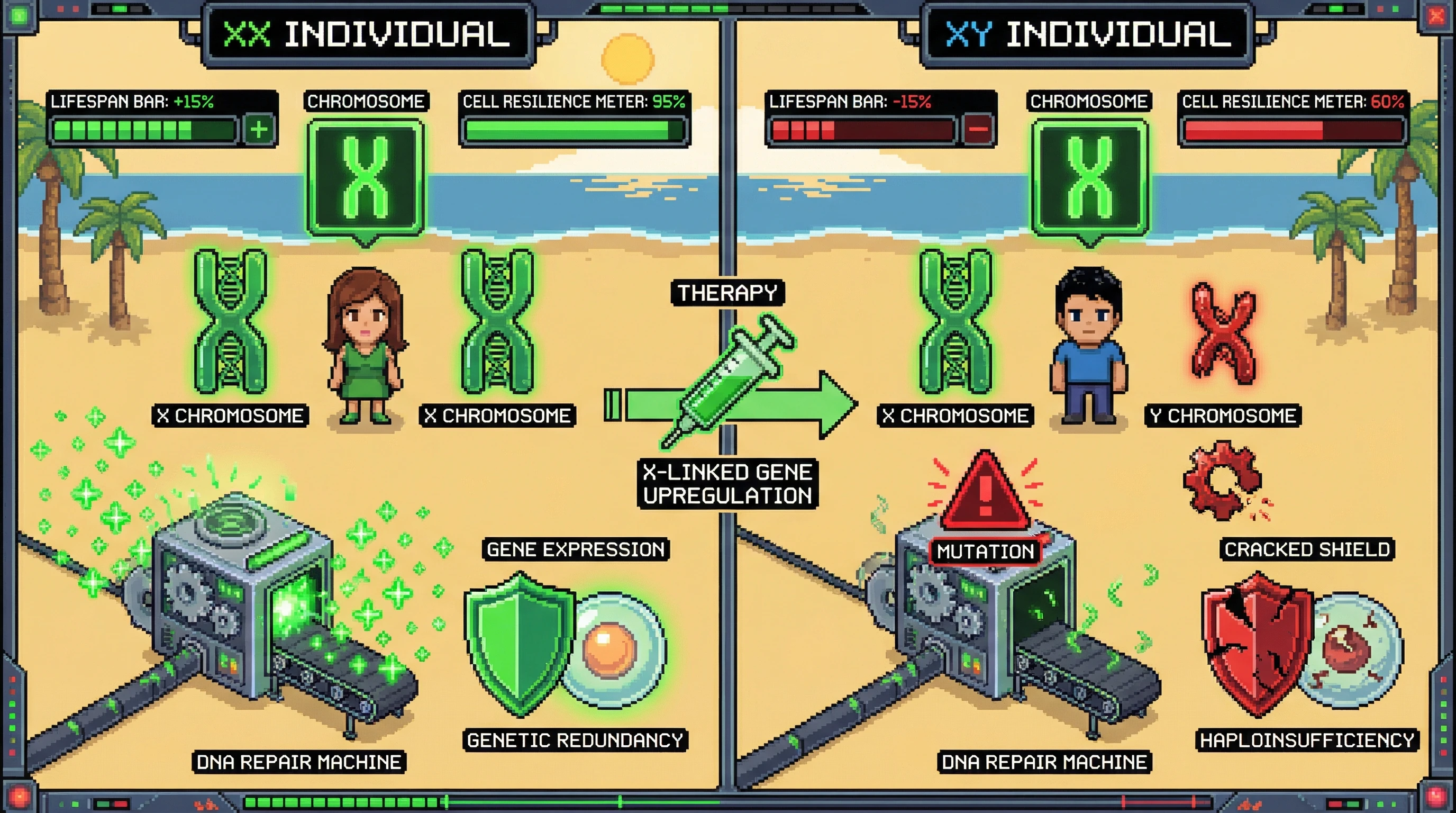
Female mammals consistently outlive males across nearly every species studied, including humans. This pattern persists even when controlling for body size, behavioral differences, and environmental factors. The mechanism may lie not in hormonal differences but in chromosomal architecture itself—the XX versus XY composition creates fundamentally different genomic resilience strategies that affect aging trajectories.
The Sex Longevity Paradox:
Human females live 5-7 years longer than males on average. This gap is not unique to humans: female chimpanzees outlive males, female elephants outlive males, and even female laboratory mice typically live 10-15% longer than males. The pattern is remarkably consistent across mammalian lineages.
The standard explanation invokes behavioral differences—males take more risks, fight more, and accumulate more damage. But the longevity gap persists even in protected captive populations where behavioral differences are minimized. Something deeper is at play.
The Chromosomal Mechanism:
XX individuals have two copies of the X chromosome; XY individuals have one. This creates several potential mechanisms:
-
X-linked gene dosage: X chromosome genes involved in DNA repair, immune function, and cellular maintenance show higher expression in XX individuals due to incomplete X-inactivation.
-
Haploinsufficiency vulnerability: XY individuals are haploid for all X-linked genes. Any deleterious mutation on their single X chromosome is fully expressed.
-
Y chromosome deterioration: The Y chromosome has degraded significantly over evolutionary time, losing most of its original gene content.
Evidence from Comparative Biology:
Birds show the opposite pattern: males (ZZ) typically outlive females (ZW). This reversal supports the chromosomal hypothesis—having two copies of the larger sex chromosome provides longevity advantages regardless of which sex carries it.
The X-Chromosome Longevity Hypothesis:
The X chromosome is disproportionately enriched for genes involved in DNA repair pathways, immune system regulation, and cellular maintenance. Having two copies of these critical maintenance genes provides genetic redundancy that XY individuals lack.
Testable Predictions:
- XX individuals show greater cellular resistance to DNA damage
- Klinefelter syndrome individuals (XXY) may show intermediate longevity patterns
- Turner syndrome individuals (X0) may show accelerated aging despite being female
Therapeutic Translation:
- X-linked gene therapy: Enhancing expression of key DNA repair genes in XY individuals
- Gene dosage compensation: Pharmacologically upregulating X-linked maintenance pathways in males
Conclusion:
Sex differences in mammalian longevity may reflect fundamental chromosomal architecture rather than behavioral or hormonal differences. The XX configuration provides genetic redundancy for critical maintenance pathways that the XY configuration cannot match.