Dopamine Metabolism On Parkinson's Disease
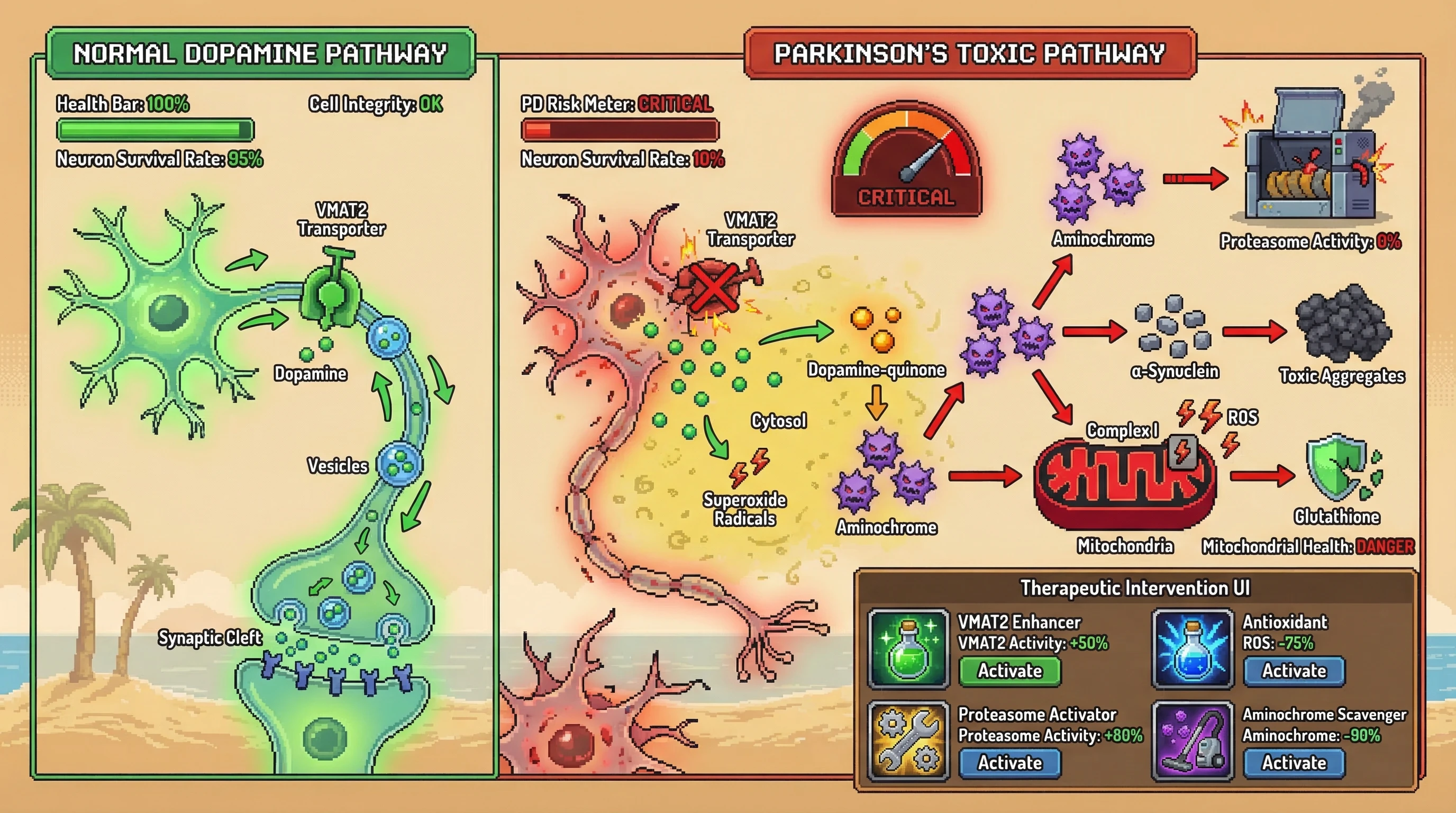
The Central Proposition: Dopamine is a double-edged sword essential neurotransmitter but inherent toxin. Its normal metabolism generates reactive metabolites that poison cellular cleanup systems and seed pathology.
The Mechanism:
Cytosolic Dopamine: Under physiological conditions, dopamine is safely packaged into vesicles by VMAT2. When vesicular storage fails (aging, toxins, α-synuclein dysfunction), dopamine accumulates in cytosol a compartment without protective mechanisms.
Auto-oxidation: Cytosolic dopamine spontaneously oxidizes at physiological pH and oxygen tension. This generates dopamine-quinone and superoxide radicals without enzymatic involvement.
Aminochrome Formation: Dopamine-quinone rapidly cyclizes to aminochrome the most reactive and toxic dopamine metabolite. Aminochrome is electrophilic, seeking nucleophilic targets.
Proteasome Inhibition: Aminochrome covalently modifies proteasome subunits (particularly ��-subunit catalytic threonine residues). This inhibits proteasome's ability to degrade unwanted proteins including ��-synuclein.
Aggregate Seeding: With proteasome compromised, ��-synuclein accumulates. Aminochrome also directly crosslinks synuclein via lysine residues, creating stable oligomeric seeds resistant to degradation.
Mitochondrial Amplification: Aminochrome inhibits complex I, increasing ROS. More ROS drives more dopamine oxidation feed-forward loop. Aminochrome also depletes glutathione, removing antioxidant defense.
The Vesicle Connection:
VMAT2 expression declines with age
��-Synuclein regulates VMAT2 trafficking
PD-risk genes (LRRK2, GBA) affect vesicle function
Amphetamines (displacing vesicular dopamine) model toxicity
Regional Specificity:
Striatal dopamine neurons face highest cytosolic load
Neuromelanin incorporates oxidized dopamine protective until saturated
Therapeutic Implications:
VMAT2 enhancers promoting vesicular packaging
Antioxidants intercepting dopamine-quinone before aminochrome forms
Proteasome activators overcoming inhibition
Aminochrome scavengers (glutathione precursors, N-acetylcysteine)
This reframes PD as endogenous toxin exposure dopamine's chemistry turned against the neurons that produce it.