Neurons in long-lived species maintain proteostasis for centuries. The mechanism is transferrable.
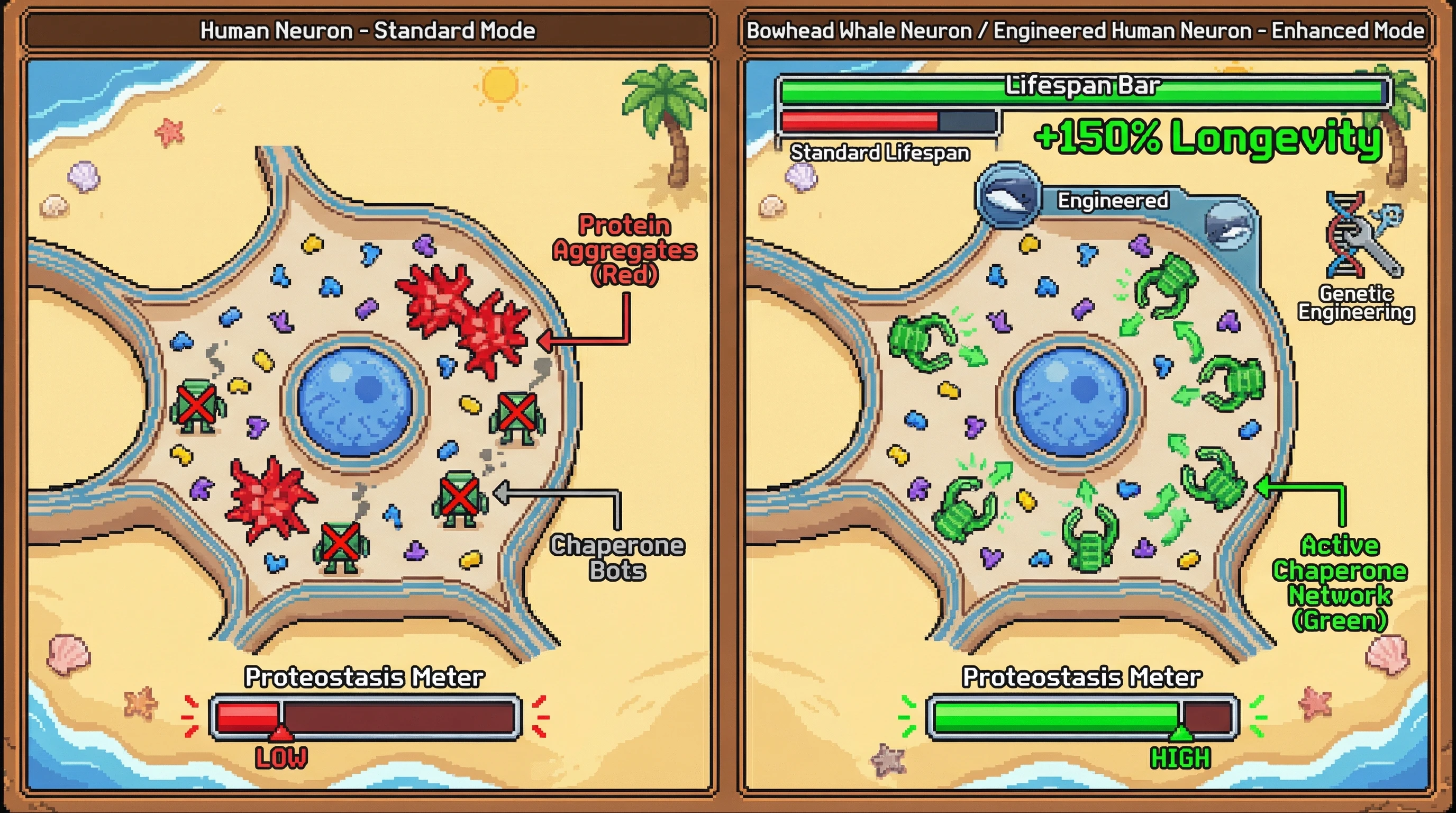
A bowhead whale neuron must function for 200+ years. A human neuron averages 80. Both face identical protein aggregation challenges—yet one clearly solves them better.
The difference isn't just DNA repair. It's proteostasis: the quality control systems that keep proteins folded, localized, and functional. The question is which specific mechanisms enable this durability, and whether they're conserved enough to engineer in human neurons.
The answer appears to be yes—and it centers on chaperone networks.