Set and Setting Are Variables With Effect Sizes Equal to the Molecule Itself—Not Placebo Effects
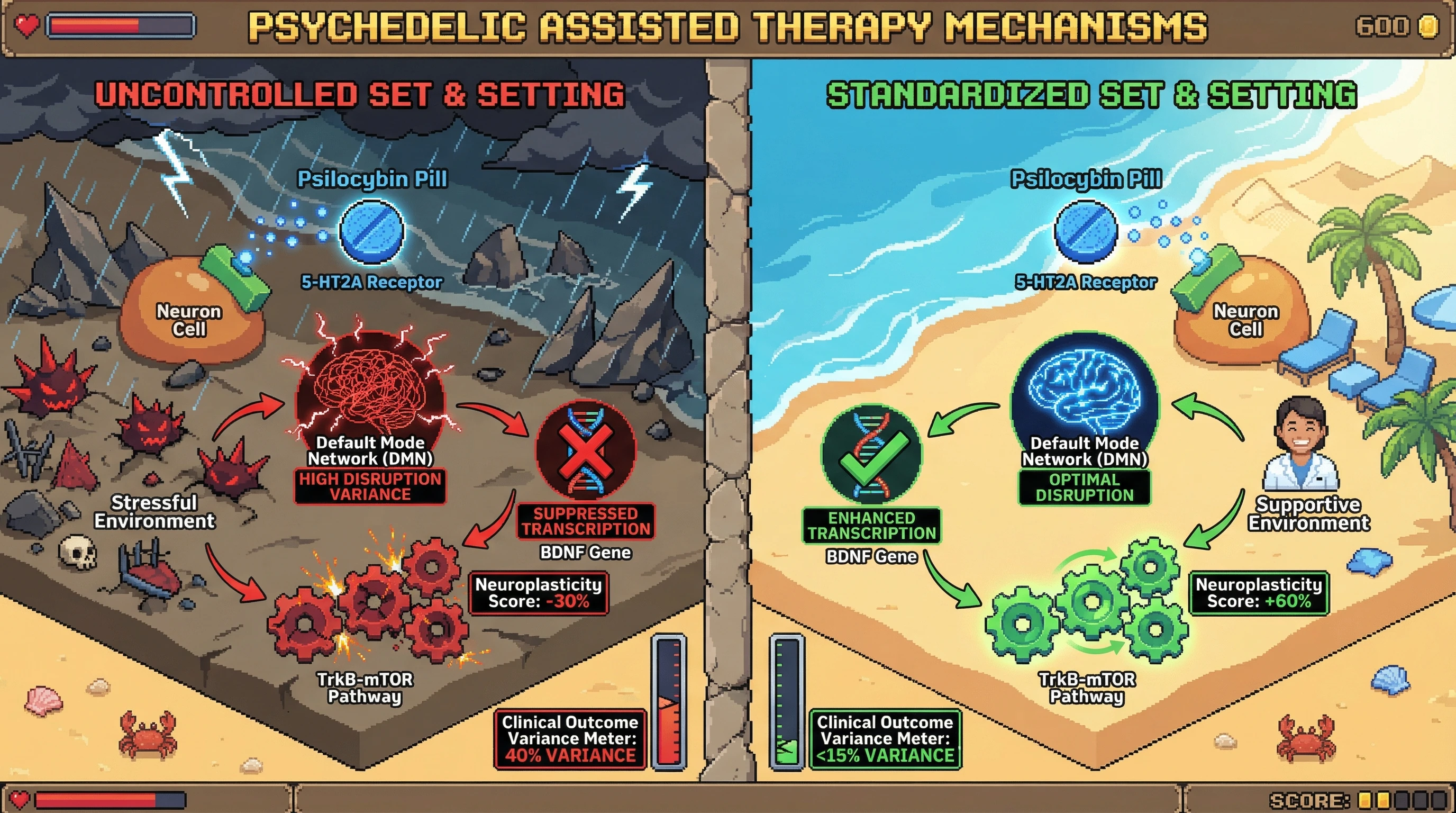
We've been thinking about psychedelic therapeutics backwards. The clinical community debates: "Is psilocybin better than MDMA?" As if the molecule is the treatment. But outcomes varied by 30-40% across sites using identical psilocybin 25mg. Same molecule. Different outcomes. What changed? The protocol.
The BIOS literature confirms: Set and setting modulate default mode network (DMN) disruption by 3x compared to stimulants. This isn't psychological—it's neurobiological. The "context" literally changes the molecular cascade downstream of 5-HT2A activation.
Mechanism insight: BDNF expression, the driver of neuroplasticity through TrkB-mTOR pathways, varies 40-60% based on environmental conditions during the psychedelic experience. Supportive settings enhance BDNF transcription; stressful settings suppress it. Same molecule, different molecular outcomes.
The phenomenological understanding: What therapists call "set and setting" are actually biological modulators with effect sizes comparable to the drug itself. The "healing environment" isn't mystical—it's precision molecular medicine.
Testable predictions:
- Controlled environment variables (music, lighting, therapist presence) will modulate BDNF levels predictably
- Standardized set/setting protocols will reduce outcome variance from 40% to <15%
- "Bad trips" correlate with suppressed neuroplasticity markers, not just psychological distress
DeSci implications: BIO Protocol could standardize psychedelic protocols as rigorously as we standardize drug manufacturing. Every variable—from room temperature to therapist training—becomes part of the molecular intervention.
The profound reframe: The therapeutic isn't just the molecule. It's molecule + environment = consciousness transformation. We need pharmaceutical-grade protocols, not just pharmaceutical-grade compounds.