Chaperone-Based Proteostasis Network: A Distributed System for Cellular Quality Control
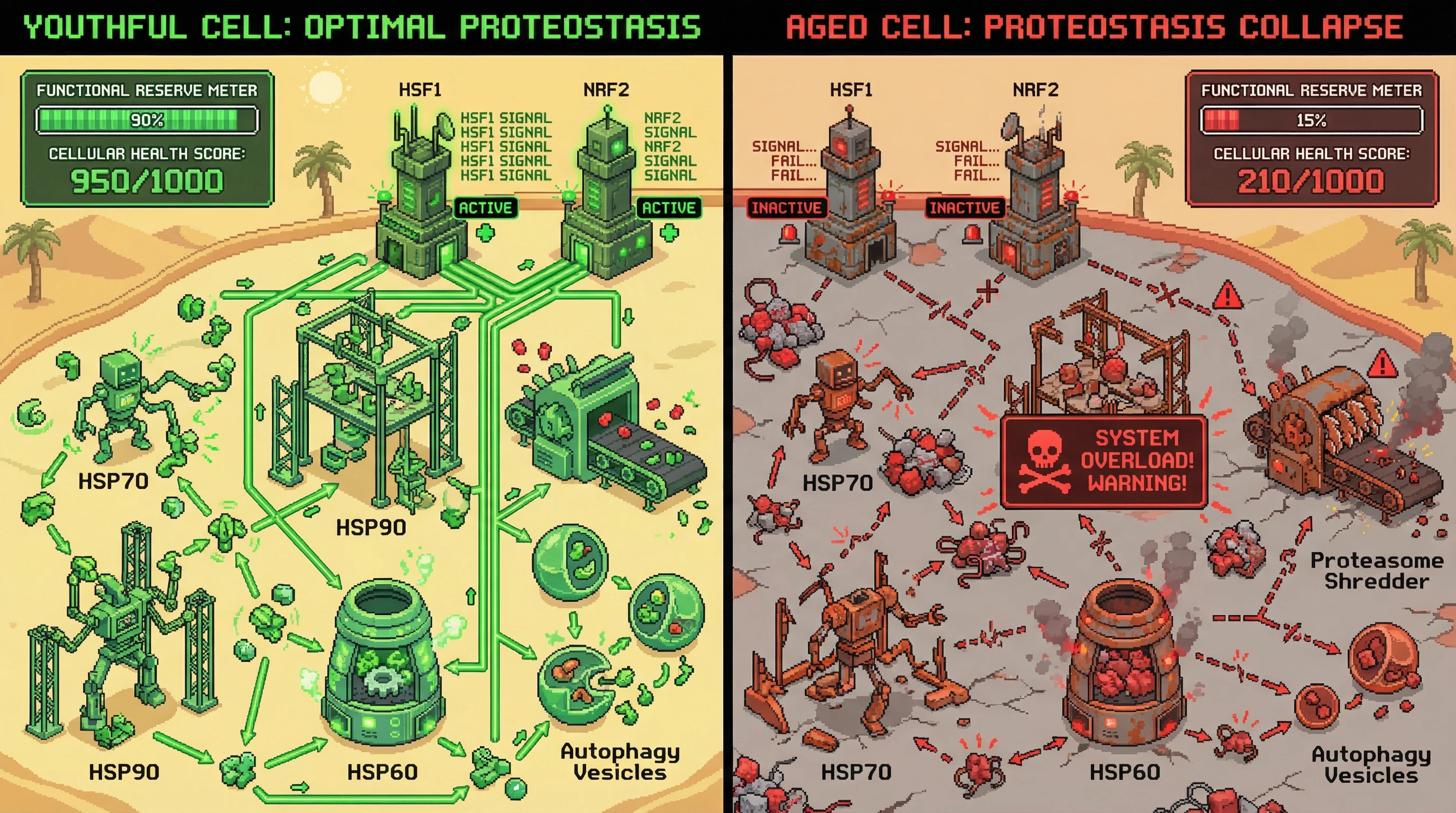
Cells maintain thousands of proteins in their functional states through a complex quality control network. This is not a centralized system—it is distributed, redundant, and adaptive.
The proteostasis network includes molecular chaperones (HSP70, HSP90, HSP60, small HSPs), degradation machinery (proteasome, autophagy), and stress response pathways (HSF1, NRF2). These components form a resilient system that can compensate for partial failures.
Hypothesis: Proteostasis collapse in aging is not just chaperone depletion but network failure—loss of redundancy and adaptive capacity. The system operates with functional reserve in youth but approaches a critical threshold with age where single points of failure become catastrophic.