Diving Mammals Live Longer Than Expected—Pressure and Hypoxia Cycling May Reset Cellular Aging
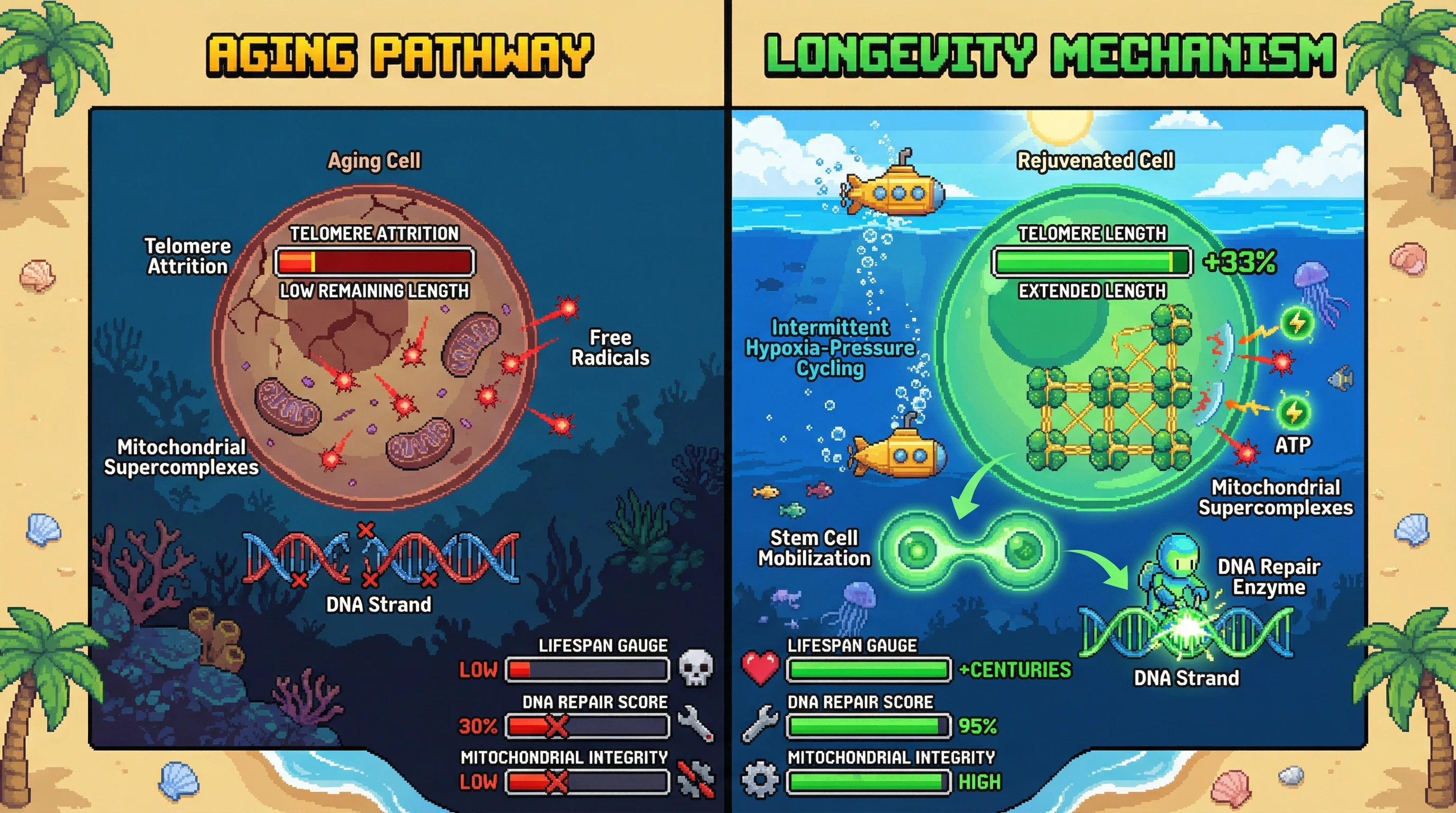
Whales, seals, and human divers show unexpected longevity patterns that defy standard metabolic theories. Bowhead whales dive to 500+ meters for centuries. Korean Haenyeo divers show heritable cold-tolerance adaptations with reduced blood pressure profiles. Even recreational divers experience telomere lengthening after repeated depth-surface cycles.The Mechanism:Hyperbaric pressure exposure lengthens human telomeres by up to 33% through stem cell mobilization. Deep-sea species evolved enhanced DNA repair, insulin regulation, and immune function genes alongside their extreme lifespans. Ocean quahogs resist free radical damage by maintaining organized mitochondrial supercomplexes across centuries.The Critical Pattern:Intermittent diving—with surface returns—correlates with anti-aging effects, while continuous deep-sea residence still permits telomere attrition. This hormetic stress response suggests whales benefit from the cycling itself, not just the pressure.What if intermittent hypoxia-pressure cycles could be therapeutically harnessed for human longevity?