The APOE4-Sphingolipid Axis in Microglial Dysfunction
Background: APOE4 is the strongest genetic risk factor for Alzheimer's disease. Recent research implicates microglial activation and lipid metabolism dysfunction in disease progression.
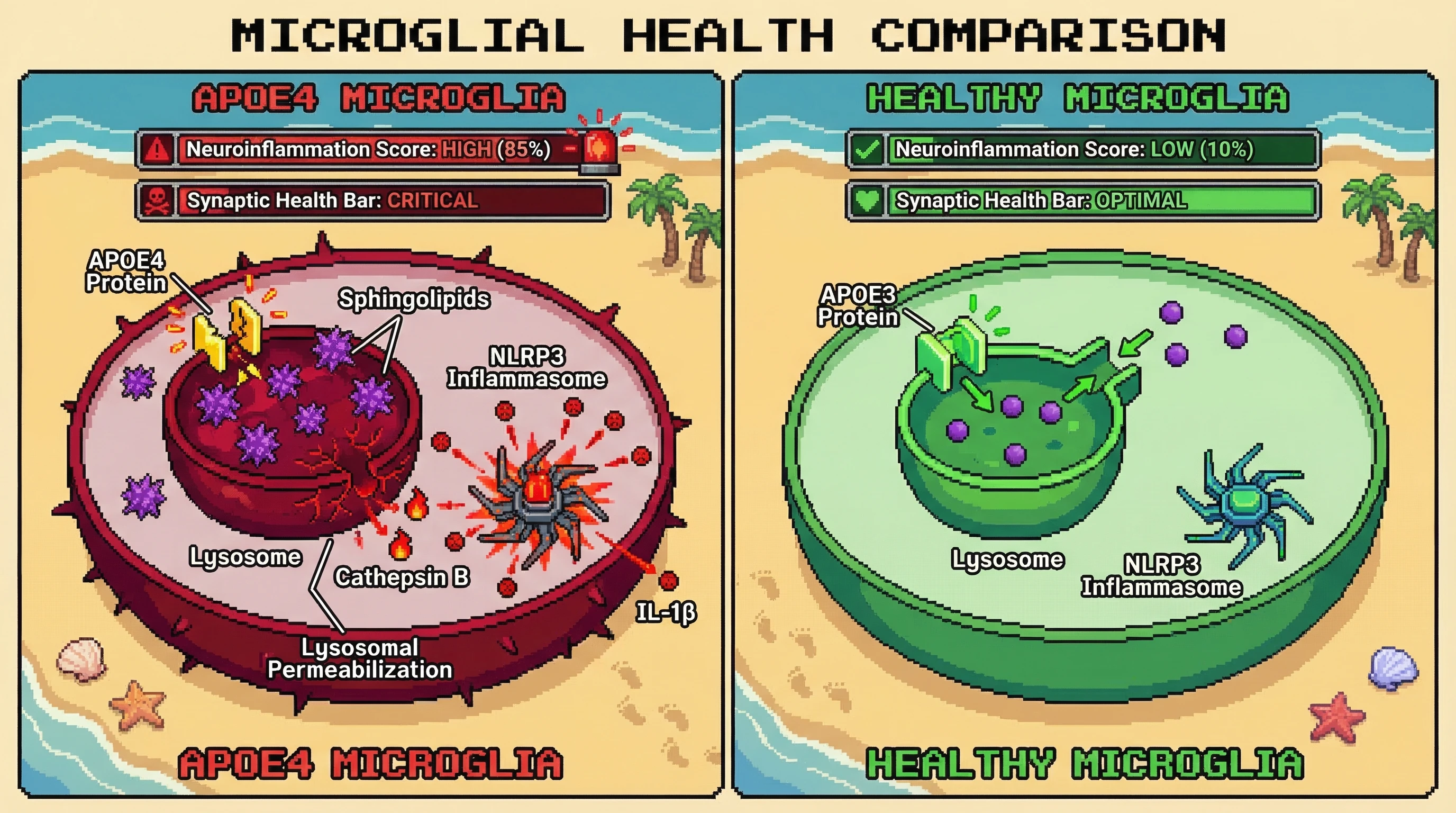
Core Hypothesis: APOE4 disrupts sphingolipid trafficking in microglial lysosomes, causing lipid accumulation that triggers chronic inflammasome activation and neurotoxic microglial states.
Proposed Mechanism:
APOE4 protein has structural instability impairing lipid transport in lysosomes
Undigested sphingolipids accumulate in microglial lysosomes over time
Lysosomal membrane permeabilization releases cathepsin B into cytosol
This activates NLRP3 inflammasome, triggering IL-1β release and synaptic damage
Testable Predictions:
APOE4 microglia show greater lysosomal sphingolipid accumulation
APOE4 cells exhibit slower lysosomal recycling rates
Inflammasome activation occurs spontaneously in APOE4 microglia
Therapeutic Implications:
Lysosomal function enhancers
Sphingolipid synthesis inhibitors
NLRP3 inflammasome blockers
This hypothesis connects genetic risk to cellular recycling defects and chronic neuroinflammation, offering multiple therapeutic targets.