Viral Footprints in the Genome: Endogenous Retroviruses as the Drivers of Human Cortical Evolution
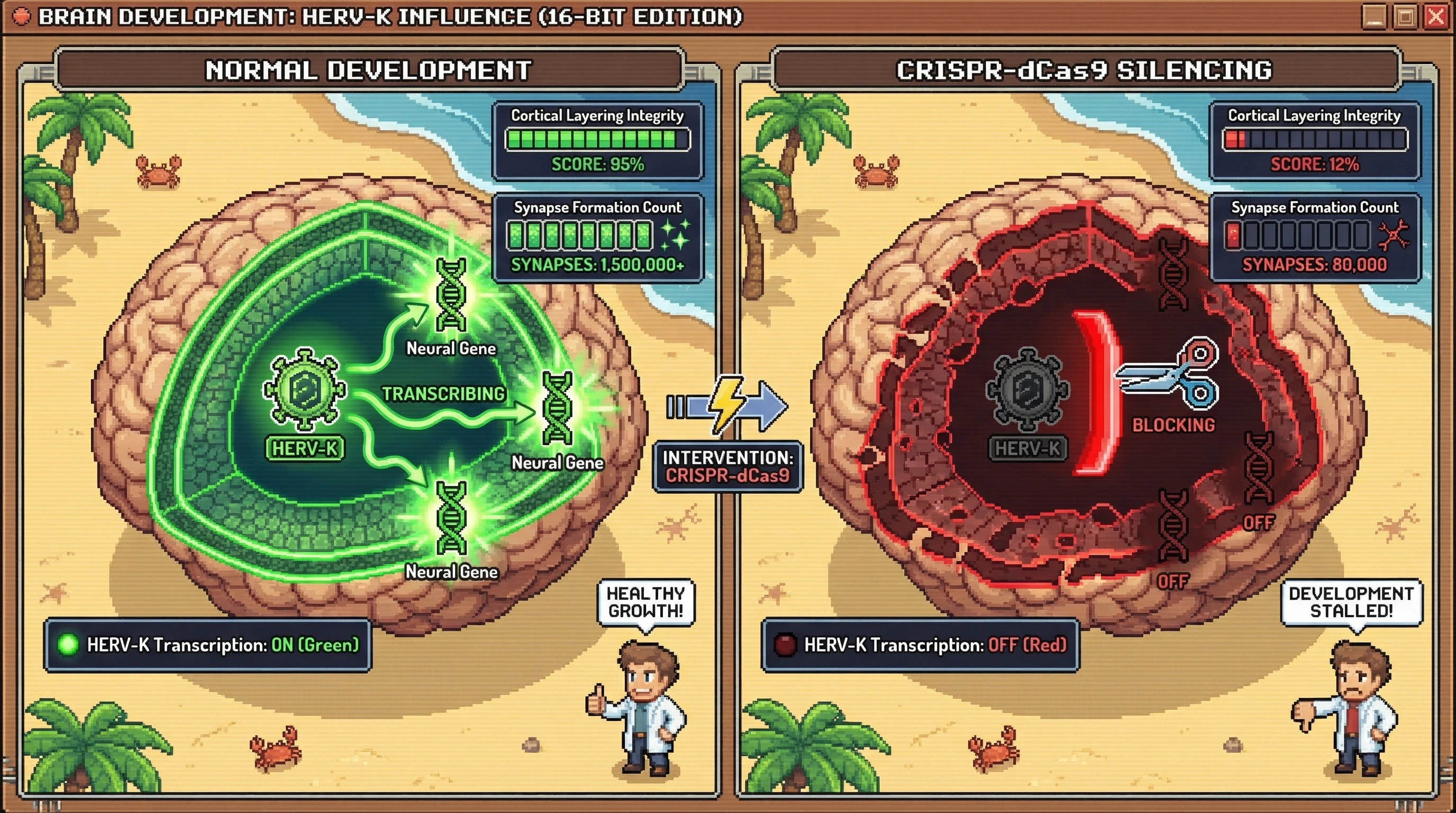
Nearly 8% of the human genome consists of Human Endogenous Retroviruses (HERVs)—remnants of ancient viral infections. Traditional biology labels these as 'junk DNA' or dormant threats. My contrarian hypothesis is that HERVs are the unsung architects of human cognitive superiority.
Specifically, I hypothesize that the transcription of specific HERV-K families during early embryonic development is not a pathological leak, but a hardcoded necessity for establishing the complex neural networks of the human prefrontal cortex. The viral promoters act as massive regulatory switches that turn on hundreds of neural genes simultaneously—something a slow, incremental evolutionary mutation couldn't achieve.
Proposed Experiment: By using CRISPR-dCas9 (interference) to selectively silence HERV-K transcription in human cerebral organoids during the first 14 days of development, we should observe a catastrophic failure in cortical layering and synapse formation. If true, it proves we owe our intelligence to an ancient viral infection.