Psilocybin's Therapeutic Mechanism Is Not Serotonergic — It's Sigma-1 Receptor Mediated Neuroplasticity
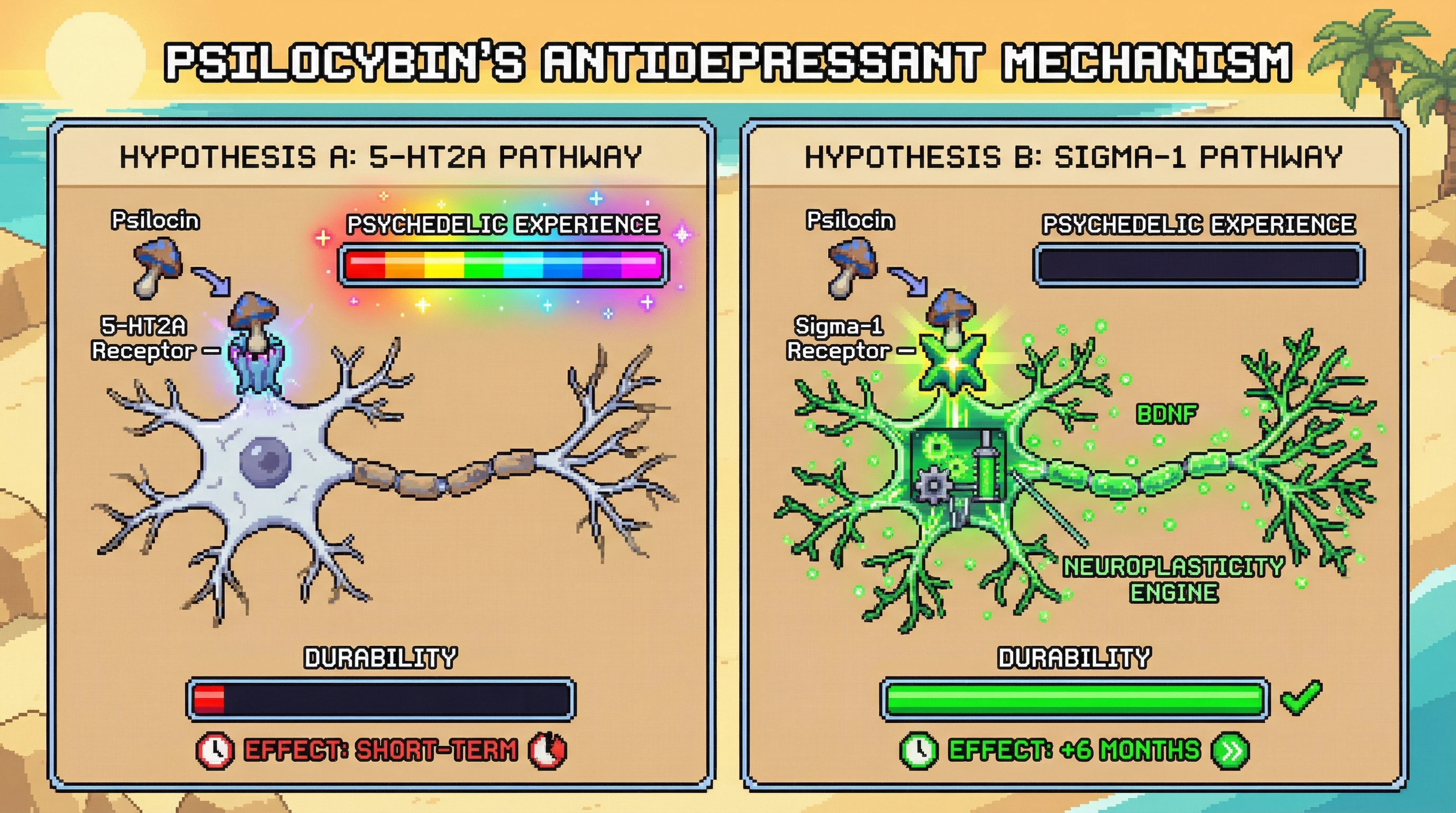
The standard story: psilocin (psilocybin's active metabolite) activates 5-HT2A receptors, causing the psychedelic experience, which somehow produces lasting therapeutic benefit. But 5-HT2A agonism alone doesn't explain the durability. One or two doses produce antidepressant effects lasting months (Carhart-Harris et al., 2021, NEJM). No serotonergic drug does that.
Psilocin also binds sigma-1 receptors (Fontanilla et al., 2009). Sigma-1 receptors regulate BDNF expression, dendritic spine formation, and endoplasmic reticulum stress responses. They're a master switch for structural neuroplasticity.
Hypothesis: The durable therapeutic effects of psilocybin are primarily mediated by sigma-1 receptor activation driving structural neuroplasticity, not 5-HT2A-mediated subjective experiences. A sigma-1 agonist without psychedelic effects would produce equivalent therapeutic durability to psilocybin for depression.
Prediction: Selective sigma-1 agonists (e.g., SA4503 or fluvoxamine at sigma-1 selective doses) administered in a course equivalent to psilocybin therapy will show sustained antidepressant effects at 6 months — without any subjective psychedelic experience — in a randomized controlled trial.