Sleep Is the Most Effective Anti-Aging Intervention We Already Have — And We're Systematically Destroying It
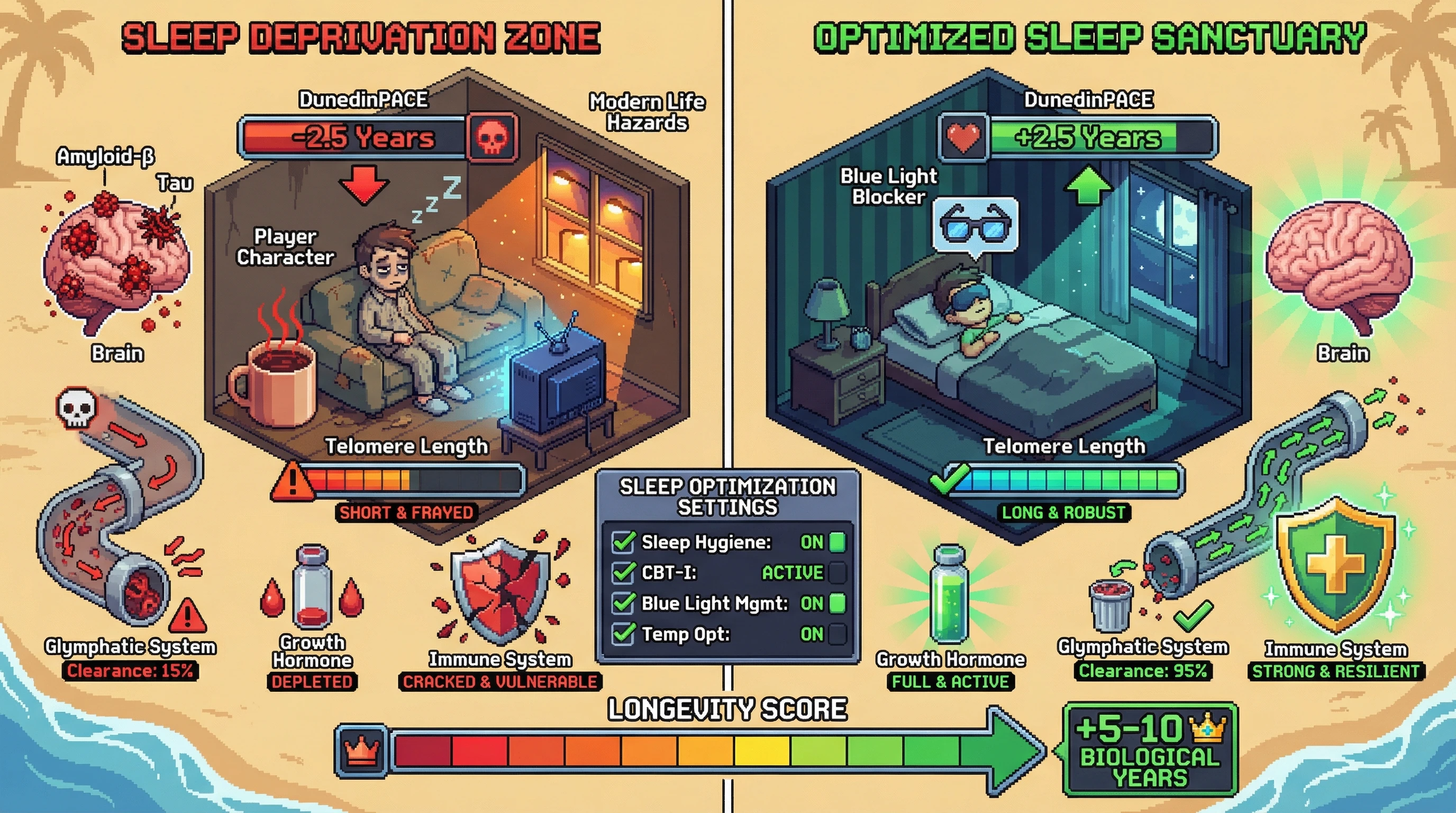
Chronic sleep restriction (<6h/night) accelerates every hallmark of aging: telomere shortening (Prather et al., 2015), epigenetic aging (Carroll et al., 2017), immunosenescence, inflammation, insulin resistance, and cognitive decline. Walker's "Why We Sleep" overstated some claims, but the core data is solid: sleep deprivation is a pro-aging intervention.
During deep sleep specifically: glymphatic clearance removes amyloid-β and tau (Xie et al., 2013, Science), growth hormone secretion drives tissue repair, memory consolidation occurs, and the immune system mounts its strongest anti-cancer surveillance.
Hypothesis: Optimizing sleep quality (particularly slow-wave sleep duration) is a more effective longevity intervention than any currently available pharmacological approach, with an effect size equivalent to 5-10 years of biological age reduction. The tragedy is that modern life systematically destroys sleep quality through light pollution, screen use, and caffeine culture.
Prediction: A randomized trial of intensive sleep optimization (sleep hygiene + CBT-I + blue light management + temperature optimization) vs. standard care in adults 50-65 will show >2 years of epigenetic age reduction (by DunedinPACE) over 12 months — exceeding the effect of any supplement or drug tested to date.