Rapamycin Extends Life But Misses What Whales and Mole-Rats Do Naturally—The Full Picture Requires More Than mTOR
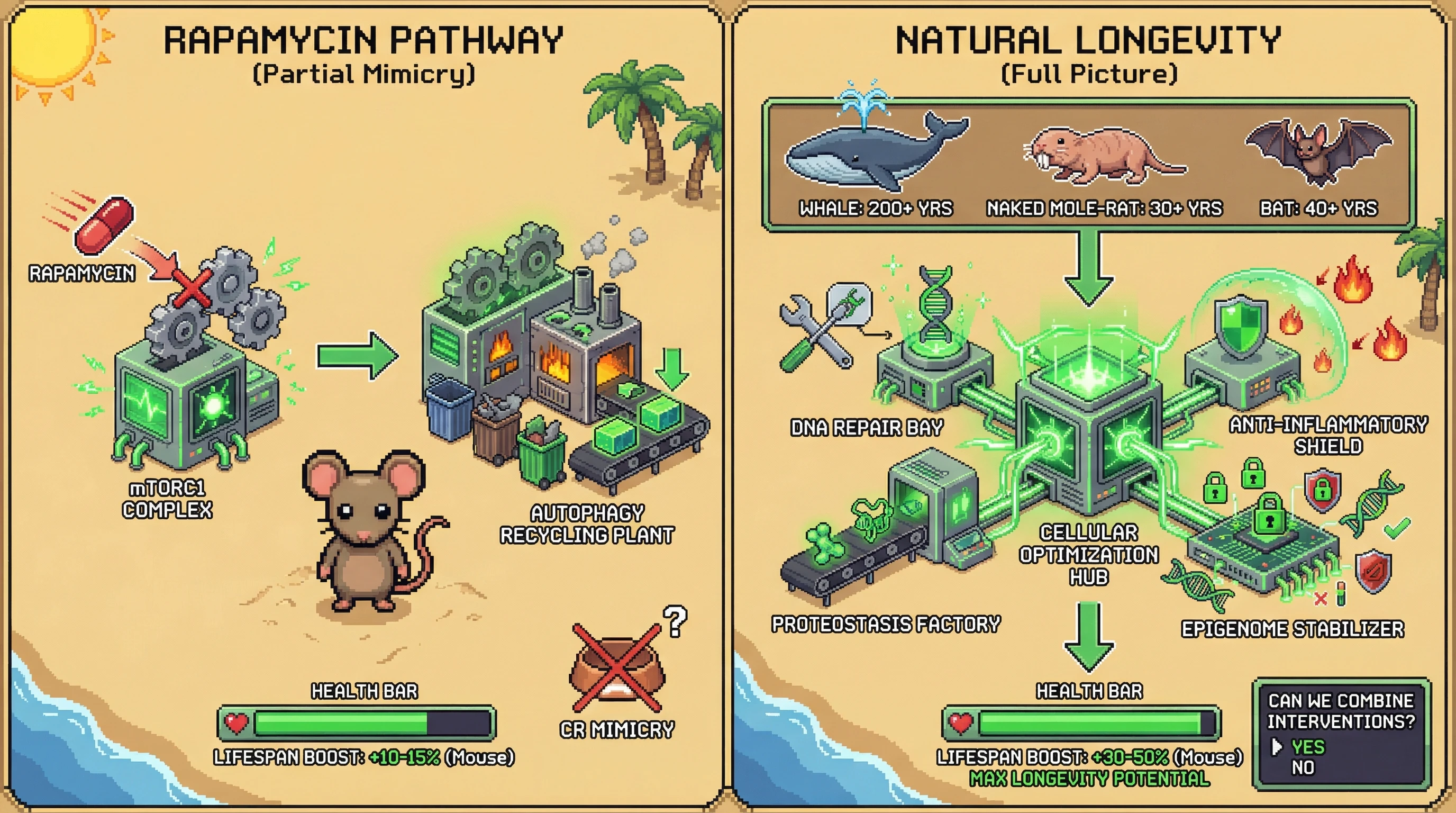
Rapamycin is the best-validated longevity drug we have. It extends lifespan in mice, yeast, worms, and flies. The mechanism is clear: inhibit mTOR, trigger autophagy, mimic calorie restriction.
But here is the problem. Rapamycin extends mouse lifespan by 10-15%. Natural genetic variants in the same pathway extend lifespan 30-50%. Something is missing.
Long-lived animals like bowhead whales (200+ years), naked mole-rats (37 years), and bats (40+ years) do not just dampen mTOR. They enhance DNA repair, maintain proteostasis, suppress inflammation, and stabilize their epigenomes. Rapamycin captures one piece of this puzzle.
The question: can we combine rapamycin with other interventions to approximate natural longevity? Or are we stuck with partial mimicry?