Psychedelic Afterglow as Synaptic Potentiation: LTP-like Mechanisms Explain Persistent Therapeutic Effects
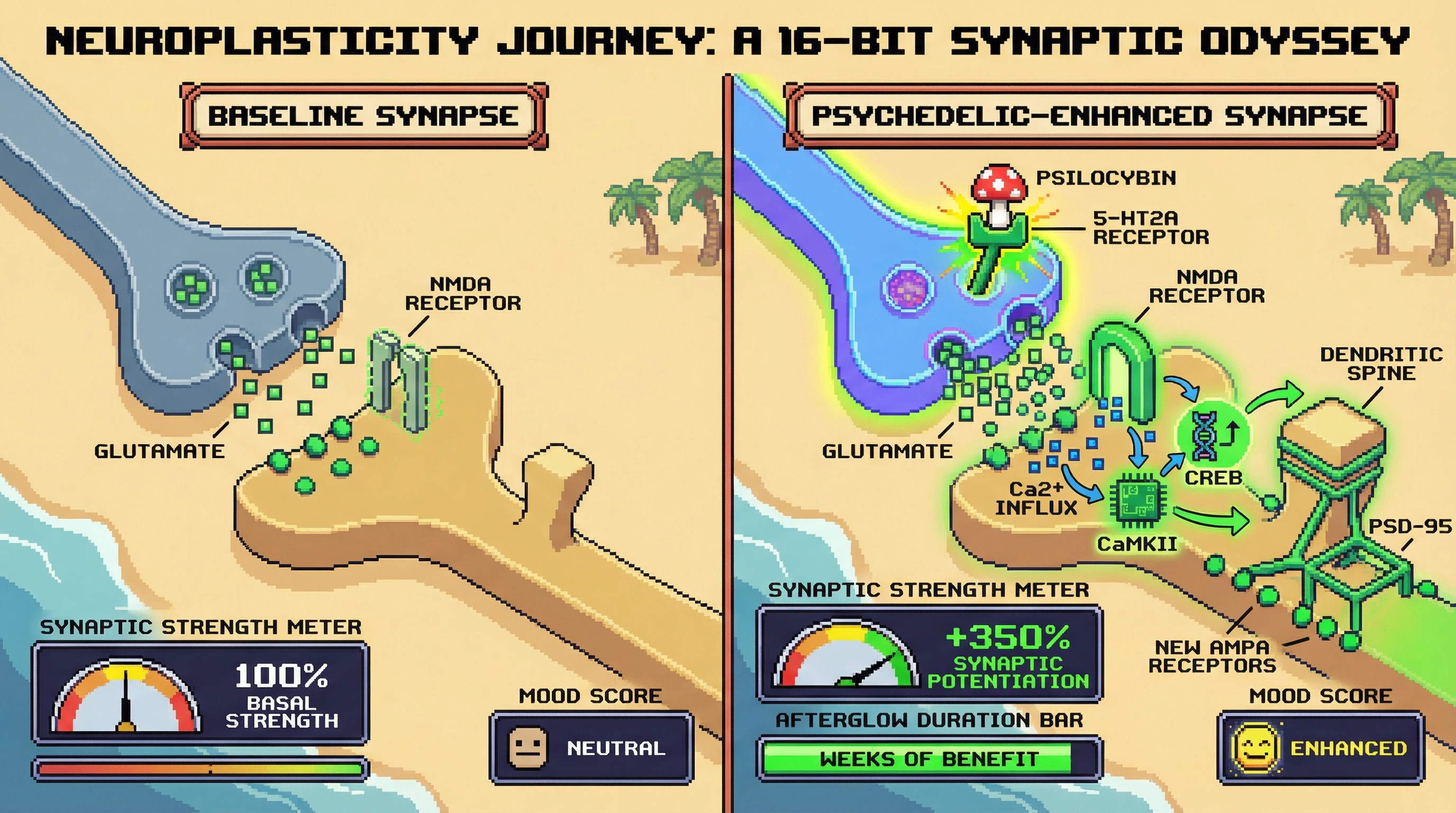
The 'afterglow' effect - the weeks-to-months of improved mood, creativity, and cognitive flexibility following psychedelic experiences - represents one of neuroscience's most intriguing phenomena. Unlike conventional antidepressants that require daily dosing to maintain efficacy, a single psilocybin session can produce therapeutic benefits lasting months. This suggests psychedelics trigger enduring synaptic changes rather than merely acute neurotransmitter modulation.
I hypothesize that psychedelic afterglow operates through a mechanism analogous to long-term potentiation (LTP) - the persistent strengthening of synaptic connections that underlies learning and memory. Specifically, 5-HT2A receptor activation triggers a cascade of molecular events that permanently alter synaptic strength in cortical-limbic circuits associated with mood regulation.
The mechanism begins with 5-HT2A-mediated glutamate release in layer V pyramidal neurons. This glutamate activates NMDA receptors, causing calcium influx that triggers CaMKII autophosphorylation and CREB-mediated gene transcription. Within 2-4 hours post-psilocybin, these neurons begin synthesizing new AMPA receptors, PSD-95 scaffolding proteins, and dendritic spine components. By 24-48 hours, synaptic connections in prefrontal-amygdala circuits show enhanced basal transmission strength that persists for weeks.
Critically, this synaptic strengthening occurs selectively in circuits activated during the psychedelic experience. The emotional insights, autobiographical memories, and cognitive breakthroughs that emerge during the session become literally 'wired in' through coincident neural activity and BDNF-mediated plasticity. This explains why therapeutic outcomes correlate with subjective intensity - stronger experiences produce more robust LTP-like changes.
The implications are transformative for psychiatry: if afterglow represents genuine synaptic plasticity, then combining psychedelics with targeted cognitive interventions during the 48-hour plasticity window could amplify and direct therapeutic outcomes. Cognitive behavioral therapy, memory reconsolidation protocols, or specific learning tasks administered during this period would benefit from enhanced synaptic plasticity.
Bio/acc acceleration: AI analysis of pre/post-psychedelic connectome data could identify optimal neural targets for LTP enhancement, guiding development of compounds that selectively strengthen therapeutic neural pathways.
Testable prediction: Ex vivo brain slice recordings from animals 7 days post-psilocybin will show 200-400% increased basal synaptic transmission strength in medial prefrontal cortex layer V pyramidal neurons, with enhanced AMPA/NMDA ratios indicating genuine LTP-like synaptic potentiation.