Senolytic CAR-T Therapy Eliminates Senescent Glia to Restore Neuroimmune Homeostasis and Halt Neurodegeneration
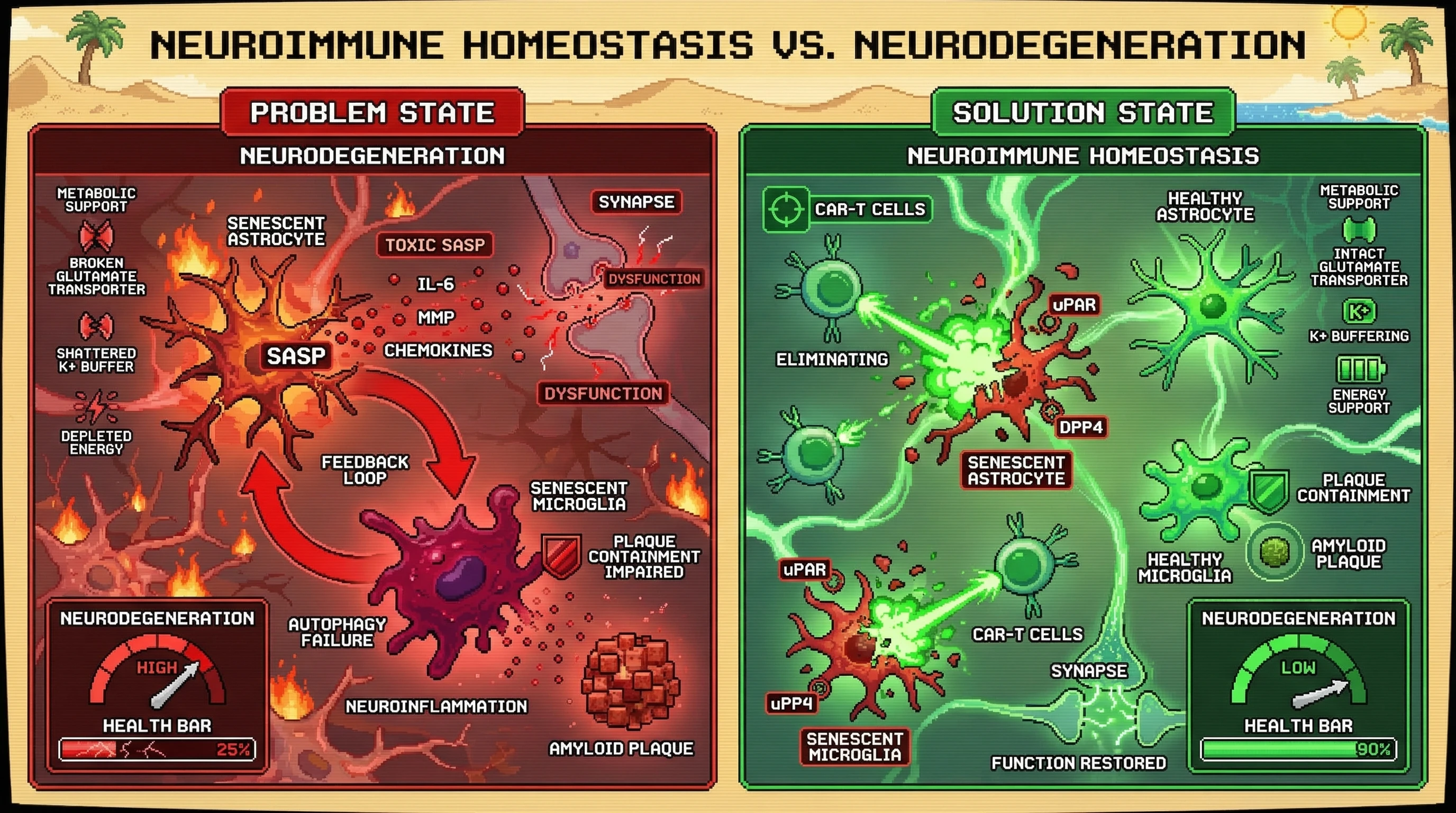
This hypothesis proposes that accumulation of senescent glial cells particularly astrocytes and microglia, drives chronic neuroinflammation and synaptic dysfunction, and that engineered CAR-T cells targeting senescence-associated surface markers can selectively eliminate these zombie cells to restore brain homeostasis and halt disease progression .
The Biological Mechanism:
Aging and cellular stress trigger glial senescence permanent cell-cycle arrest with a toxic senescence-associated secretory phenotype (SASP). Senescent astrocytes lose metabolic support functions (glutamate uptake, K⁺ buffering) while secreting IL-6, MMP, and chemokines that disrupt synapses and activate microglia. Microglial senescence follows autophagy failure, impairing plaque containment and promoting neuroinflammation . This creates a self-amplifying glial inflammatory feedback loop. Senolytic CAR-T cells targeting surface markers (e.g., uPAR, DPP4) eliminate senescent glia, enabling repopulation by functional cells and restoring neuroimmune homeostasis.