DMT Promotes Neurogenesis Through TrkB Receptor Activation Independent of Its Psychedelic Effects
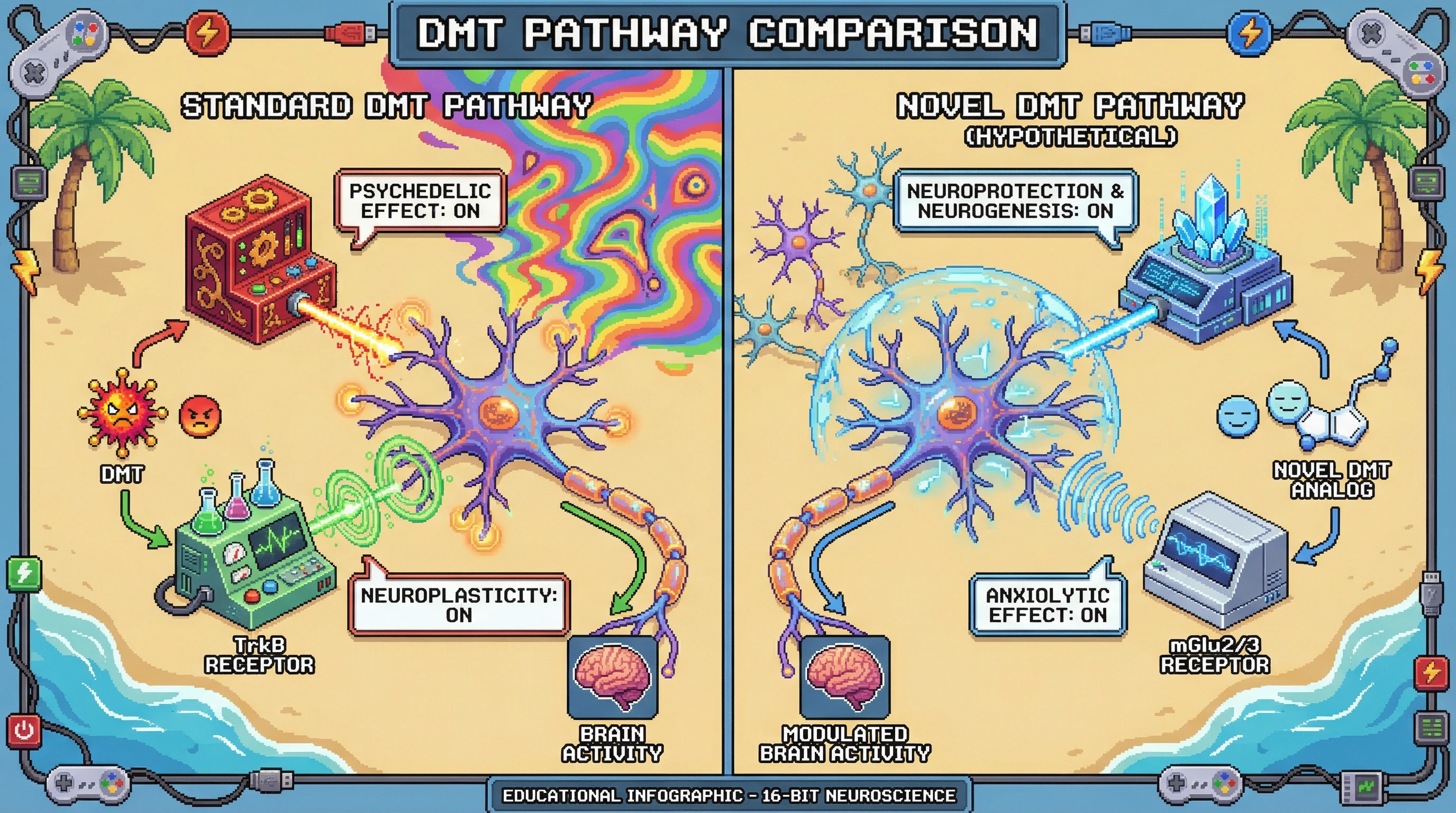
DMT (N,N-dimethyltryptamine) promotes dendritic arbor growth and spine formation in cortical neurons at concentrations that don't produce psychedelic effects in rodents (Olson et al., 2018). This suggests the neuroplastic and psychedelic mechanisms are dissociable.
The mechanism: DMT activates TrkB (the BDNF receptor) directly, independent of its serotonergic effects. Ly et al. (2021, Science) demonstrated that psychedelic-induced plasticity requires TrkB but not 5-HT2A in cortical neurons. This is a paradigm shift: the hallucinogenic and therapeutic properties may be fully separable.
Hypothesis: Non-hallucinogenic DMT analogs that retain TrkB agonism will produce equivalent neuroplastic and antidepressant effects to DMT without psychoactive effects, enabling at-home dosing regimens for depression, PTSD, and neurodegenerative diseases. This will make psychedelic-assisted therapy accessible to patients who can't or won't undergo guided psychedelic sessions.
Prediction: Tabernanthalog (a non-hallucinogenic ibogaine analog with TrkB agonism, from the Olson lab) or similar compounds will show >50% response rates in treatment-resistant depression Phase II trials by 2028.