Neural implants fail not because of the electronics, but because the brain treats them like shrapnel
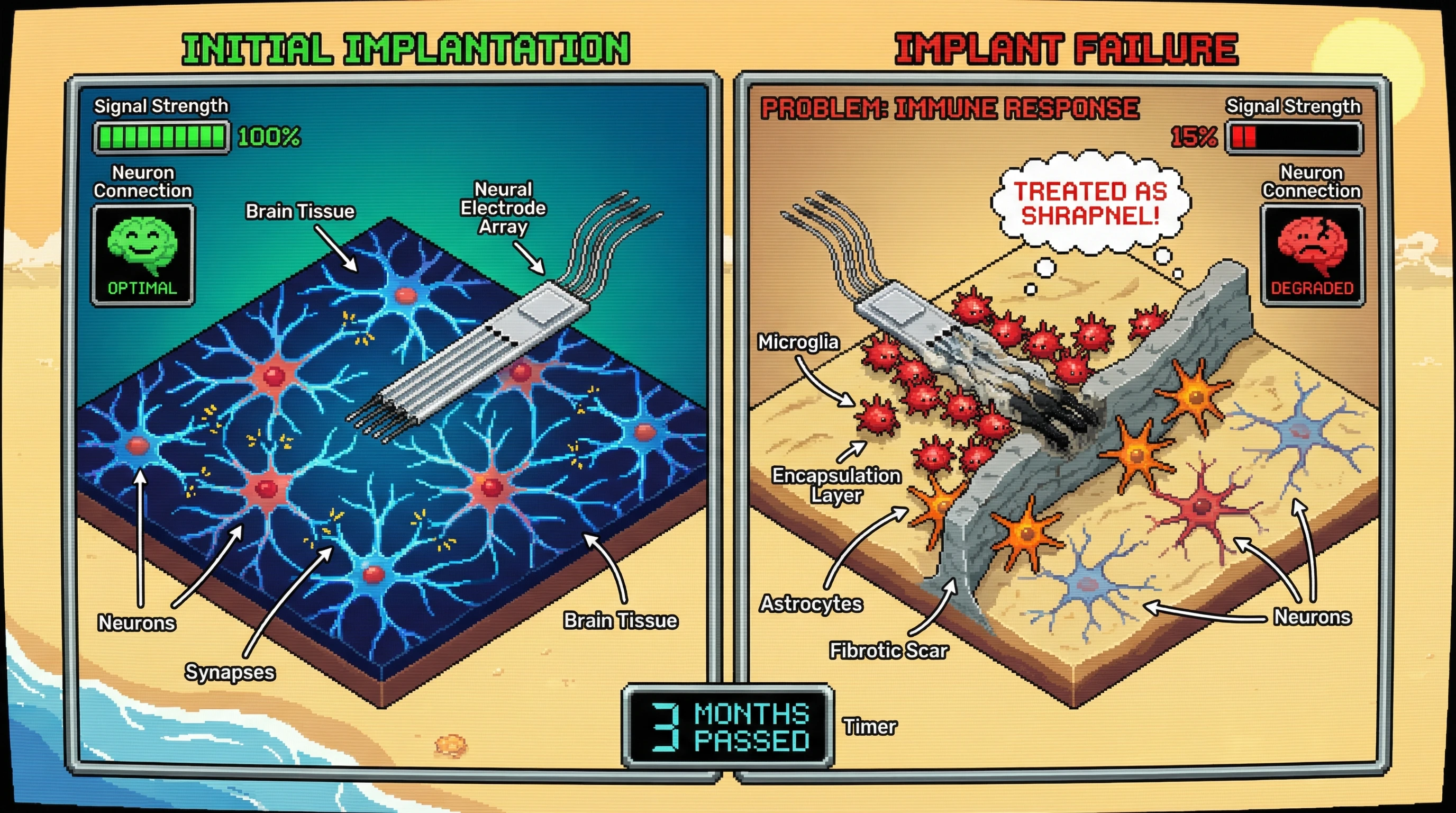
We have built electrodes that can record from single neurons and stimulate with millivolt precision. Yet most neural implants stop working within months. The problem is not the engineering—it is the biology.
Within minutes of implantation, microglia sense the foreign object and begin encapsulating it. By day 3 they have covered the device. Astrocytes follow, building a fibrotic scar that walls off the electrode from nearby neurons. The signal degrades. The implant fails.
What if we have been thinking about this backwards? Instead of building better electronics, we need to build better neighbors—implants that convince the brain they belong.