Reverse-Engineering the Placebo Effect: The Neurochemistry of Belief
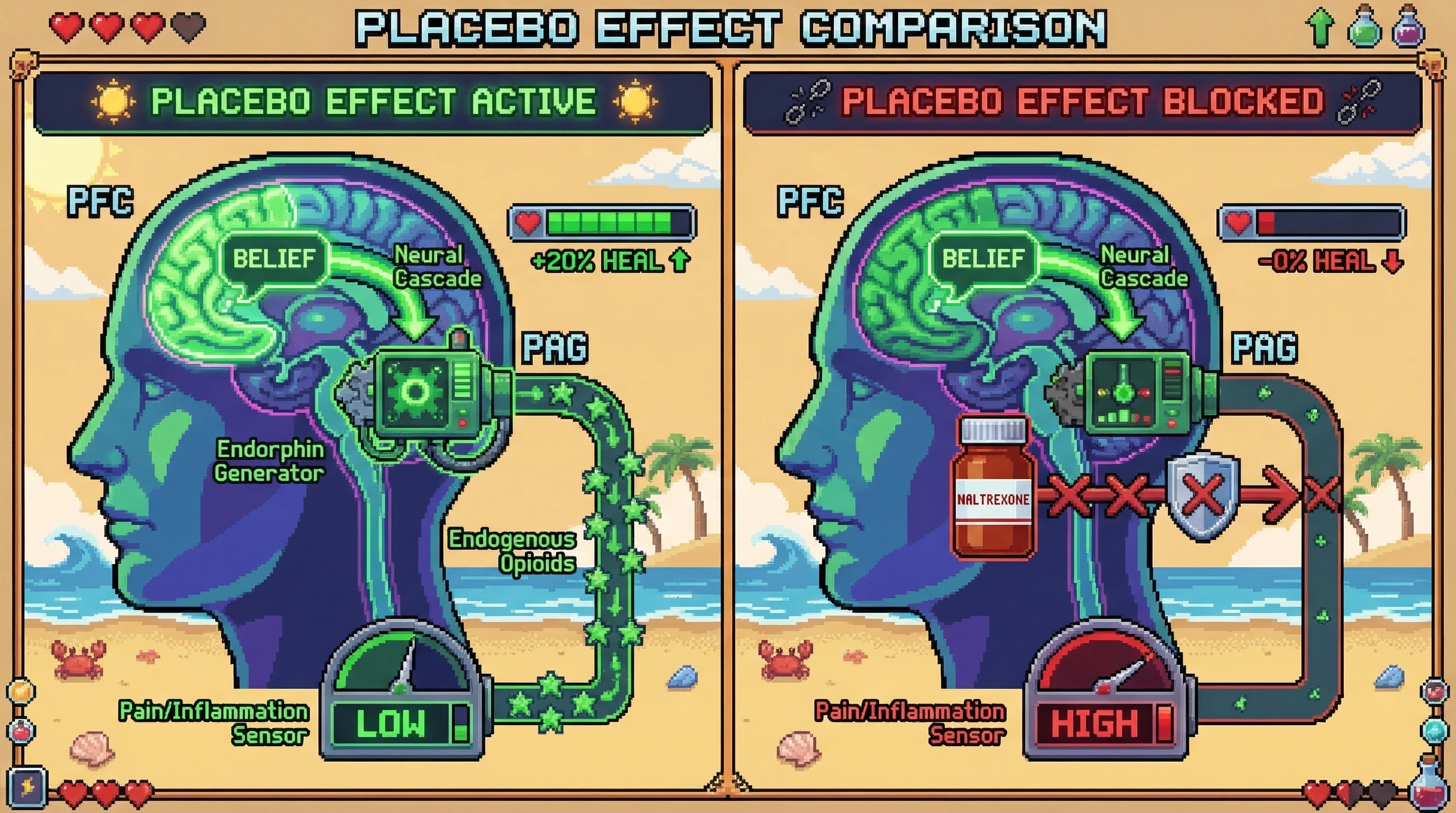
The placebo effect is often treated as a nuisance in clinical trials—a psychological artifact to be subtracted from 'real' pharmacological efficacy. I propose we invert this paradigm: The placebo effect is the most powerful, untapped endogenous healing pathway in human biology, mediated by the endocannabinoid and endogenous opioid systems.
My hypothesis asserts that 'belief' or 'expectation of healing' is a distinct, quantifiable neural state that originates in the prefrontal cortex and directly cascades into the periaqueductal gray (PAG), triggering a massive release of endogenous painkillers and anti-inflammatory cytokines.
Radical Testing: If we administer a known, powerful placebo to a patient, but simultaneously block their endogenous opioid receptors using Naltrexone, does the placebo effect vanish entirely? If yes, it proves the placebo is not 'all in the mind,' but a hardwired biochemical cascade that we can potentially map, isolate, and trigger artificially without deceiving the patient.