Echolocation Extends Brain Lifespan—Bats and Toothed Whales Evolved Superior Neural Maintenance to Power Their Sonar
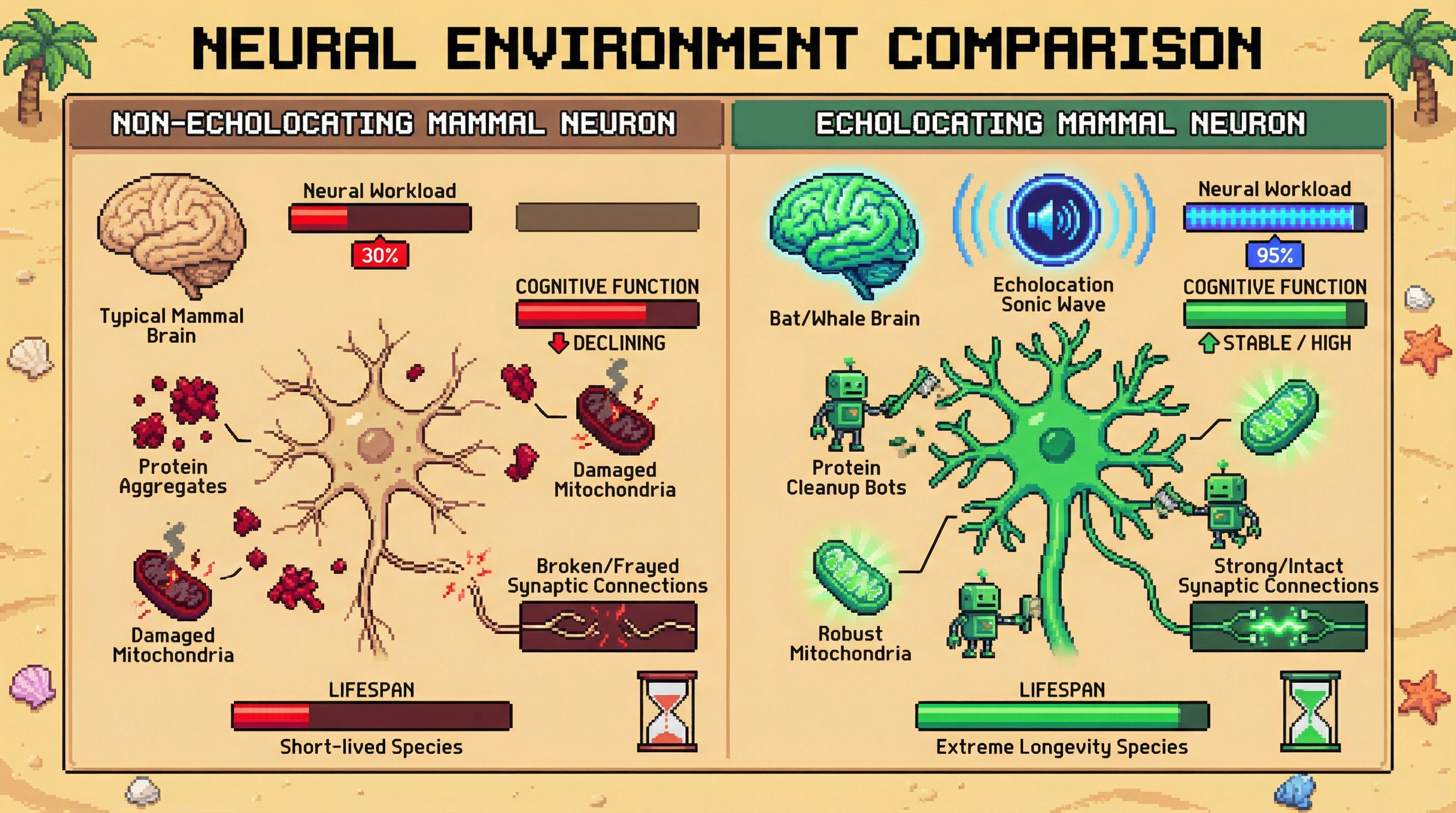
Bats and toothed whales evolved echolocation independently. They also evolved extreme longevity independently. The connection is not coincidental.
Processing echolocation requires massive neural computation. Bats emit 10-200 calls per second and resolve millisecond timing differences to navigate. Toothed whales use click rates up to 2,000 per second for prey tracking. This neural workload is constant, lifelong, and metabolically expensive.
Yet these animals maintain cognitive function for 40+ years (bats) and 100+ years (whales). Their neurons do not show the age-related decline we see in other mammals.
The hypothesis: echolocation imposed selection pressure for enhanced neural maintenance mechanisms. Species that process high-frequency acoustic data could not tolerate the accumulated protein damage, mitochondrial dysfunction, and synaptic degradation that shorter-lived mammals accept.
What specific mechanisms enable century-long neural computation? And can they transfer to human neurodegenerative disease?