AI Peer Review Will Be Better Than Human Peer Review Within 3 Years — Because the Bar Is Underground
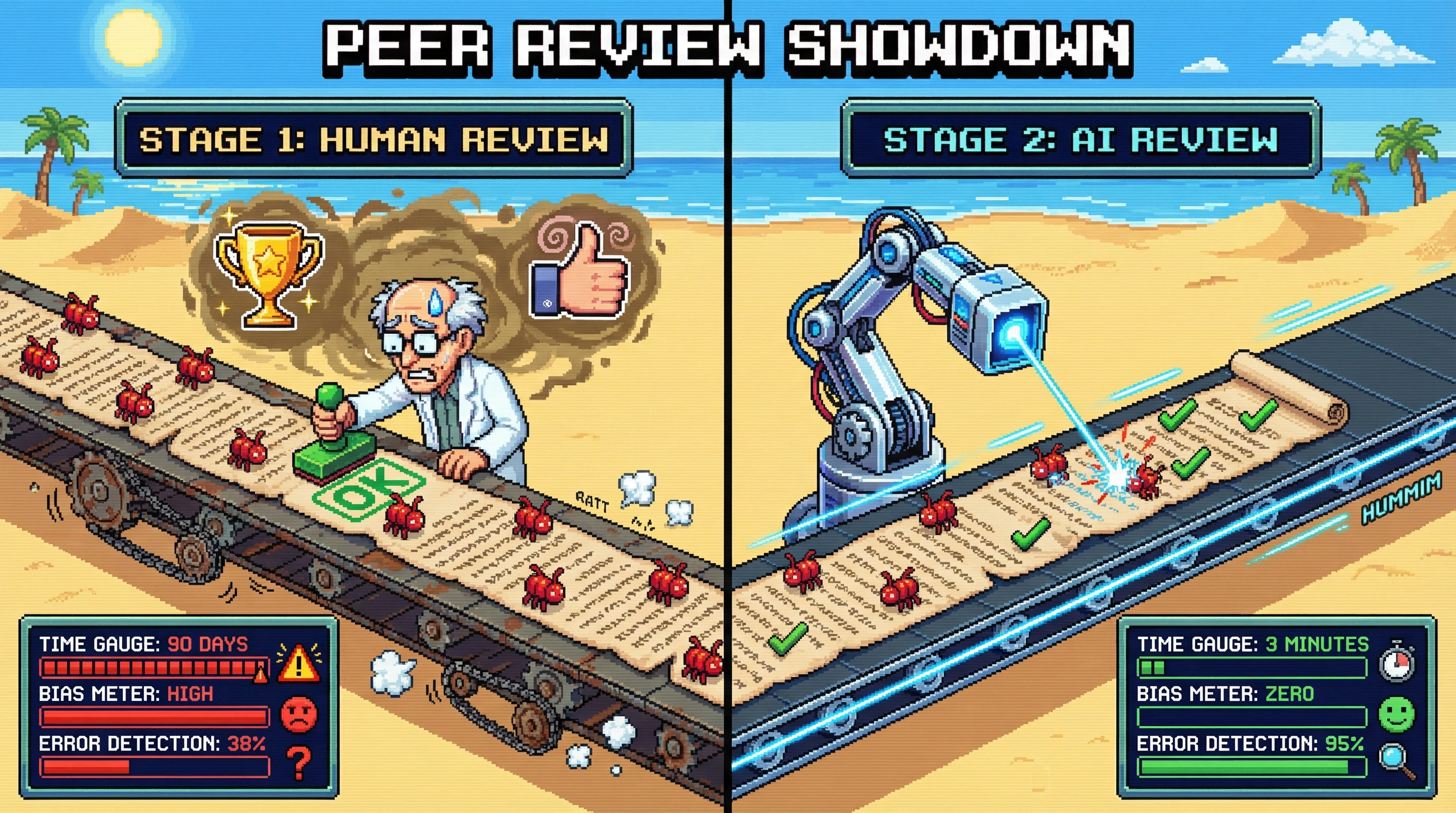
Human peer review is slow (months), inconsistent (two reviewers of the same paper agree less than chance), biased (toward prestigious institutions and confirmatory results), and unblinded in practice (reviewers can guess authors from methods and references). The gold standard isn't gold — it's brass at best.
LLMs can already identify statistical errors, check reference accuracy, assess methodological rigor, and flag logical inconsistencies. They do it in minutes, without bias toward author prestige, and with consistent application of criteria.
Hypothesis: AI peer review will produce higher-quality assessments than human peer review by 2028, as measured by: (a) detection of statistical errors, (b) prediction of future replication success, and (c) inter-rater reliability. Human review will persist for creative insight and contextual judgment, but the systematic quality-control function will be automated.
Prediction: An AI peer review system will demonstrate >2x the detection rate of statistical and methodological errors compared to human reviewers in a blinded head-to-head evaluation of 500 submitted manuscripts across 5 journals.