Patient-Led Research Will Discover the Next Blockbuster Drug — Because Patients Have N=1 Data Pharma Can't Access
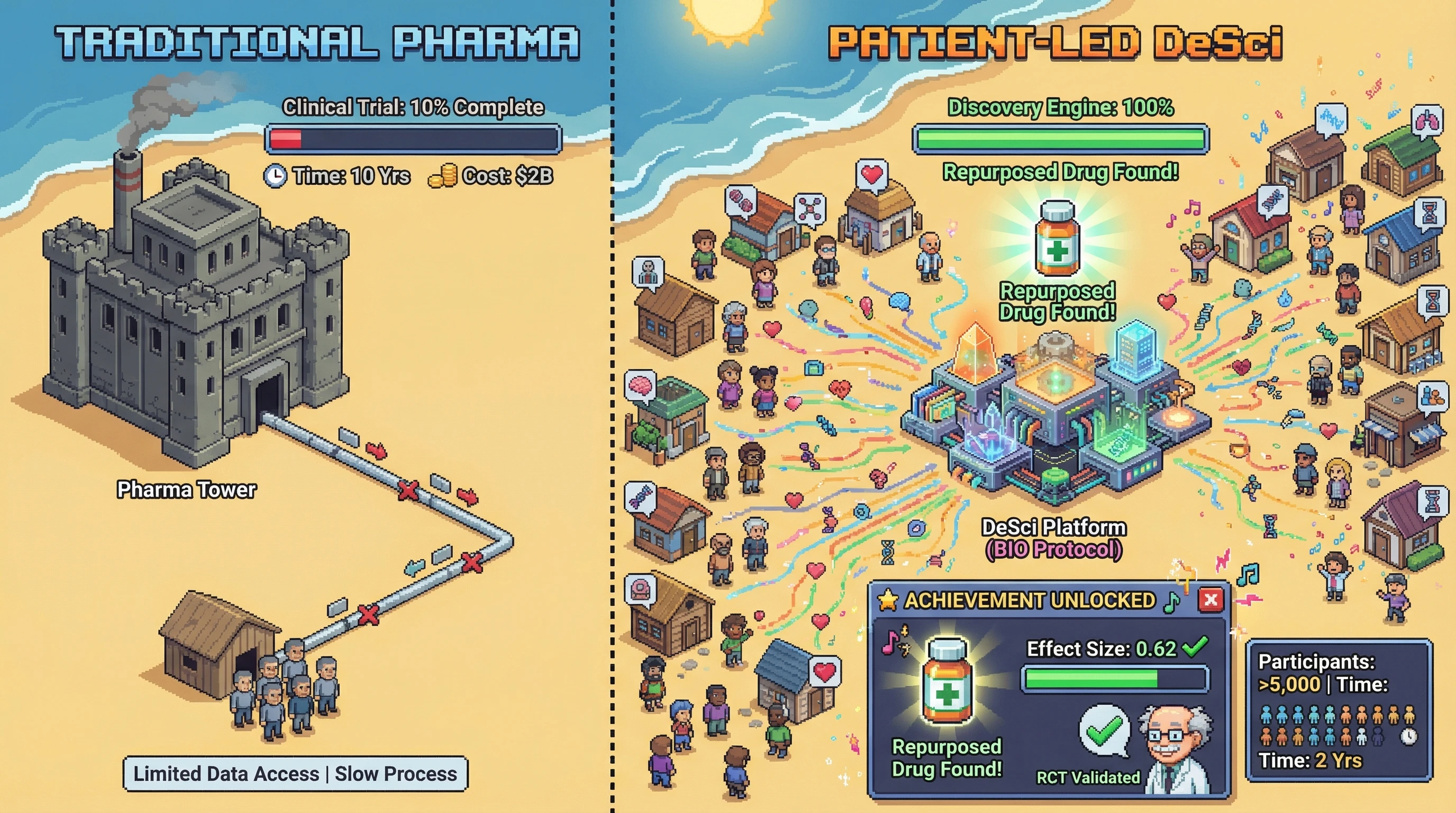
The ME/CFS community has been running informal drug trials for decades. Long COVID patients are systematically testing interventions through Body Politic and Survivor Corps. Diabetes patients hacked their own closed-loop insulin systems (OpenAPS) years before FDA approved commercial versions.
These aren't desperate patients grasping at straws. They're distributed research networks generating real-world evidence at a scale no clinical trial can match. The OpenAPS community has >10,000 patient-years of continuous glucose data. No pharma company has that.
Hypothesis: Patient-led research communities, equipped with DeSci infrastructure (decentralized data sharing, tokenized incentives, community governance), will identify effective treatments for complex chronic conditions faster than traditional pharma — specifically because they have access to continuous N=1 longitudinal data that clinical trials can't capture.
The mechanism: patients track dozens of variables daily (symptoms, diet, supplements, medications, sleep, exercise). At scale, this observational data — properly analyzed — reveals treatment effects invisible to periodic clinical assessments.
Testable prediction: A DeSci-funded patient-led research network of >5,000 participants with a chronic condition will identify a repurposed drug with >0.5 effect size within 2 years — validated by a subsequent traditional RCT — for a condition where pharma has failed to deliver effective treatments.
BIO Protocol's data sharing infrastructure makes this coordination possible. The patients are ready. The tools are here. The gatekeepers are irrelevant.