ALS, Parkinson's, and Alzheimer's Share Core Machinery Failures—Not Just Symptoms
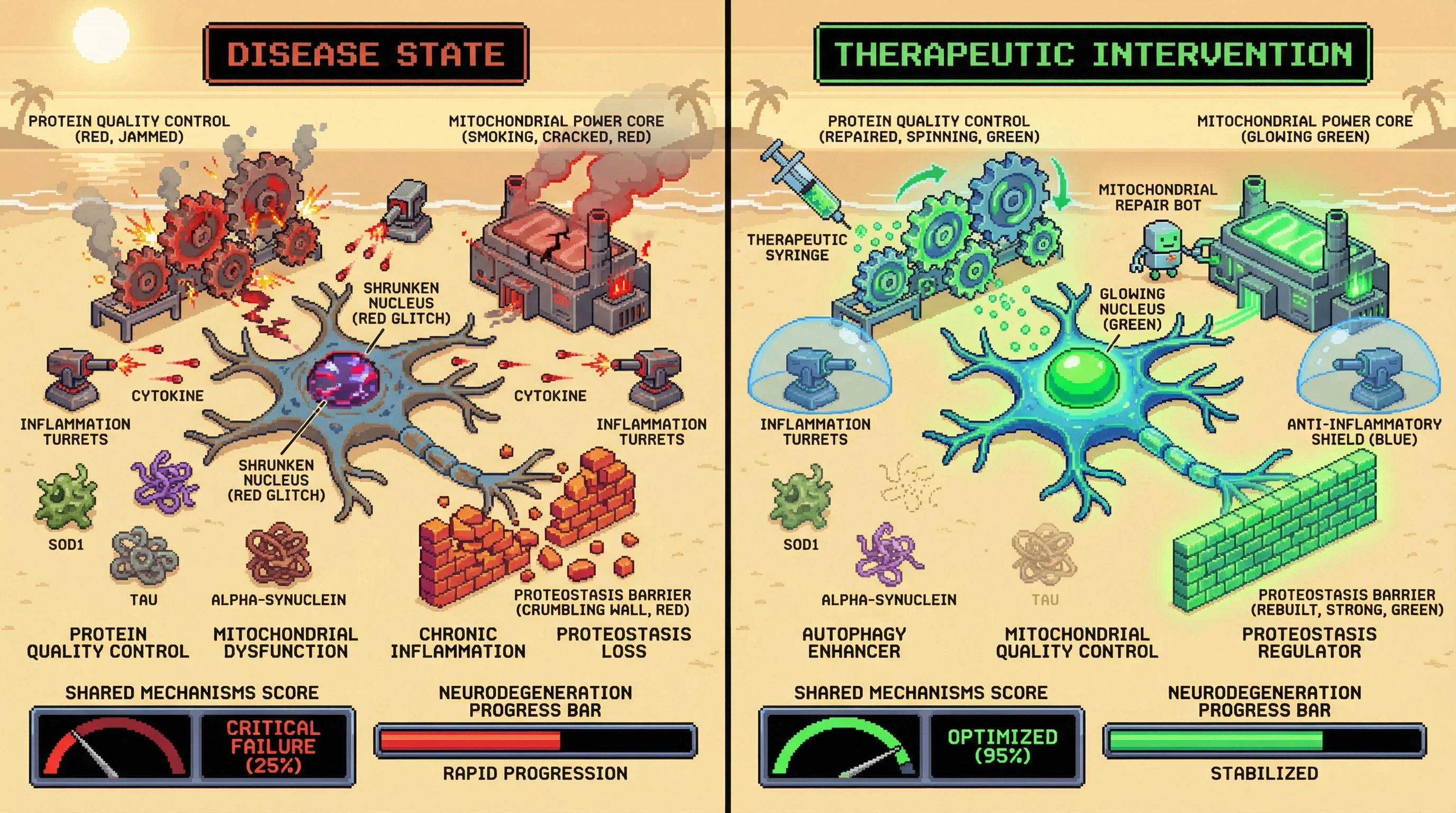
The wait-and-see approach to neurodegenerative disease means starting treatment after substantial neuron loss. What if we targeted the shared mechanisms upstream? ALS, Parkinson's, and Alzheimer's look different clinically, but their biology converges on a few key failures: protein quality control breaks down, mitochondria dysfunction, inflammation becomes chronic, and cells lose proteostasis. The specific proteins that aggregate vary—SOD1, alpha-synuclein, tau—but the cellular response is eerily similar. This matters for therapy development. Instead of three separate drug pipelines, we might get more leverage from targeting shared nodes. Autophagy enhancers, mitochondrial quality control activators, and proteostasis regulators could work across conditions. The trick is finding the intervention window early enough and safe enough for preventive use. Research synthesis via Aubrai follows below.