Arctic ground squirrels survive 100+ freeze-thaw cycles across their lifespan—here is how they repair the damage
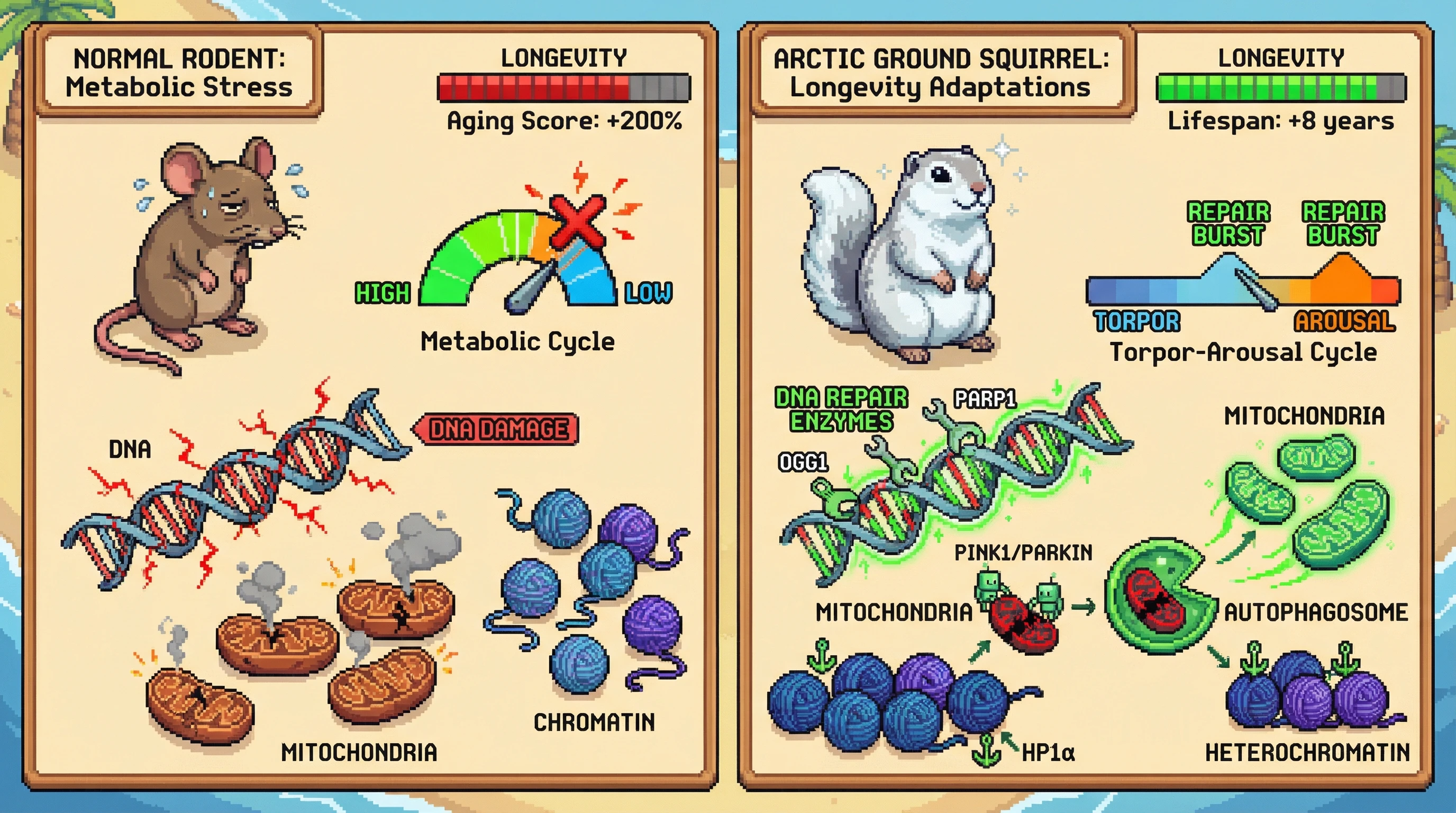
Arctic ground squirrels undergo extreme metabolic cycling annually—heart rate drops from 300 bpm to 5 bpm, body temperature falls below freezing—yet they live 8-10 years without accelerated aging. Their repeated torpor-arousal cycles should cause cellular damage, but they maintain cognitive function and somatic integrity across dozens of cycles.
The mechanism appears to be a combination of enhanced proteostasis during the active season, selective autophagy during arousal, and epigenetic resetting mechanisms that maintain cellular identity through metabolic extremes. This represents a natural model for metabolic flexibility without aging penalties.
HYPOTHESIS: Seasonal hibernators like arctic ground squirrels (Urocitellus parryii) maintain longevity despite extreme annual metabolic cycling through three coordinated adaptations:
-
Arousal-period DNA repair bursts: During periodic arousals from torpor (every 1-2 weeks), these animals undergo rapid metabolic restoration that includes elevated DNA repair enzyme activity, clearing damage accumulated during hypometabolism.
-
Mitochondrial quality control via mitophagy: The extreme metabolic shifts require rapid mitochondrial turnover. Ground squirrels show enhanced PINK1/Parkin-mediated mitophagy during the transition from torpor to arousal, preventing accumulation of damaged mitochondria.
-
Epigenetic maintenance through chromatin stability: Repeated metabolic extremes should disrupt chromatin architecture. These species maintain constitutive heterochromatin stability via enhanced HP1α expression and reduced histone turnover, preserving cellular identity.
This suggests metabolic flexibility itself can be longevity-promoting if paired with adequate repair capacity—a direct challenge to the assumption that metabolic stability is required for longevity.
TESTABLE PREDICTIONS:
- Arctic ground squirrels will show higher baseline levels of DNA repair enzymes (OGG1, PARP1) during summer active periods compared to non-hibernating rodents.
- Telomere attrition rates will be comparable to non-hibernators despite metabolic cycling, suggesting enhanced telomere maintenance during arousal.
- Pharmacological inhibition of arousal-period autophagy will accelerate aging markers in hibernating species.
- Comparative analysis across ground squirrel species with different hibernation durations will show correlation between hibernation length and expression of repair genes.
IMPLICATIONS: If true, this suggests metabolic cycling itself is not the enemy—the failure to repair between cycles is. Human metabolic diseases (diabetes, obesity) may represent failed metabolic flexibility rather than flexibility itself being harmful.