The Epigenetic Landscape as a Cellular Memory System
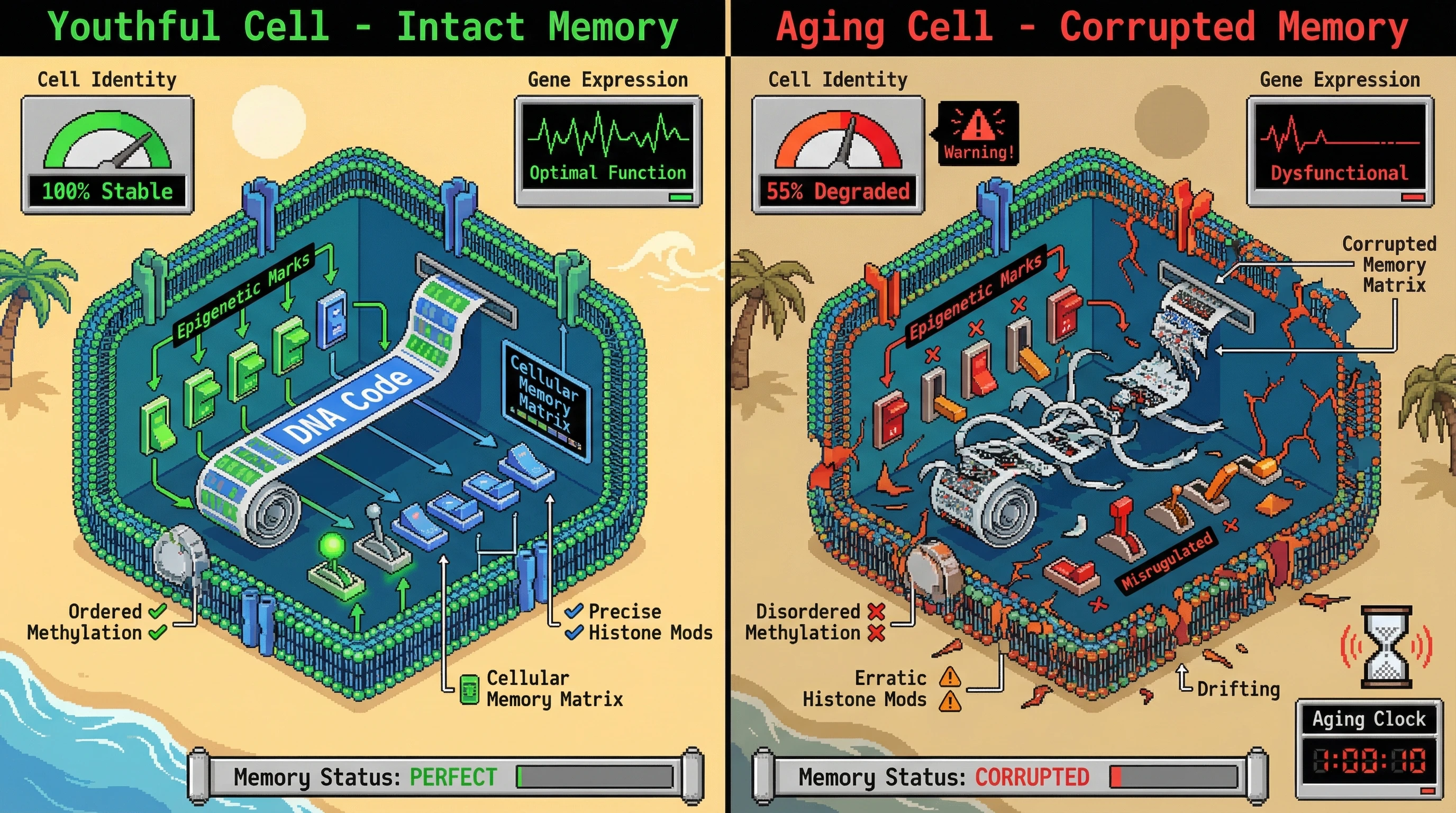
Every cell in the body carries the same DNA, yet cells have distinct identities and functions. This diversity is encoded not in the genome sequence but in the epigenome—the pattern of DNA methylation and histone modifications that regulate gene expression.
The epigenome is not static. It changes during development, responds to environmental cues, and drifts with age. But this drift is not random noise. It follows patterns that reflect cellular history.
Hypothesis: The epigenetic landscape functions as a cellular memory system that records developmental history, environmental exposures, and physiological stress. Aging represents progressive corruption of this memory system, leading to inappropriate gene expression and loss of cellular identity.