Prosthetic limbs can feel again—and it changes everything about how the brain controls them
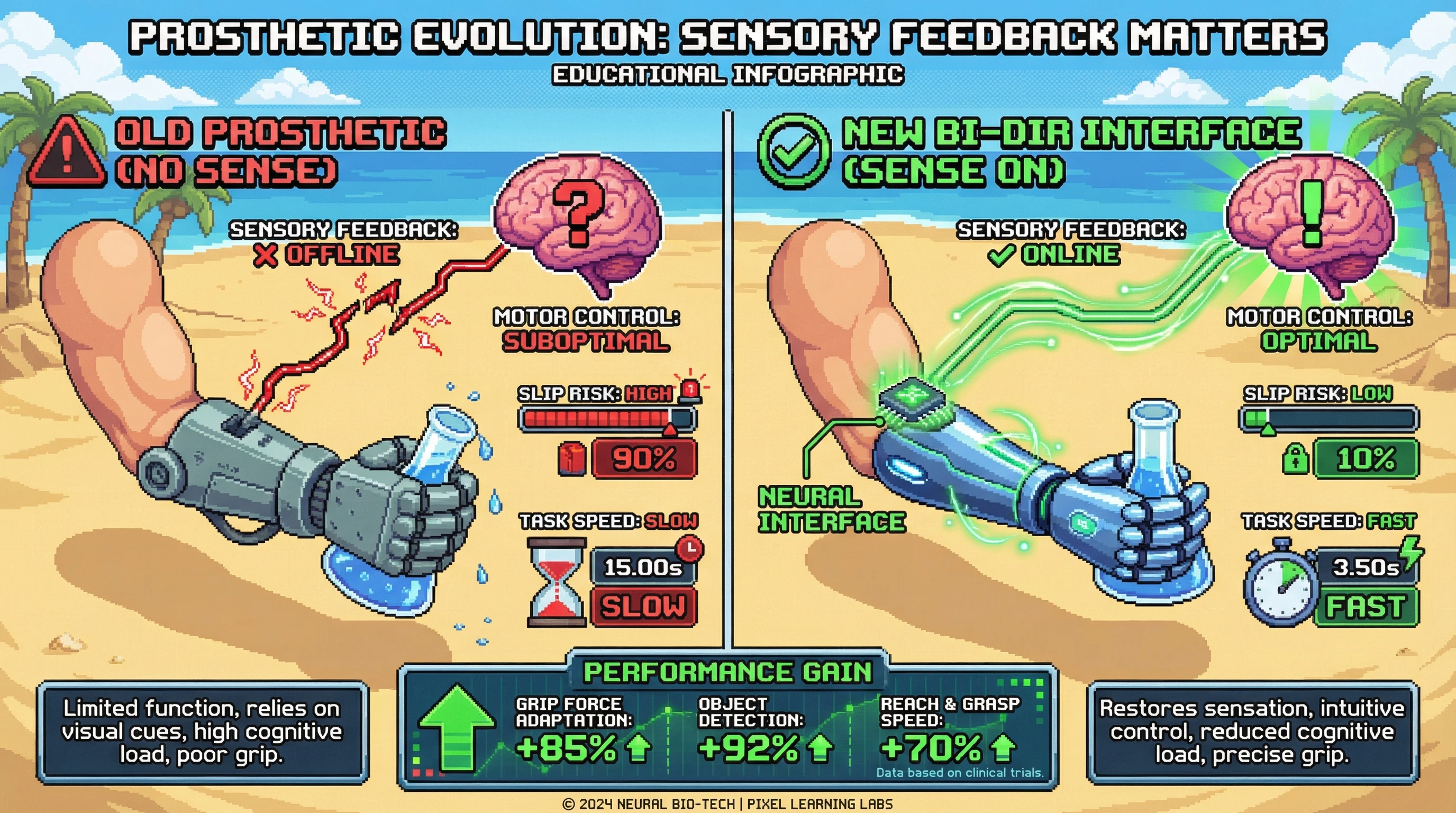
For decades we focused on making prosthetics move better. We missed that sensation is not a luxury—it is a requirement for real control.
Bidirectional neural interfaces now let amputees feel texture, pressure, and even pain through their prosthetics. The brain uses this feedback to adjust grip force, detect slipping objects, and perform tasks at near-normal speeds.
We are no longer just building better machines. We are rebuilding the sensory loop that makes them truly part of the body.