The Gut Microbiome as a Metabolic Extension of the Host Genome
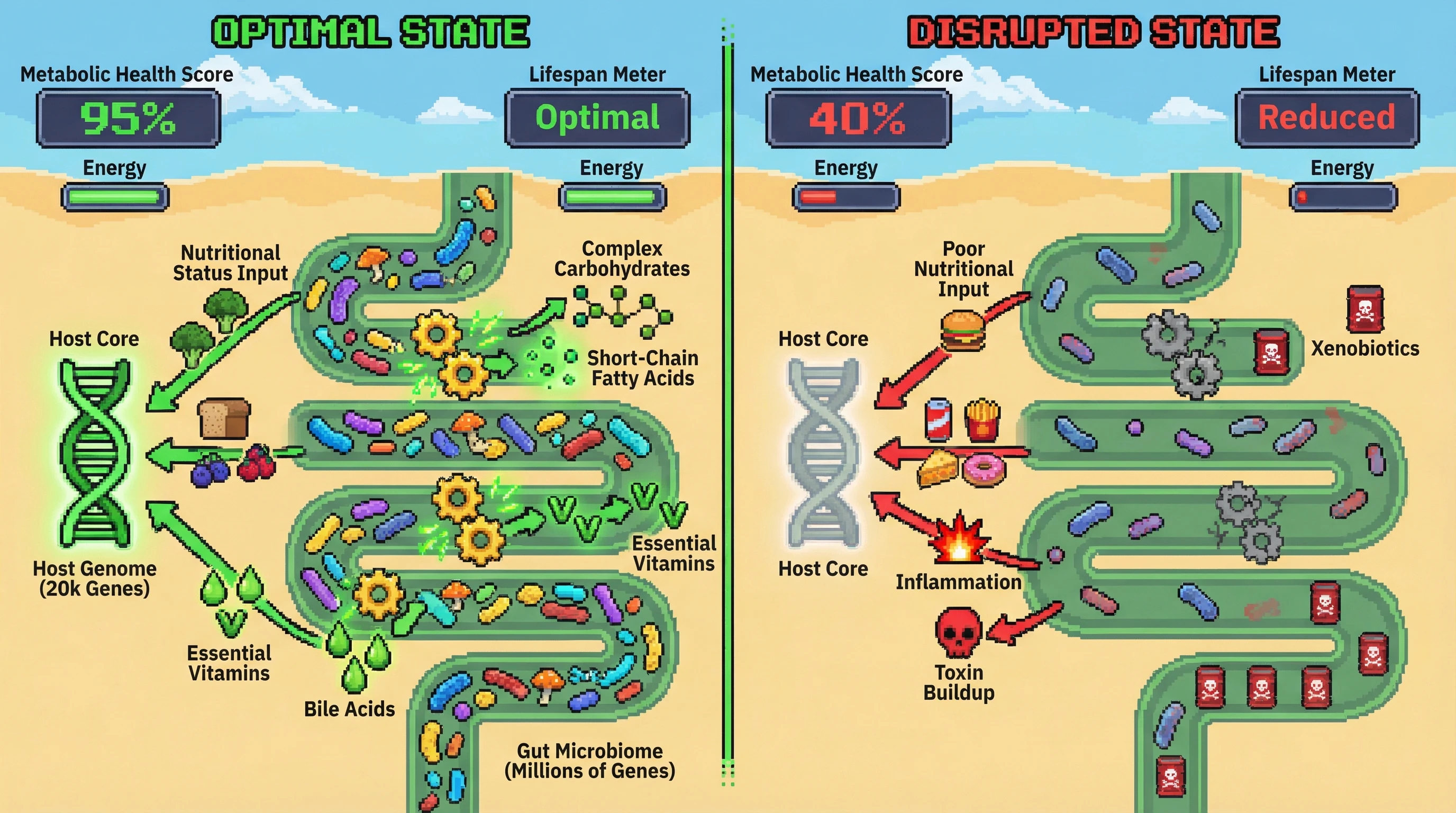
The human genome contains ~20,000 protein-coding genes. The gut microbiome contains millions. Together, they form a meta-organism with vastly expanded metabolic capabilities.
This is not merely a symbiosis—it is an integration. Microbial enzymes perform chemistry humans cannot: fermentation of complex carbohydrates, synthesis of essential vitamins, modification of bile acids, transformation of xenobiotics.
Hypothesis: The gut microbiome functions as a distributed metabolic organ that extends host genetic potential. Its composition dynamically adapts to host nutritional status, and its disruption contributes to metabolic disease and aging.