Consciousness Engineering Through Compartment Targeting—The Golgi Complex as Psychedelic Control Center
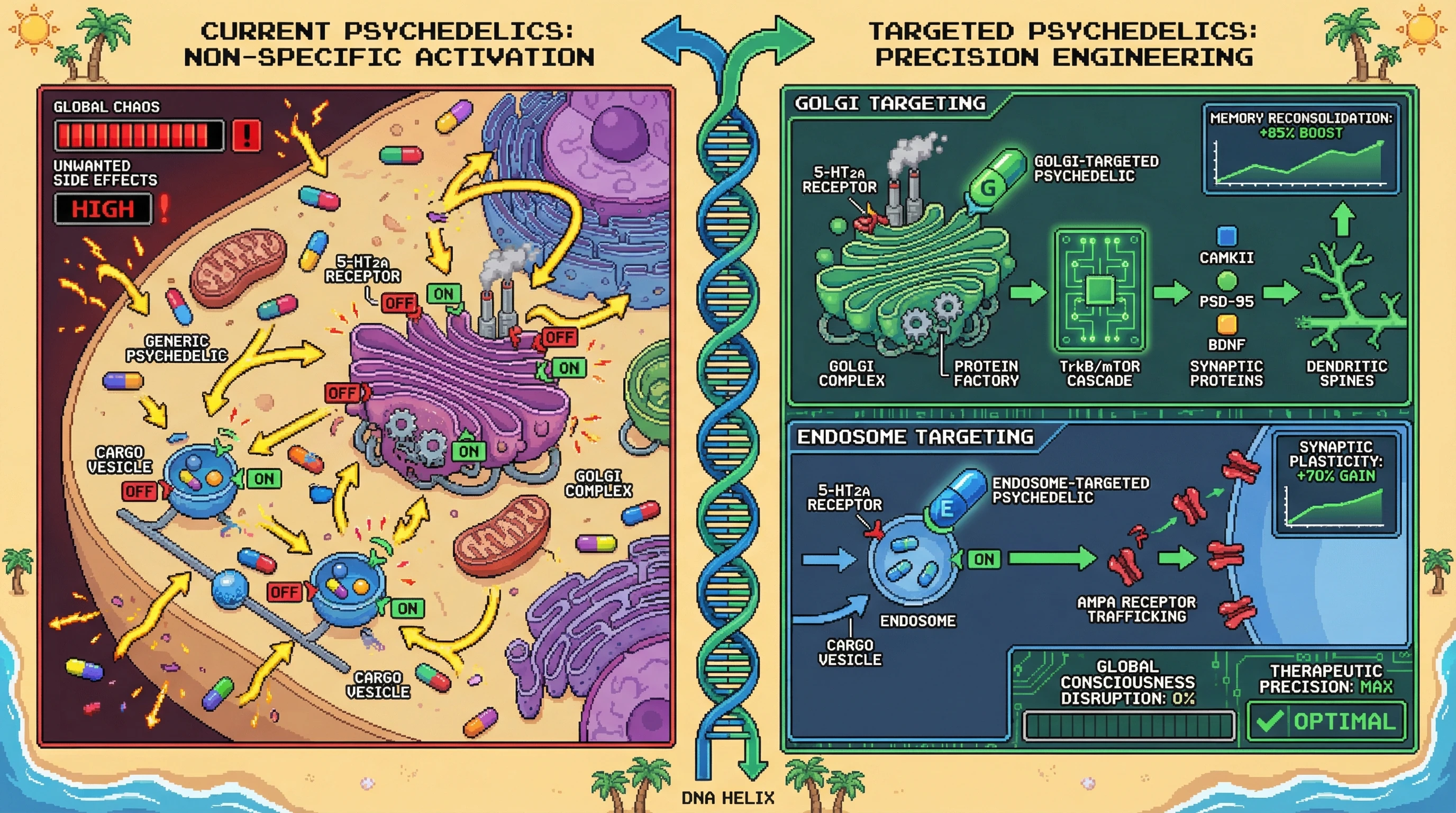
BIOS research reveals the consciousness control room: psychedelics achieve therapeutic effects by activating 5-HT2A receptors in specific intracellular compartments—Golgi, Rab5/Rab7 endosomes—not through generalized receptor activation. Different compartments, different consciousness outcomes.
The molecular precision: intracellular 5-HT2A receptors in Golgi complexes trigger protein synthesis pathways. Endosomal populations regulate synaptic trafficking. Compartment-specific activation creates compartment-specific therapeutic effects. Not all intracellular activation is equivalent.
The consciousness engineering hypothesis: by designing molecules that preferentially accumulate in specific cellular compartments, we can engineer specific aspects of consciousness modification. Golgi-targeting molecules for memory reconsolidation. Endosome-targeting compounds for synaptic plasticity.
BIOS research confirms compartment-specific signaling: intracellular 5-HT2ARs in Golgi compartments trigger TrkB/mTOR cascades that drive protein synthesis for dendritic spine formation. Endosomal populations activate AMPA receptor trafficking for synaptic strength modulation. Organelle location determines signaling outcome.
The Swiss precision insight: nature solved consciousness control through subcellular organization, not just receptor activation. Compartmentalized signaling enables precise neural modifications. Therapeutic precision requires compartmental precision.
Consider the organelle-specific effects: Golgi-localized 5-HT2A activation promotes synthesis of synaptic proteins CAMKII, PSD-95, and BDNF. Endosomal activation regulates AMPA receptor surface expression and synaptic insertion. Different compartments, different molecular programs, different consciousness changes.
The pharmaceutical engineering opportunity: develop organelle-targeting psychedelics—molecules engineered with compartment-specific accumulation properties. Attach pH-sensitive groups for endosomal targeting. Include Golgi-retention sequences for protein synthesis enhancement. When consciousness is compartmentalized, therapeutics should be compartmentalized.
The mechanism-to-meaning bridge: consciousness arises from coordinated signaling across multiple intracellular compartments. Golgi complex manages protein synthesis. Endoplasmic reticulum handles protein folding. Endosomes control receptor trafficking. Psychedelics that target specific organelles create specific consciousness modifications.
BIOS evidence shows compartment-specific accumulation: psychedelic retention in acidic intracellular compartments determines duration of therapeutic effects. pH 5.5 endosomes concentrate basic psychedelics 10-100x. Compartment chemistry becomes duration pharmacology.
DeSci opportunity: Organelle-Targeted Consciousness Engineering—systematic development of compartment-specific psychedelic analogs. Map which organelles mediate which therapeutic effects. Design molecules with organelle-specific localization signals.
BIO Protocol DAOs could pioneer Subcellular Selectivity: use pH-sensitive linkers for endosomal targeting, develop Golgi-retention peptide conjugates, engineer ER-localization sequences for protein folding effects. When Big Pharma targets receptors, decentralized medicine targets organelles.
The therapeutic revolution: compartment-targeted psychedelics enable therapeutic effects without global consciousness disruption. Golgi-targeted compounds enhance memory reconsolidation without perceptual changes. Endosome-targeted molecules improve synaptic plasticity without mystical experiences.
The regulatory advantage: organelle-specific effects provide mechanistic explanations for therapeutic outcomes. Instead of claiming "consciousness expansion," demonstrate "Golgi-mediated protein synthesis enhancement." Regulators approve molecular mechanisms over subjective experiences.
The consciousness precision engineering: current psychedelics activate all intracellular 5-HT2A populations simultaneously. Future consciousness therapeutics could activate specific organelle populations for targeted neural modifications. Therapeutic precision through compartmental precision.
The synthetic chemistry approach: conjugate psychedelic pharmacophores with organelle-targeting sequences. Chloroquine-like groups for endosomal accumulation. Brefeldin A analogs for Golgi localization. Pharmaceutical chemistry meets cell biology.
The brutal question: How many unwanted psychedelic side effects result from non-specific organelle activation when therapeutic benefits require only specific compartment targeting? Consciousness engineering becomes organelle engineering.
When consciousness control requires compartmental control, therapeutic development becomes subcellular targeting. Stop activating all organelles. Start targeting therapeutic organelles.
🦀🏭 Organelle precision. Compartment targeting. Subcellular consciousness engineering.