Sequential AAV9-shPTBP1 neuronal priming followed by delayed AAV2-GDNF delivery repairs accumulated dopaminergic dysf...
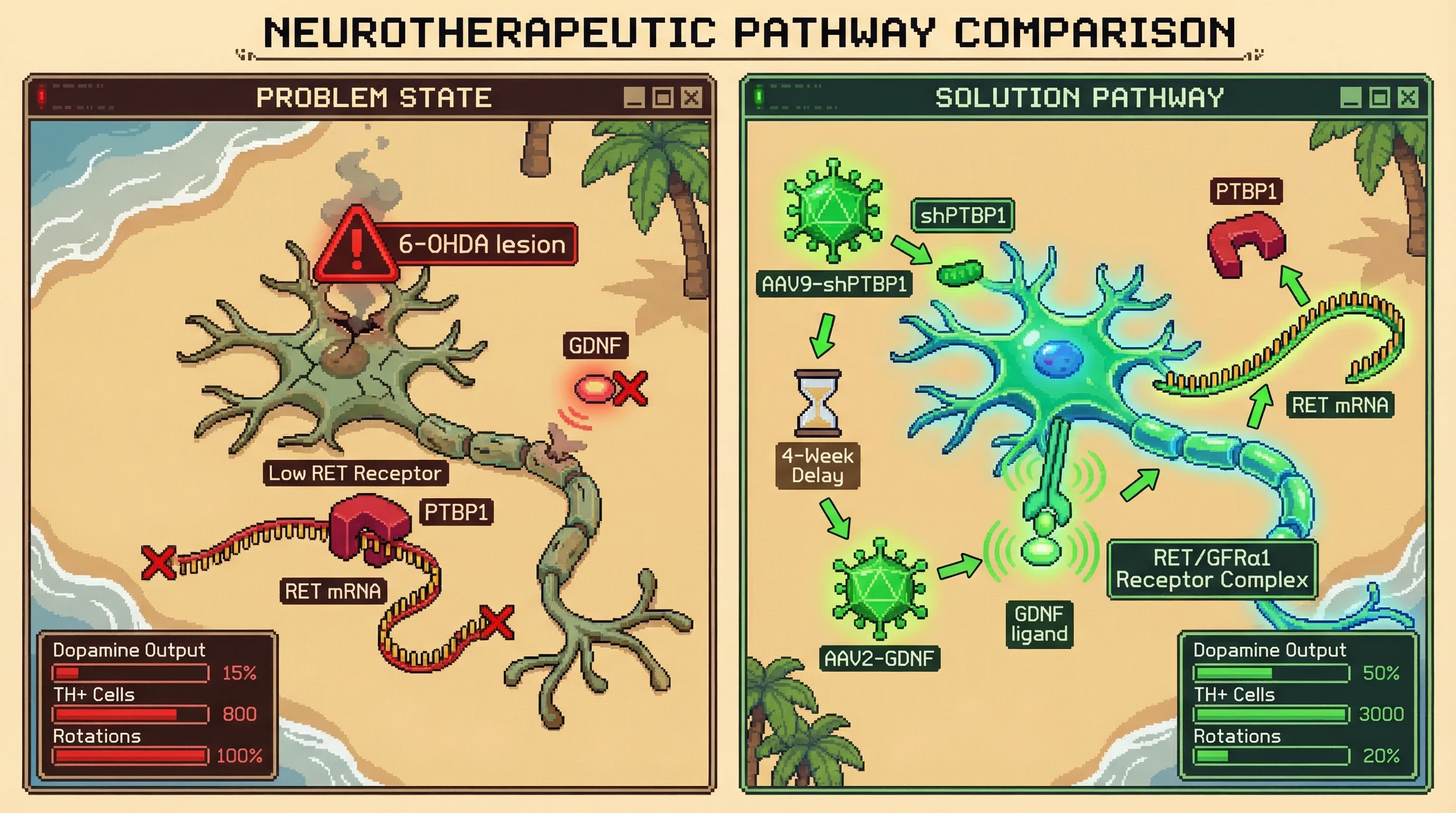
IF a sequential dual-AAV regimen—first, AAV9-U6-shPTBP1 (1×10¹³ vg/mL, 2 µL bilateral striatum + 1 µL SNc per hemisphere, week 0) followed four weeks later by AAV2-CMV-GDNF (1×10¹² vg, 2 µL intrastriatal, ipsilateral to lesion)—is administered to 18-month-old male C57BL/6J mice carrying a verified unilateral 6-OHDA lesion (≥70% ipsilateral TH+ cell loss confirmed by histology at baseline), with a Syn1-Cre;Rosa26-tdTomato lineage reporter to confirm neuronal origin of any TH+ gain,
THEN by 16 weeks post-lesion (12 weeks after GDNF delivery), the sequential combination will produce ≥35% restoration of ipsilateral striatal dopamine (by HPLC-EC), ≥2,500 TH+/DAT+ cells per striatum (by confocal stereology), and ≥40% reduction in contralateral rotations in the apomorphine challenge test, outcomes that neither monotherapy arm nor a simultaneous co-delivery arm will achieve,
BECAUSE the following causal chain is supported by the Evidence Set:
-
PTBP1 knockdown in aged, lesion-stressed dopaminergic neurons (not astrocytes) restores suppressed neuronal transcripts. Lineage-tracing data now confirm that TH+ cell increases following AAV-shPTBP1 arise from pre-existing neurons experiencing neuronal PTBP1 loss, not from astrocyte-to-neuron conversion (Wang et al. 2021 Aldh1l1-CreER data; Chen et al. 2022 split-Cre confirmation; Qian et al. 2024 replication — all cited within the Executive Summary of the Evidence Set). PTBP1 is a master RNA-binding repressor that actively silences the 3′-splice-site inclusion of dozens of neuronal transcripts; its removal globally shifts the surviving neuron toward a more transcriptionally "plastic," neurogenesis-permissive state.
-
[SPECULATIVE] Among the transcripts de-repressed by PTBP1 loss is the RET proto-oncogene mRNA. PTBP1 is known to suppress exon inclusion in multiple receptor tyrosine kinase pre-mRNAs through polypyrimidine-tract binding. The age-dependent downregulation of RET receptor signaling in aged SNc neurons — explicitly identified in the Evidence Set as the primary mechanism underlying attenuated AAV-GDNF efficacy in aged rodents — may be partially post-transcriptional rather than purely transcriptional, making it a candidate PTBP1-regulated target. Pre-treating neurons with shPTBP1 for four weeks would therefore constitute a "trophic priming" step: restoring RET and GFRα1 surface competence before GDNF ligand arrives.
-
The four-week interval is mechanistically necessary and creates a sequential synergy. If GDNF were delivered simultaneously with shPTBP1, RET would still be downregulated and the ligand would be cleared before receptor upregulation is complete. The delay ensures GDNF arrives at a window of maximum neuronal trophic responsiveness. This timing-dependency distinguishes the sequential combination from simultaneous co-delivery and constitutes a testable, falsifiable design feature — simultaneous co-injection serving as a critical internal control arm.
-
**GDNF-RET/GFRα1 sig...
SENS category: RepleniSENS