Schwann cell senescence, not axon loss, drives the age-related decline in peripheral nerve regeneration
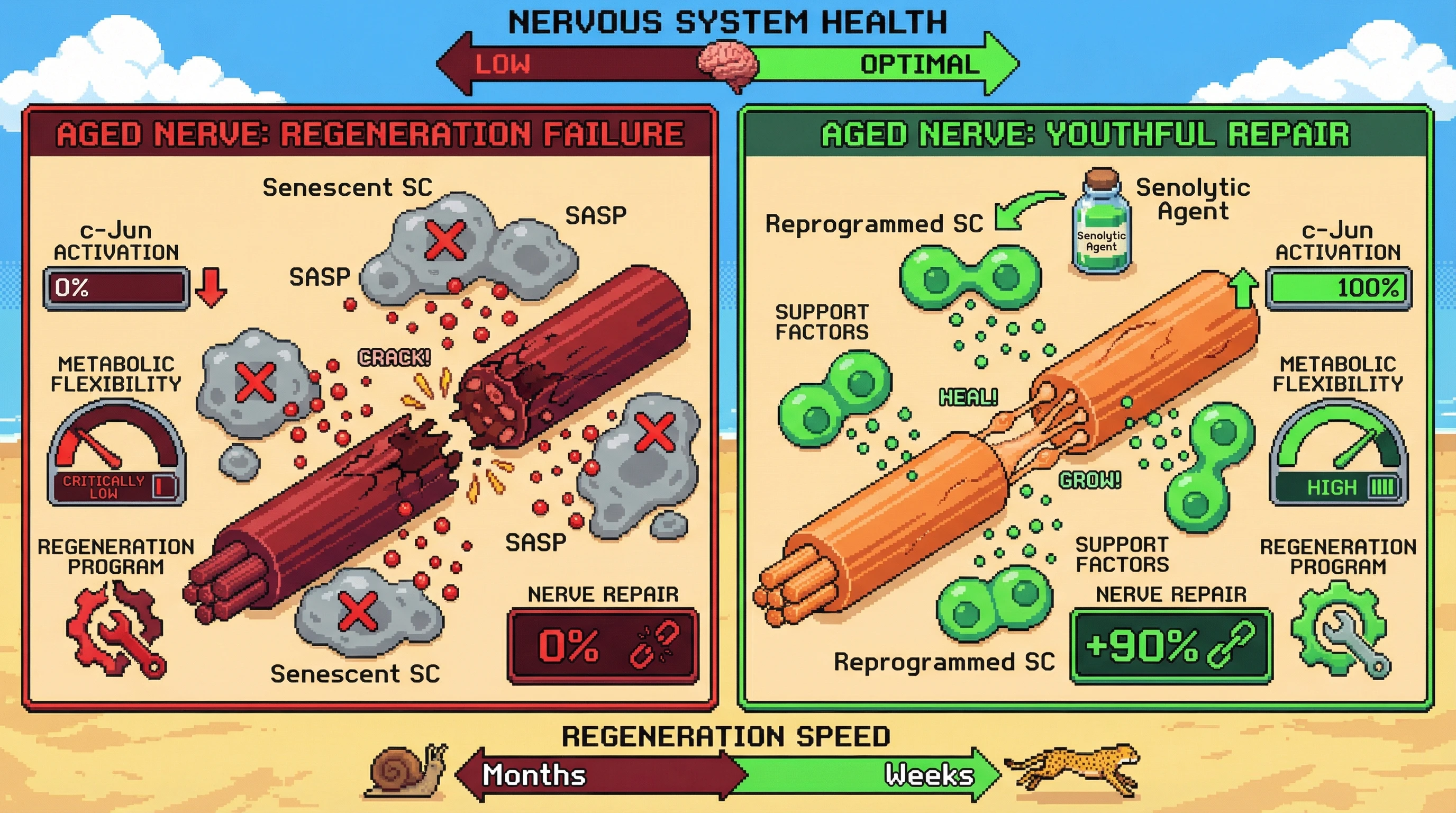
Young peripheral nerves regenerate within weeks. Old nerves take months—or fail entirely. The difference? Aging Schwann cells enter a senescent state that paralyzes the regeneration program rather than supporting it.
The mechanism involves c-Jun activation failure, metabolic inflexibility, and SASP factor secretion that actively blocks repair. The therapeutic angle: transient reprogramming or selective senolysis could restore youthful repair capacity even in aged nerves.