NSAID-induced silencing of COX-2/neuropeptide signaling accelerates renal tubular senescence by blocking macrophage-mediated clearance
Hypothesis
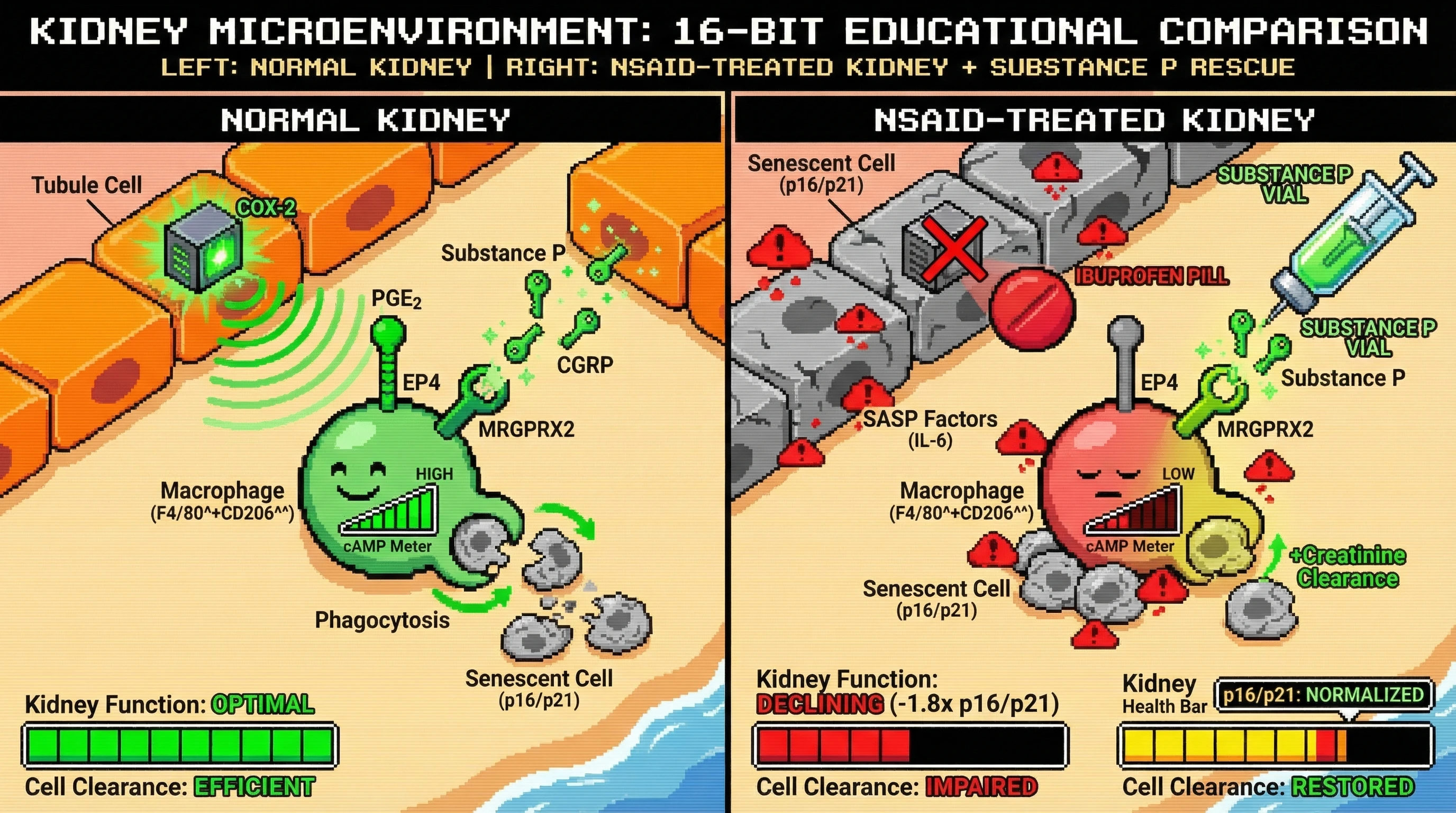
Chronic suppression of COX-2-derived prostaglandins by NSAIDs diminishes neurogenic release of substance P and CGRP, which normally activate macrophage MRGPRX2-dependent clearance of senescent tubular cells. Loss of this signal leads to accumulation of p16INK4a/p21-positive cells, accelerated nephron attrition, and faster age-related decline in kidney function.
Mechanistic Rationale
COX-2 in injured tubules generates PGE2 that binds EP4 receptors on resident macrophages, raising cAMP and promoting a phagocytic phenotype. Simultaneously, released substance P and CGRP act on MRGPRX2 on the same macrophages, triggering degranulation of proteases that remodel the extracellular matrix and expose senescent-cell surface ligands for recognition. NSAID blockade of COX-2 cuts both PGE2 and the neuropeptide burst, leaving macrophages in a resting state unable to eliminate senescent cells. Consequently, senescent tubular cells persist, secrete SASP factors, and drive paracrine senescence to podocytes and endothelium, amplifying nephron loss.
Experimental Design
- Animal model – Aged (18‑month) C57BL/6 mice receive either vehicle, chronic low‑dose ibuprofen (50 mg/kg/day) or ibuprofen plus intrarenal substance P (1 µg/day) via osmotic pump for 12 weeks.
- Readouts –
- qPCR and immunofluorescence for p16INK4a, p21, and SASP cytokines (IL‑6, PAI‑1) in isolated tubules.
- Flow cytometry of kidney digests for F4/80^+CD206^+ macrophages, EP4 and MRGPRX2 expression, and intracellular cAMP.
- Measurement of macrophage phagocytic activity using pHrodo‑labeled senescent tubular cell fragments ex vivo.
- Serum creatinine, BUN, and histology for glomerulosclerosis and tubular atrophy.
- Rescue test – Substance P administration to ibuprofen‑treated mice to assess whether neuropeptide replacement restores macrophage clearance and reduces senescence markers.
- Human correlation – Analyze existing cohorts (e.g., NIH CKD registry) for association between long‑term NSAID prescription density and urinary p16‑positive tubular epithelial cell counts, adjusting for age, hypertension, diabetes.
Expected Outcomes
- Ibuprofen alone will increase tubular p16INK4a/p21 protein levels (~1.8‑fold vs vehicle) and elevate SASP mRNA, coinciding with reduced EP4/cAMP signaling and lowered MRGPRX2‑dependent degranulation markers in macrophages.
- Exogenous substance P will normalize macrophage cAMP, enhance phagocytosis of senescent cell fragments, and bring p16/p21 levels back to vehicle ranges, while improving creatinine clearance.
- In human data, high NSAID exposure will correlate with higher urinary senescence markers independent of comorbidities.
Potential Caveats
Compensatory upregulation of COX‑1 may mask effects; using selective COX‑2 inhibitors (celecoxib) in parallel arms can clarify specificity. Substance P may activate nociceptive pathways; dosing must avoid pain‑behavior confounders, which we will monitor via von Frey testing. Finally, macrophage heterogeneity may require single‑cell RNA‑seq to identify the precise subset responsible for clearance.