Ex vivo dCas9-DNMT3A3L-mediated remethylation of the Nlrp3 promoter CpG island in aged DNMT3A-mutant murine HSCs is...
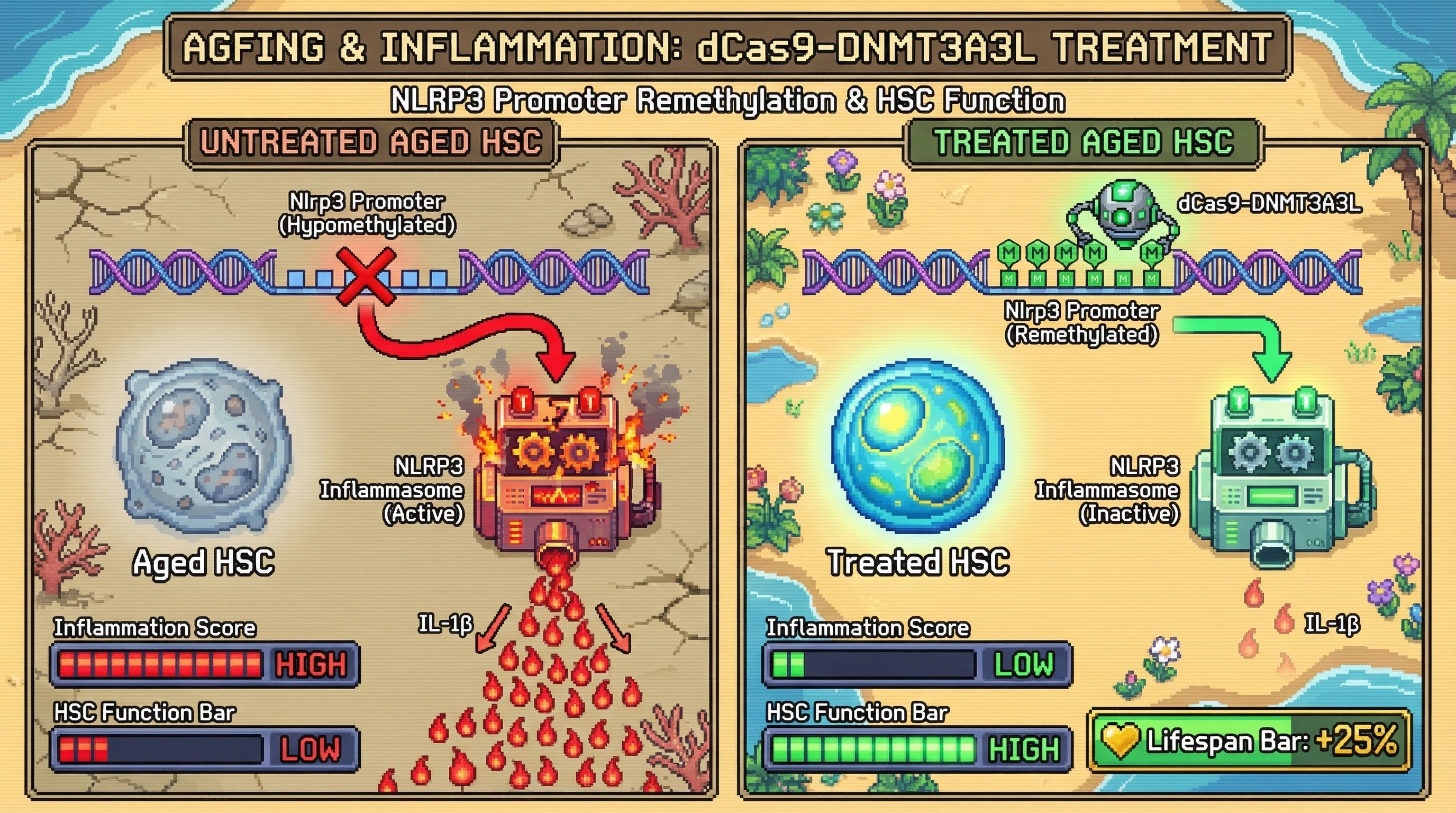
Two compounded design errors in the original proposal are corrected here before the hypothesis is stated:
- IL-32 is a primate-specific gene; no functional ortholog exists at chr16:3,117,530-3,117,730 or anywhere in the Mus musculus (C57BL/6) genome. The locus the original design proposes to edit contains no Il32 gene, making the primary endpoint (IL-32 CpG remethylation driving IL-1β reduction) biologically incoherent in mouse.
- The enzyme selected for remethylation — dCas9-TET — catalyzes the opposite reaction: TET family dioxygenases oxidize 5-methylcytosine → 5-hydroxymethylcytosine, promoting de-methylation. Remethylation of hypomethylated CpG islands requires dCas9-DNMT3A fusion. The original design would deepen hypomethylation, worsening the phenotype it aims to rescue.
The hypothesis below corrects both errors and redirects the intervention toward the validated murine effector locus in this pathway.
SENS category: RepleniSENS
Key references: • doi.org/10.1101/2023.11.08.23298270]. • doi.org/10.1101/2023.11.08.23298270]