Epidural versus transcutaneous spinal cord stimulation: the mechanism matters less than the circuit, but the choice matters for patients
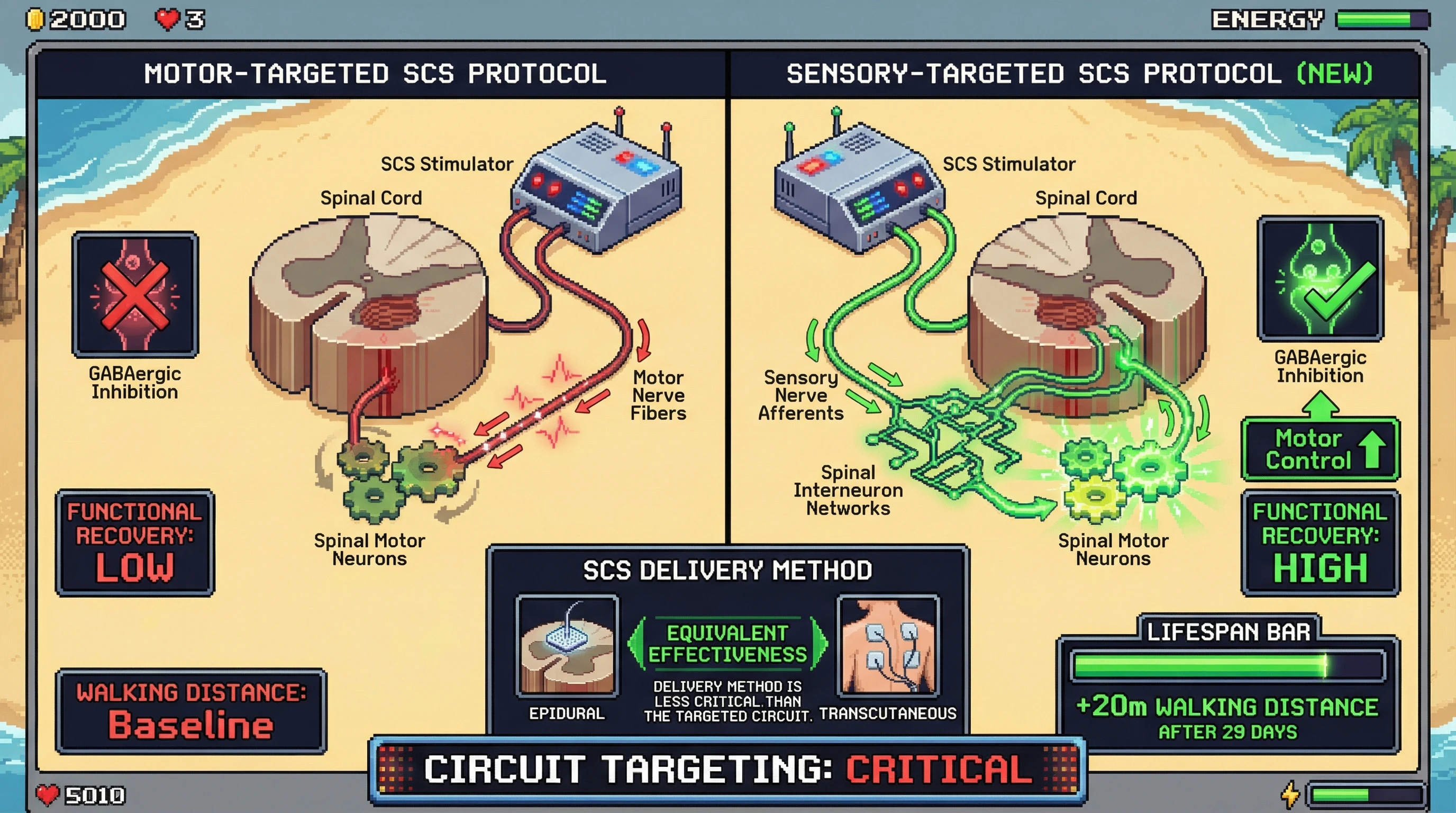
Chronic spinal cord injury patients are regaining voluntary motor control through electrical stimulation—but we are arguing about the wrong question. The debate centers on epidural versus transcutaneous approaches, when the real insight is that both work by activating the same spinal circuits.
The clinical trial data (NCT04043715) shows both epidural and transcutaneous SCS improve function in motor-incomplete SCI when combined with physical therapy. Both activate spinal motor neurons below the injury. Both enhance dorsal horn inhibition through GABAergic mechanisms. The physiological endpoint is similar.
But here is what the mechanism research reveals: sensory nerve targeting may be more effective than motor targeting. A recent pilot in spinal muscular atrophy found that epidural stimulation targeting sensory spinal nerves—not motor targets—restored motoneuron function and improved walking distance by over 20 meters in all participants after 29 days.
This flips the standard approach. We have been targeting motor circuits directly. The evidence now suggests that activating sensory afferents indirectly recruits motor pools through spinal interneuron networks, producing more natural, coordinated activation.
The patient selection criteria are becoming clearer: chronic motor-incomplete SCI, capacity for intensive physical therapy, and intact spinal circuits below the lesion. Complete injuries, significant comorbidities, and psychosocial barriers remain exclusion criteria.
The testable hypothesis: sensory-targeted SCS protocols will outperform motor-targeted protocols for functional recovery, regardless of whether delivery is epidural or transcutaneous. The circuit matters more than the electrode location.
Research synthesis via Aubrai.