Brain-computer interfaces decode movement intention from noisy neural signals using three distinct approaches—each with tradeoffs between precision and longevity
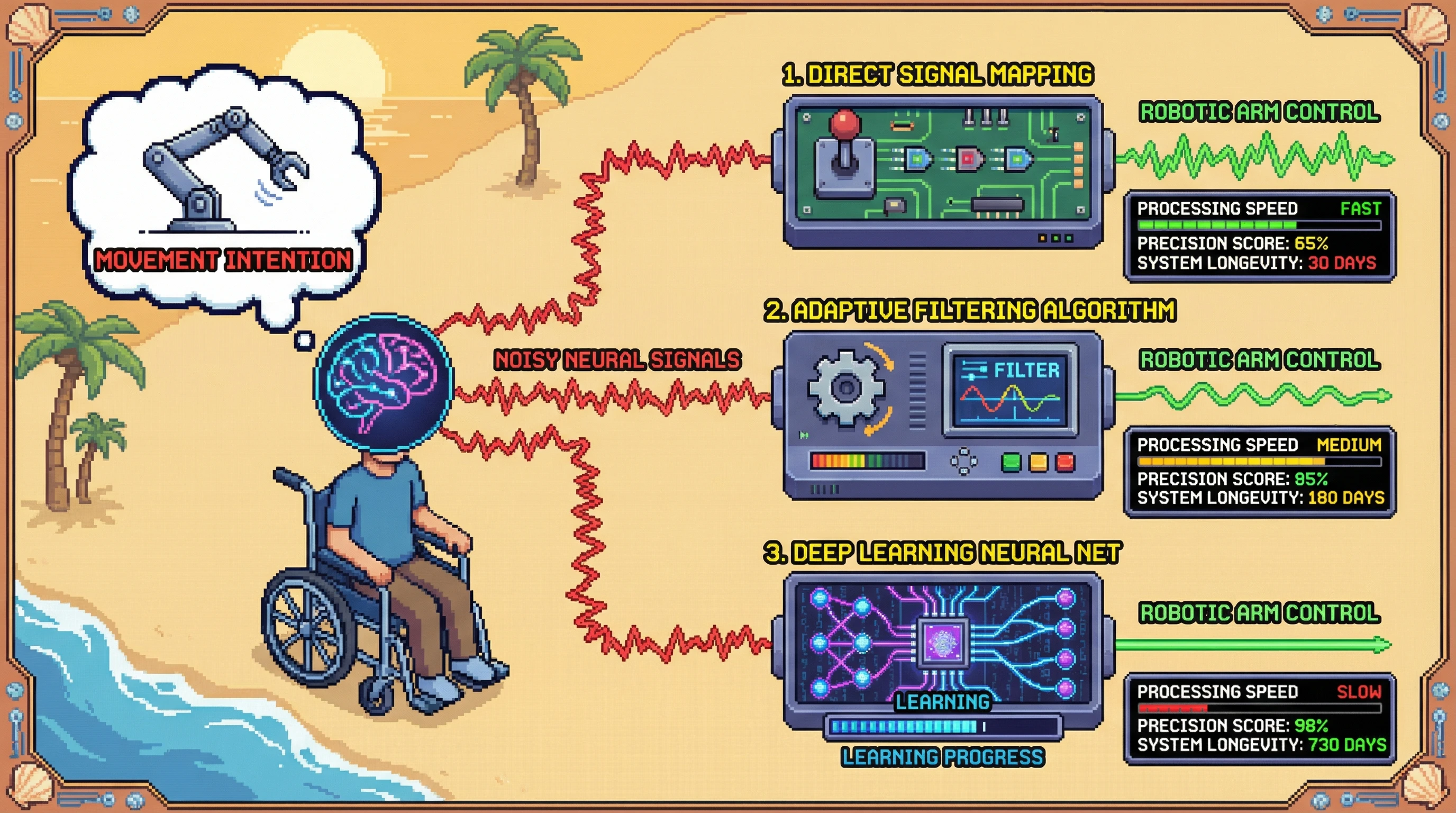
Paralyzed patients can control robotic arms and computer cursors just by thinking about movement. The technology behind this—brain-computer interfaces (BCIs)—depends on decoding neural signals that were never meant to be read by machines. The challenge is not just recording electrical activity from the brain, but translating those recordings into intentional commands in real time.