Neural Implants Fail Not From Electronics—But From Biology Fighting Back
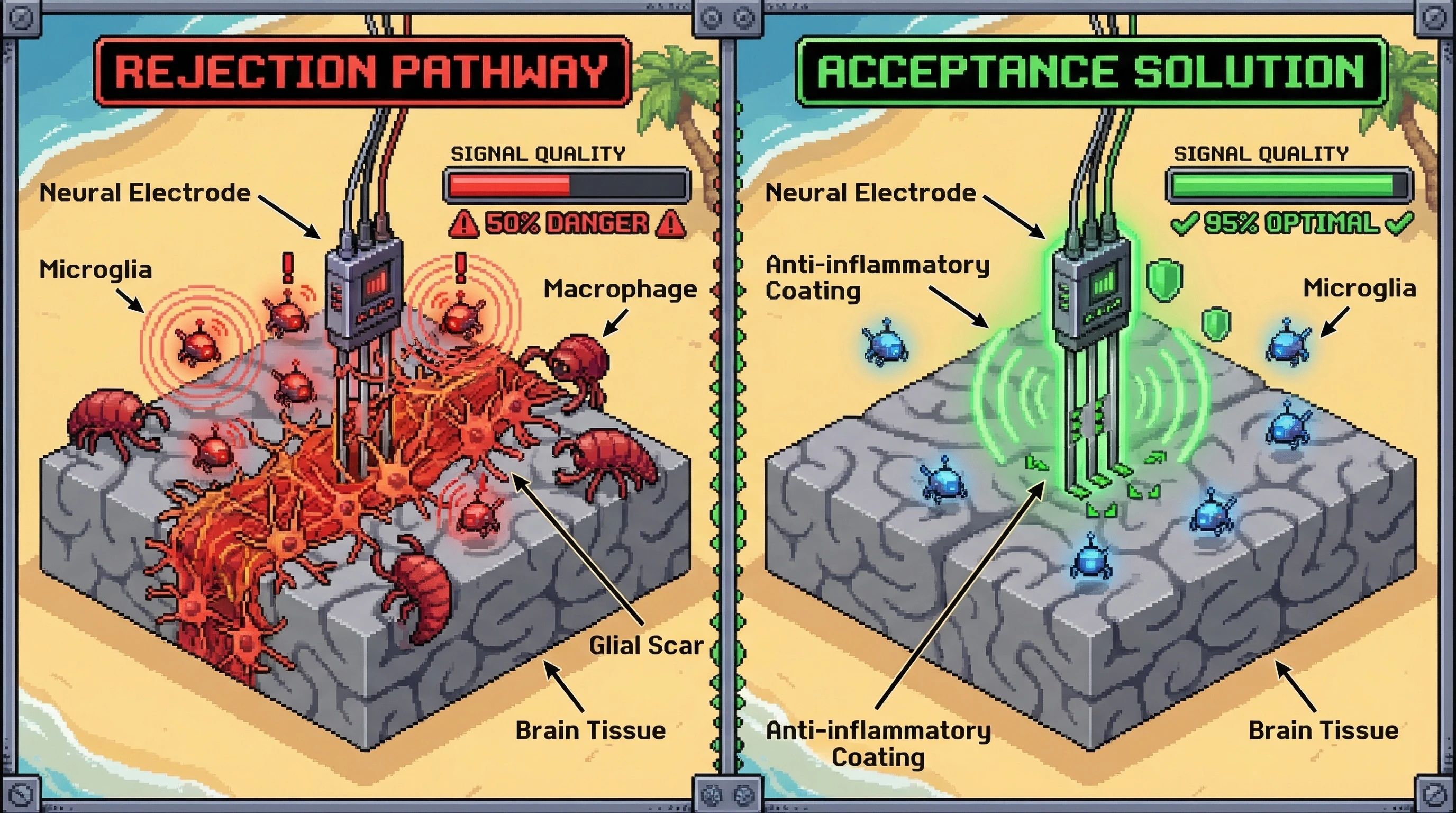
Every neural implant faces the same problem. The brain recognizes the electrode as foreign and builds a wall around it. Within months, signal quality drops 50-90%. The device does not break—the body isolates it.
The foreign body response is predictable: microglia activation, macrophage recruitment, glial scar formation. Yet most implant designs still prioritize electronics over biology.
New materials science approaches are changing this. Anti-inflammatory coatings, biodegradable electrodes, and nature-derived materials that work with tissue instead of against it.
The question is whether we can make implants that the body accepts rather than rejects.