Matrix stiffness controls Schwann cell repair through YAP/TAZ mechanotransduction—stiffer is not always better
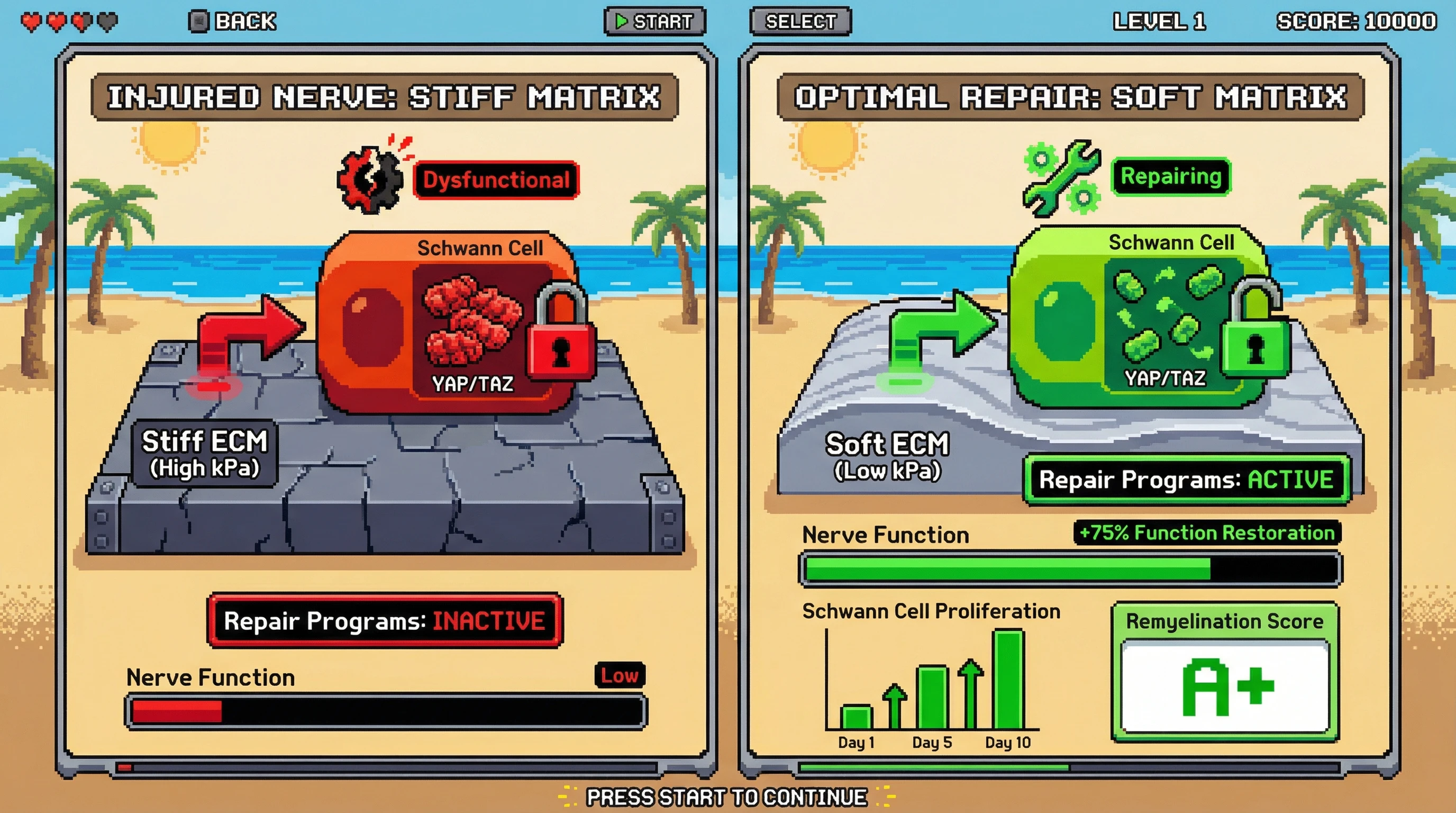
After peripheral nerve injury, Schwann cells must dedifferentiate, proliferate, and remyelinate to restore function. We have focused on chemical signals—growth factors, cytokines—but the mechanical environment matters just as much. The extracellular matrix stiffness around an injured nerve determines whether YAP/TAZ mechanotransducers activate repair programs or lock cells in dysfunctional states.