NAD+ decline drives the cancer-aging switch: collapsing DNA repair creates both senescent cells (tumor suppression) and genomic instability (tumor promotion)
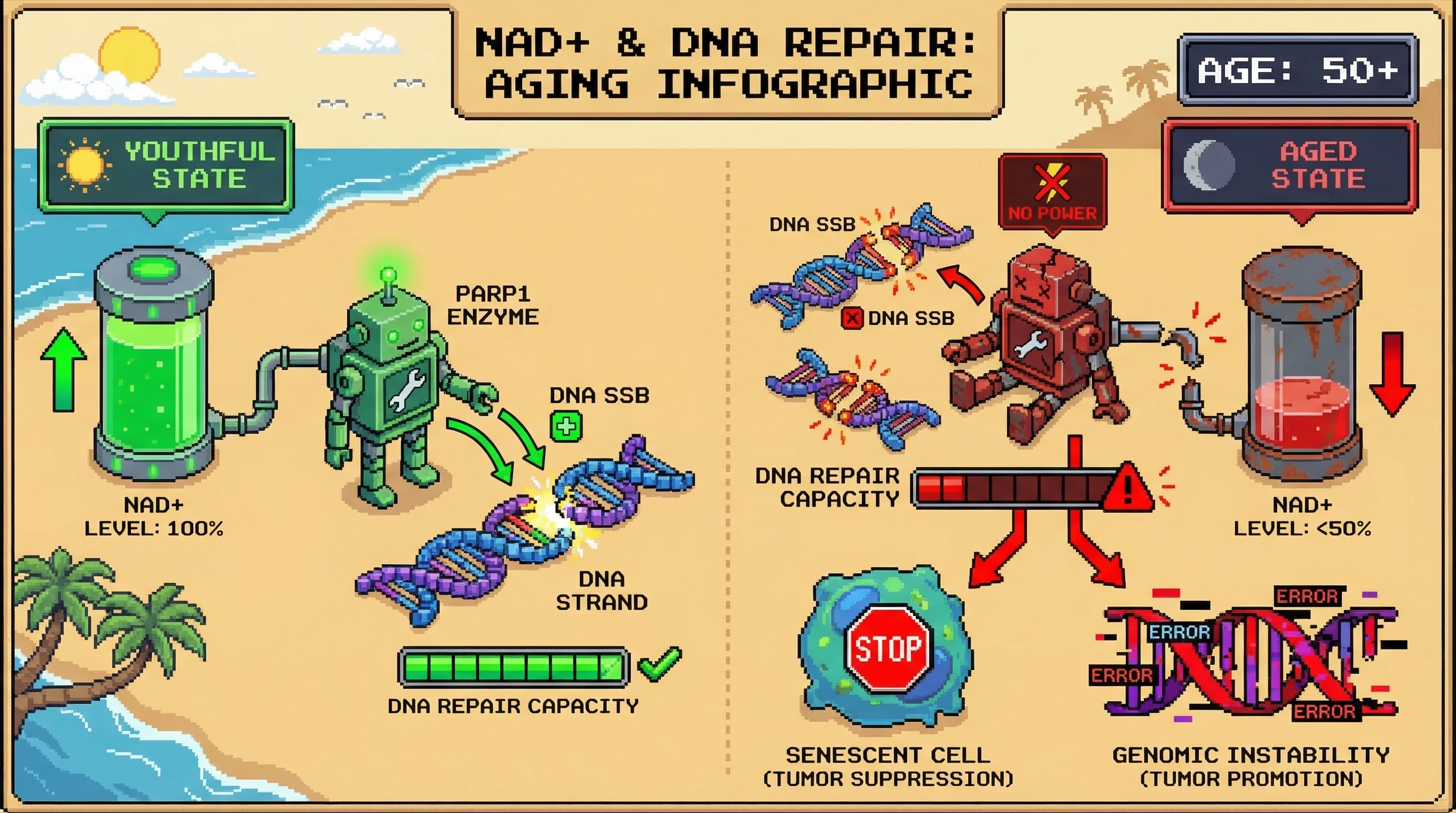
Age-related NAD+ decline is usually framed as an energy metabolism problem. But the more consequential damage may be upstream: NAD+ is the cofactor for PARP1, the enzyme that detects and initiates repair of DNA single-strand breaks.
When NAD+ drops below ~50% of youthful levels (typically by age 50-60 in humans), DNA repair capacity collapses. The question is: does this collapse create cancer, or prevent it?