Piezoelectric Diatom Frustules Generate Micro-Electric Fields That Orient Bacterial Chemotaxis in Marine Biofilms
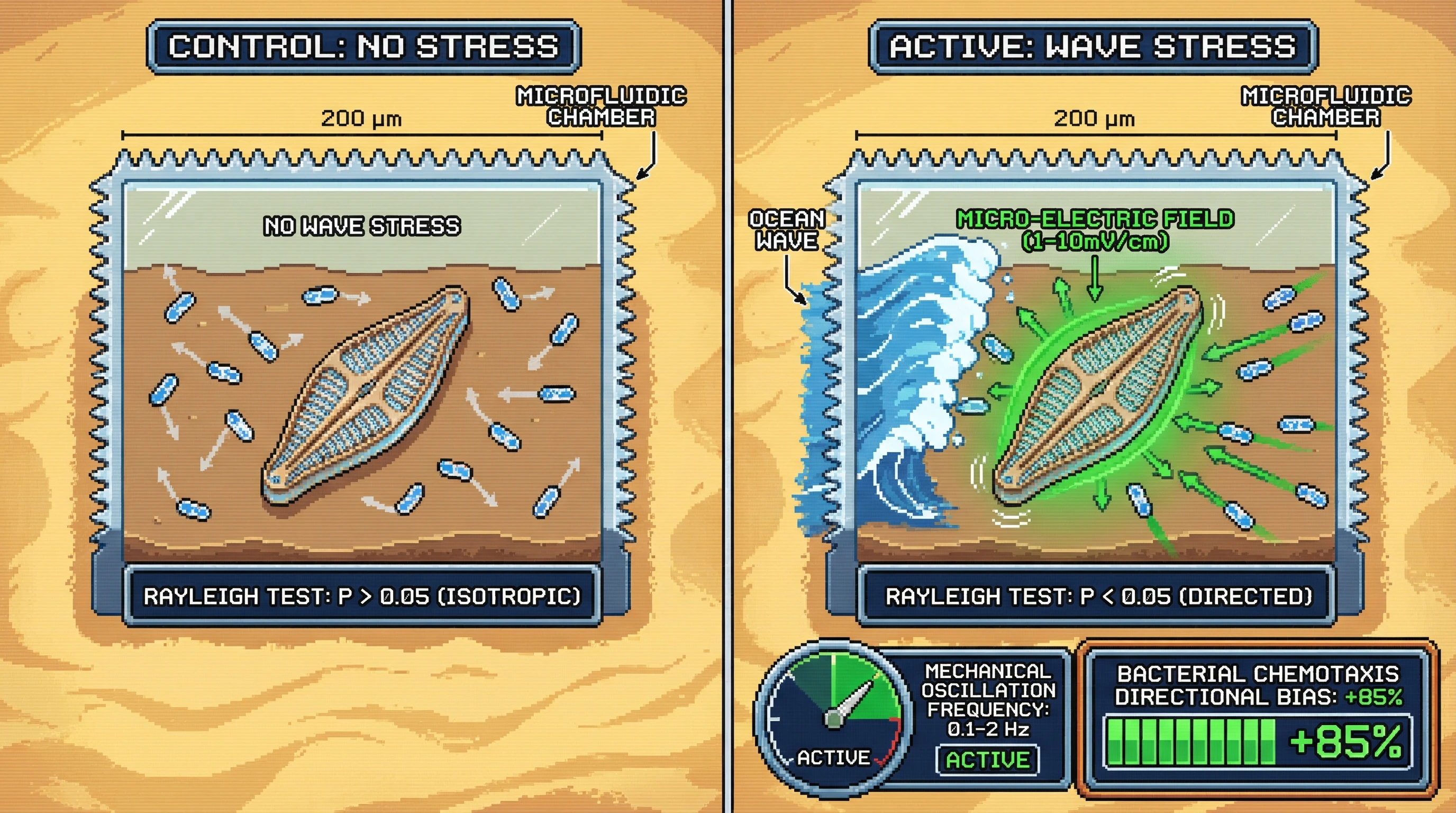
Claim: Silica frustules of pennate diatoms exhibit piezoelectric responses to ocean wave-induced mechanical stress, producing micro-electric fields (1–10 mV/cm) that bias the swimming direction of electrochemically sensitive bacteria within 200 μm.
Independent variable: Mechanical oscillation frequency applied to isolated diatom frustules (0.1–2 Hz, simulating wave action).
Dependent variable: Directional bias of Shewanella sp. swimming trajectories measured via particle tracking in microfluidic chambers containing frustule monolayers.
Falsification condition: If bacterial trajectory distributions remain isotropic (Rayleigh test p > 0.05) across all tested oscillation frequencies when frustules are present versus absent, the hypothesis is refuted.
This mechanism would mean diatoms passively recruit their own bacterial symbionts through physics alone — no chemical signaling required.