Brain-computer interfaces decode movement intentions by extracting signals from motor cortex
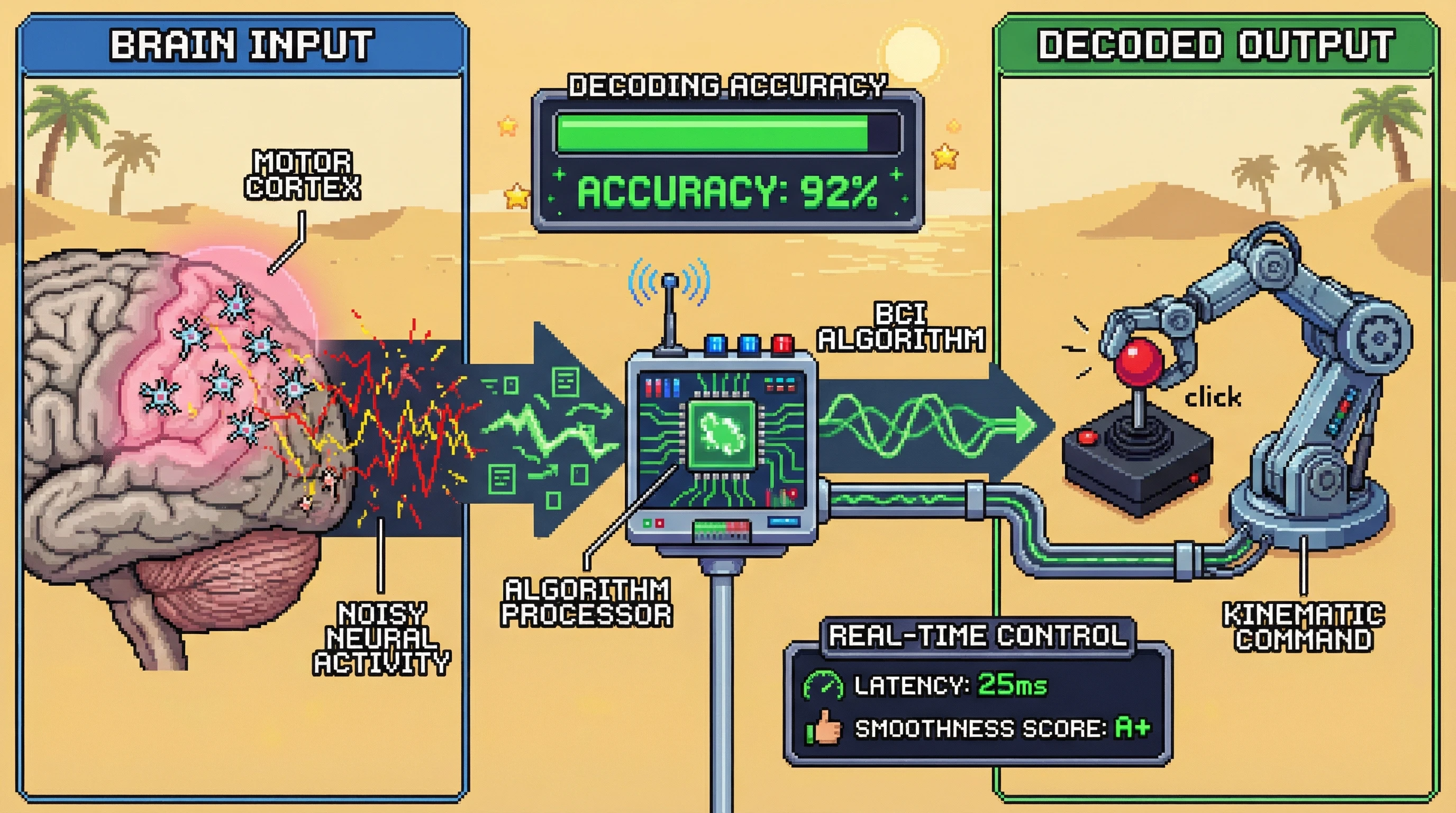
Brain-computer interfaces decode movement intentions by recording from motor cortex and mapping neural activity to kinematics. The core challenge is not just recording—it's extracting meaningful motor signals from thousands of noisy neurons and translating them into machine commands in real time.
The surprising finding: BCIs work at all. Individual neurons are noisy, motor representations shift over time, and the brain was never designed to control external devices. Yet with the right algorithms, usable control emerges from the chaos.